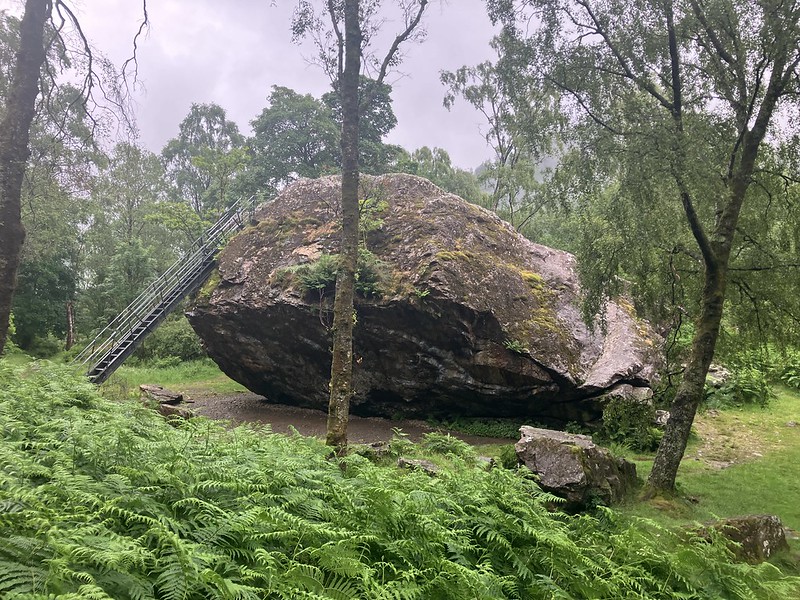
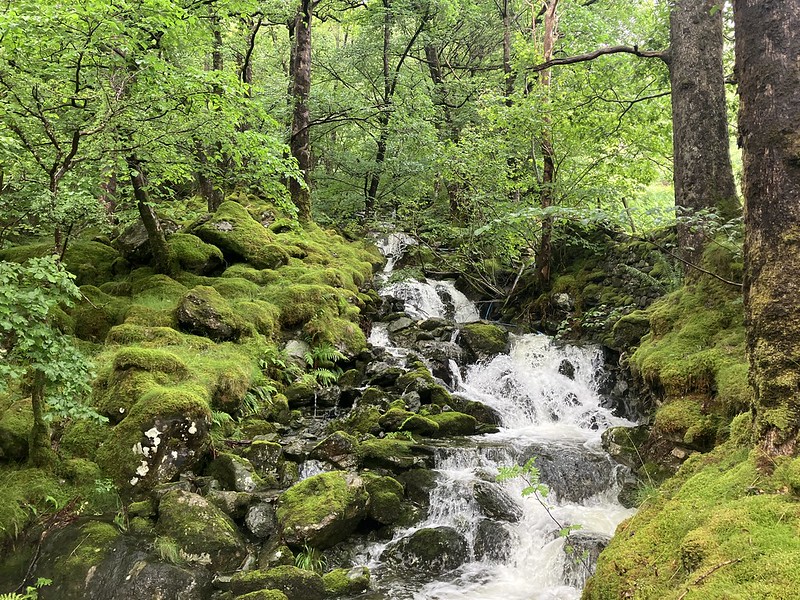
After a gentle, weather dampened day based out of Longthwaite Hostel in Borrowdale, wandering through the rain to the Bowder Stone (a glacial erratic from the last ice age), drying out in a café in Grange, pausing by the stream at the bottom of Gate Gill to soak up the atmosphere and heading up Castle Crag, the smallest Wainwright; followed by some yoga and plenty of food the day before. The valley was finally breathing again the next morning. Sunlight touched the fells, and the air was crisp and cool in the aftermath of rain. I’d come with a plan.
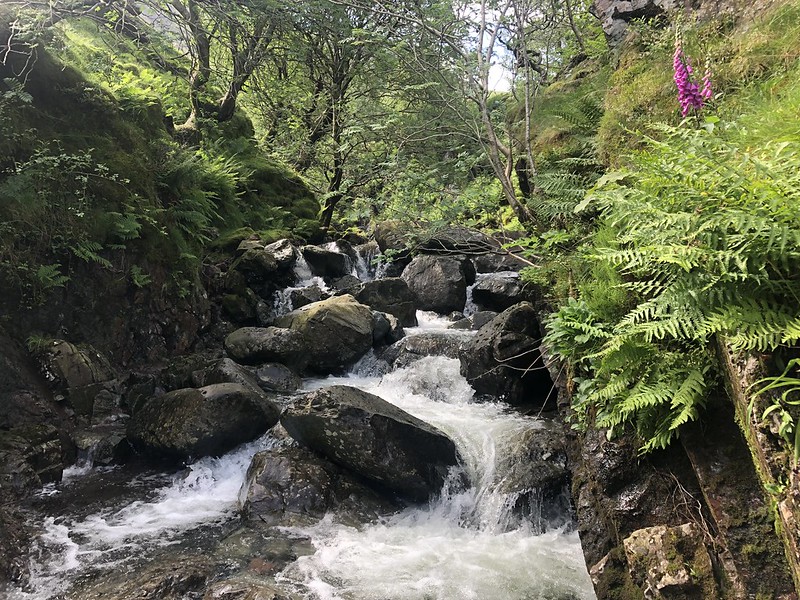
Originally, I’d intended to reach Tongue Tied by threading my way up Grains Gill, cutting beneath Allen Crags and skirting toward the slabs above Esk Hause. It’s a wilder, more direct approach. But after days of rain, I wanted to see how passable it was. The answer: not very. The lower gill was in full flow: beautiful but forceful. Even after picking through bracken to bypass waterlogged sections, I realised I’d spend more time navigating hazards than actually scrambling.
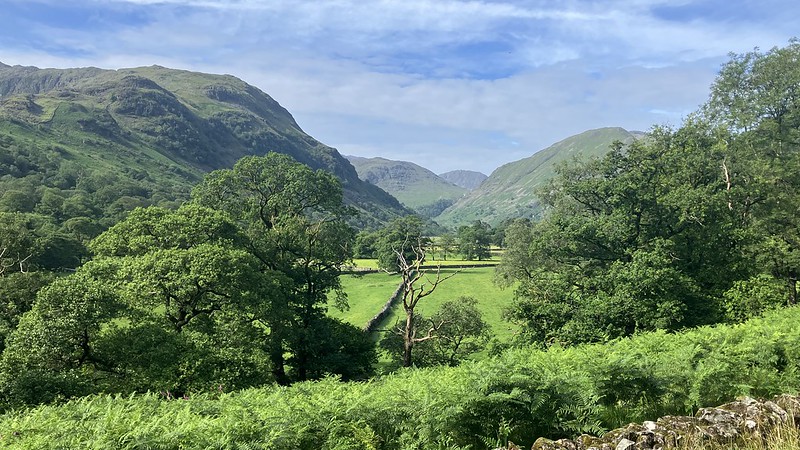
Instead, I turned uphill alongside Ruddy Gill, gaining height steadily until I crested the col at Esk Hause, where I could look across toward Ill Crag and the tongue of rock that gives the scramble its name. From a distance, Tongue Tied looked inviting: angled bands of rough volcanic rock stretching upward in stages.
Tongue Tied – Grade 2 ★★
The scramble itself, described in John Fleetwood’s Scrambles in the Lake District North, begins with broad, slabby sections interspersed with steeper steps. I initially drifted a little too low, lured by easy ground, which gave me some bonus scrambling to rejoin the intended line. A gentle reminder that even clear looking routes deserve care and attention.
The rock was dry and grippy, the moves enjoyable and I was reminded how freeing solo scrambling can feel. With a rope in my bag in case of emergencies and no pressure, you’re forced into presence. No one to impress, no one to rush for.
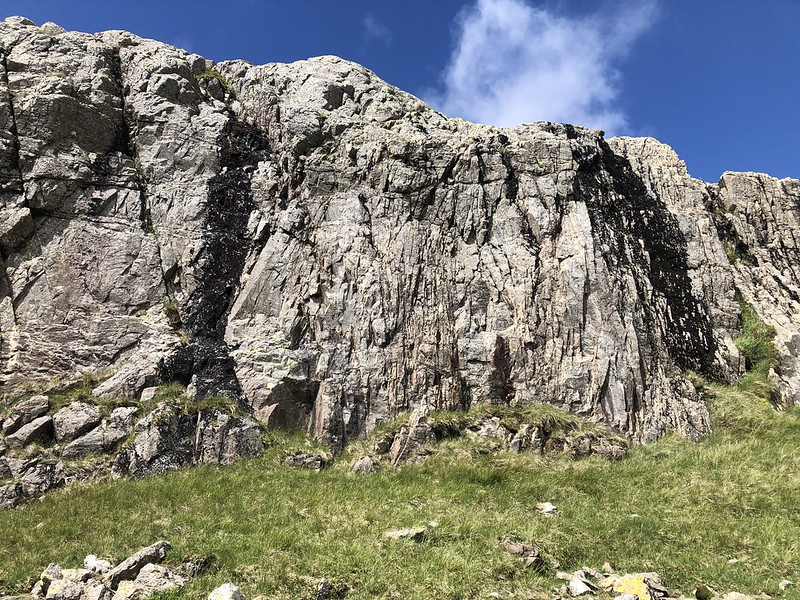
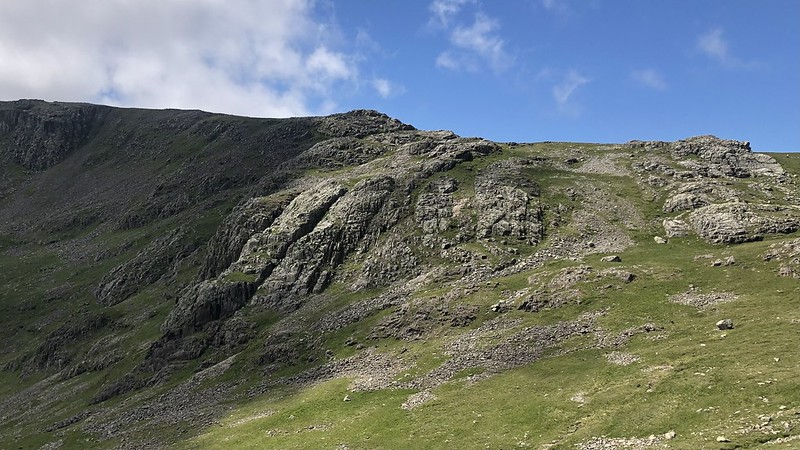
Near the final buttress, the route briefly steepens. The guidebook mentions a Grade 3 variation and I paused to assess the line. On another day, with a partner, I might’ve taken it on. But solo, and still early in the day, I opted for the safer line to the right, threading through clean holds until I topped out.
From the upper reaches of Tongue Tied, I crossed the col westward, descending to join the Corridor Route. A familiar trail from a winter outing earlier this year. But I wasn’t done yet. My next target was Skew Gill, a narrow, shaded gully cutting deep into the north face of Great End.
Skew Gill – Grade 1 ★
I’d seen people climb it in snow and ice back in January and it had piqued my interest. I’d long been curious what it would feel like in summer conditions. The guidebook calls it “a large, scree-filled gully offering modest scrambling but with considerable character.” That’s about right.
Even so, I had a moment of hesitation. The gully is loose in places and as I stood at the bottom looking up, I regretted not packing my helmet. Water flowed down the central channel and the steep sides carried the risk of stones coming down. I couldn’t see any signs of recent rockfall, though, so I decided to move at a steady pace through the higher risk sections.
Still, the atmosphere was unforgettable. It felt like entering a lost world. Hidden from view, steep-sided and ancient. The scrambling wasn’t hard although it demanded concentration. Several sections required hands on movement, and a few times the water flowed over my boots and hands. The final wall, slightly steeper and damp, was more of a challenge than expected. Perhaps it was the wet rock. Perhaps just tired legs.
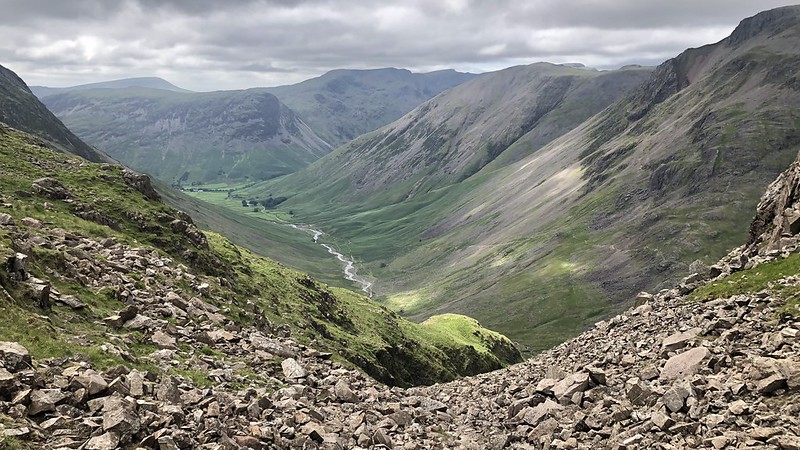
At the top, I emerged back onto ‘The Band’ of Great End, the land opening out once more.
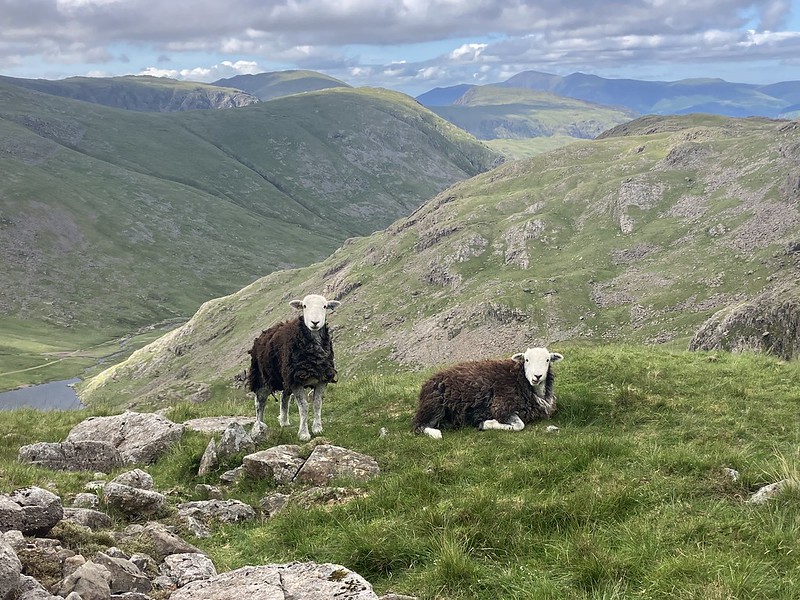
Before the descent, I paused for a brew. I’ve made a habit of carrying a small flask and teabag on these trips. On that day especially, there was something grounding about gazing out over Derwent Water far below, listening to the bird song and watching the Herdwick sheep grazed quietly close by.
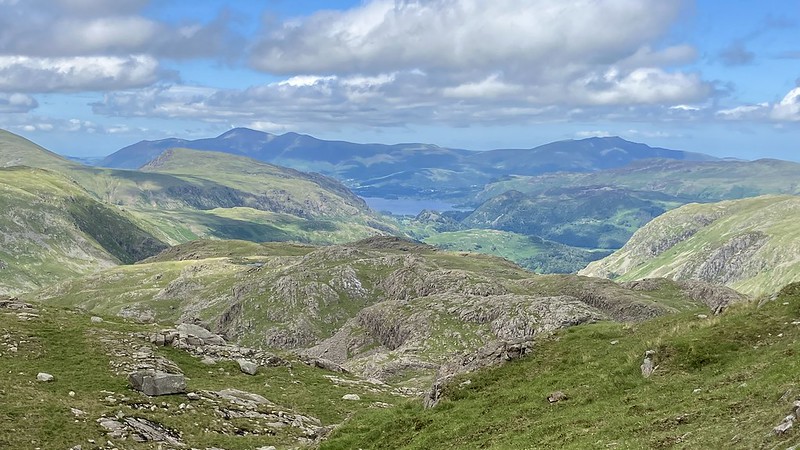
Eventually, I shouldered my pack and dropped down via The Band, joining the path past Styhead Tarn, then tracing the curve of the valley back to the hostel.