Just off the A1, somewhere many of us must have driven past countless times without ever really noticing, lies Langford Lowfields. This is a place that doesn’t immediately announce itself and yet sits quietly waiting beside one of the country’s great rivers.
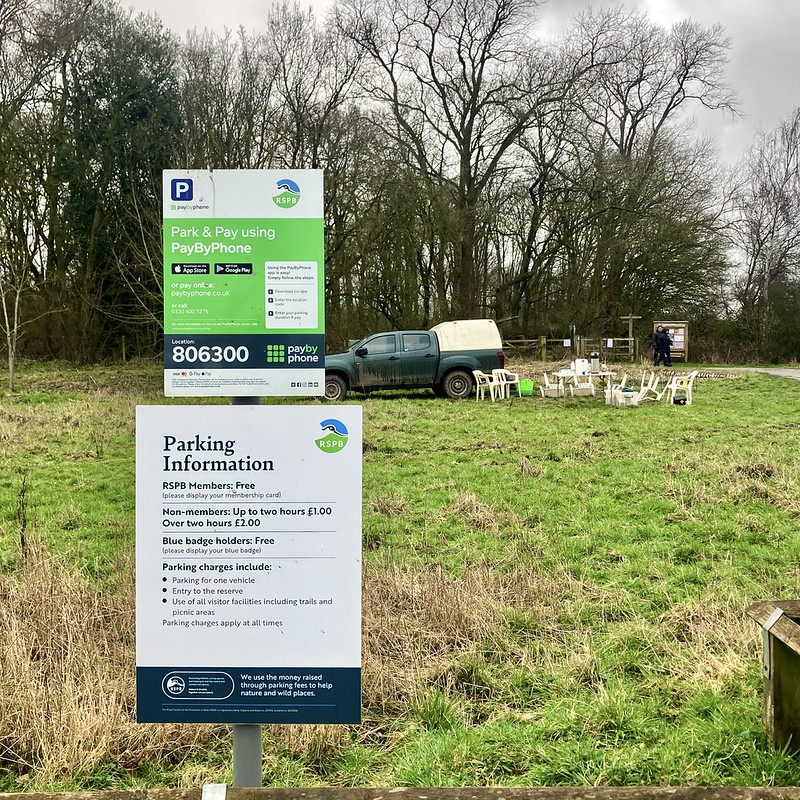
We arrived early to a simple car park, one that lacks the comforts of a cafe or visitor centre and instead offers something far more elemental: wetlands stretching out towards the tidal limit of the River Trent, where fresh water finally begins to overcome the brackish push from downstream.
Rain was already falling steadily as we stepped out, waterproofs pulled on and wellies tightened, before heading out through the gate, membership cards discreetly left face down on dashboards and almost immediately being rewarded with the sight of a heron standing watch in the rain.
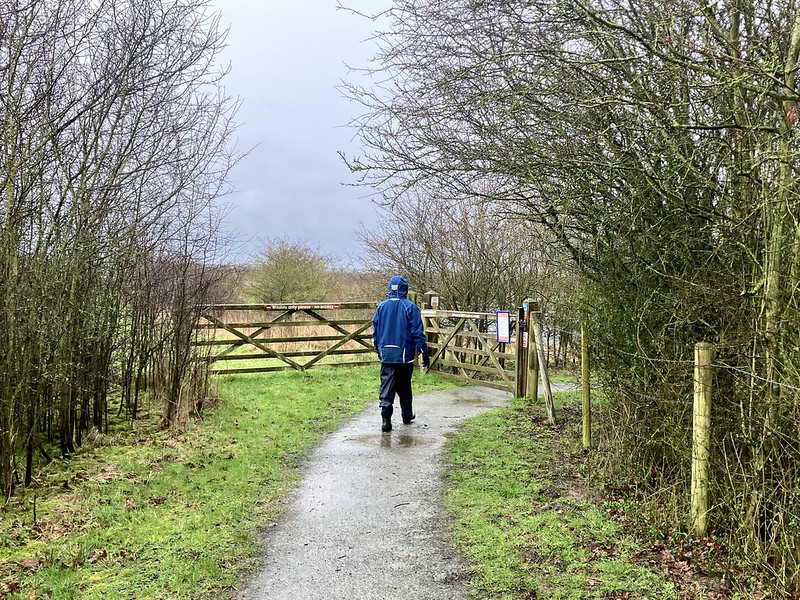
Entering the woodland, the trees seemed improbably alive with birdsong despite the weather and it was the sudden full voice of a song thrush, bursting into chorus right beside us, that provided our first proper moment of delight.
Flooded paths dictated our route although we were able to make our way to the raised ‘castle’ viewpoint, from where the reserve opened out before us in a way that felt both expansive and intimate at the same time.
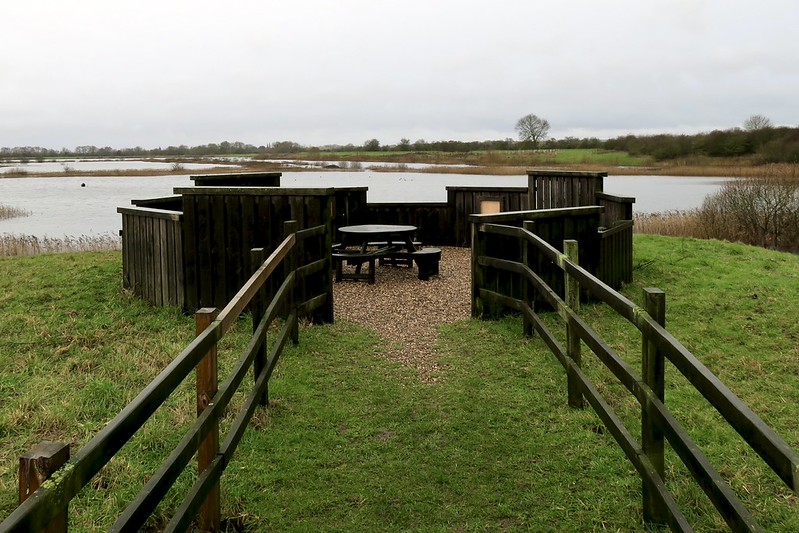
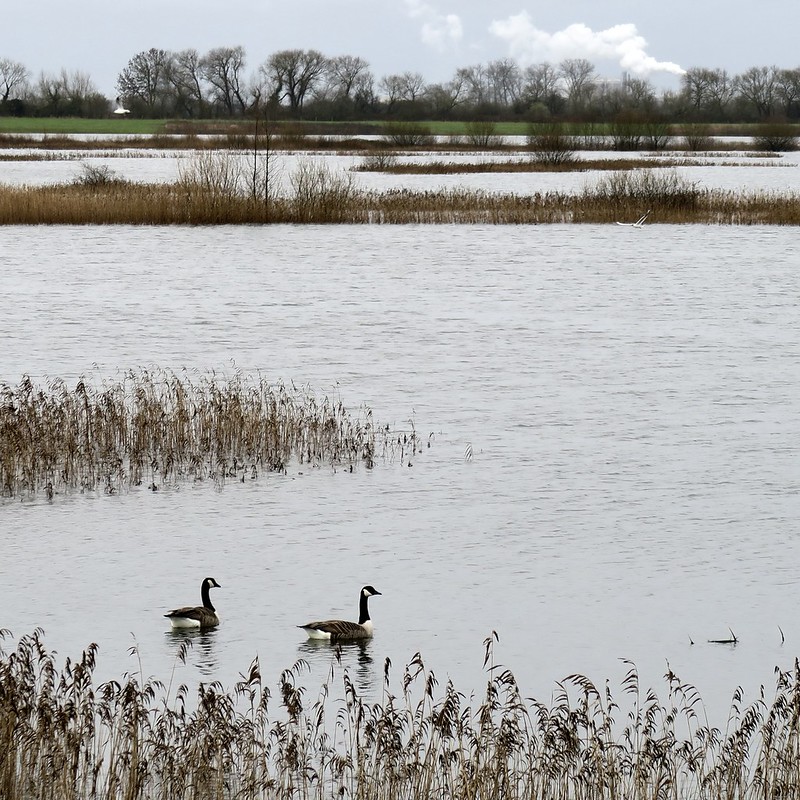
Two Canada Geese moved steadily across the water below, their progress somehow quietly majestic, while beyond them we picked out:
- Tufted Ducks
- Great Crested Grebes
- A Great White Egret
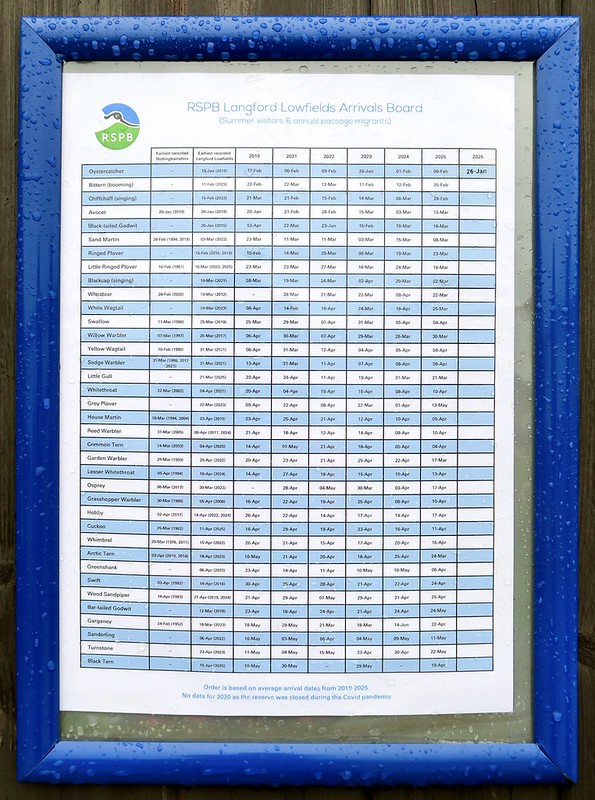
and most memorably, the deep and resonant boom of our first Bittern of the year.
Even the lone crow perched high in a tree seemed part of the wider atmosphere.
The floating bridge sat stranded in high water, no longer visibly reachable, which felt like an appropriate reminder that this is a landscape still shaped more by water than by people.
By the time we retraced our steps to meet the rest of the group, the rain had begun to ease and we continued out along the edge of the silt lagoons, their warning signs hinting at the underlying instability while also reassuringly suggesting that this is somewhere nature is being allowed to reclaim space.
Along the woodland margins and reedbeds we encountered:
- Greylag Goose
- Coot
- Blue Tit
- Robin
- Great Tit
while near the visitor hut the water held Mute Swan and more Great Crested Grebes.
Out on Phase 1, Black-headed Gulls drifted across the surface as a flock of Tufted Ducks lifted off in unison and a Cormorant chose the floating bridge as a temporary drying platform.
Following the Trent Valley Way towards Cromwell Weir, the landscape began to shift subtly from winter toward spring.
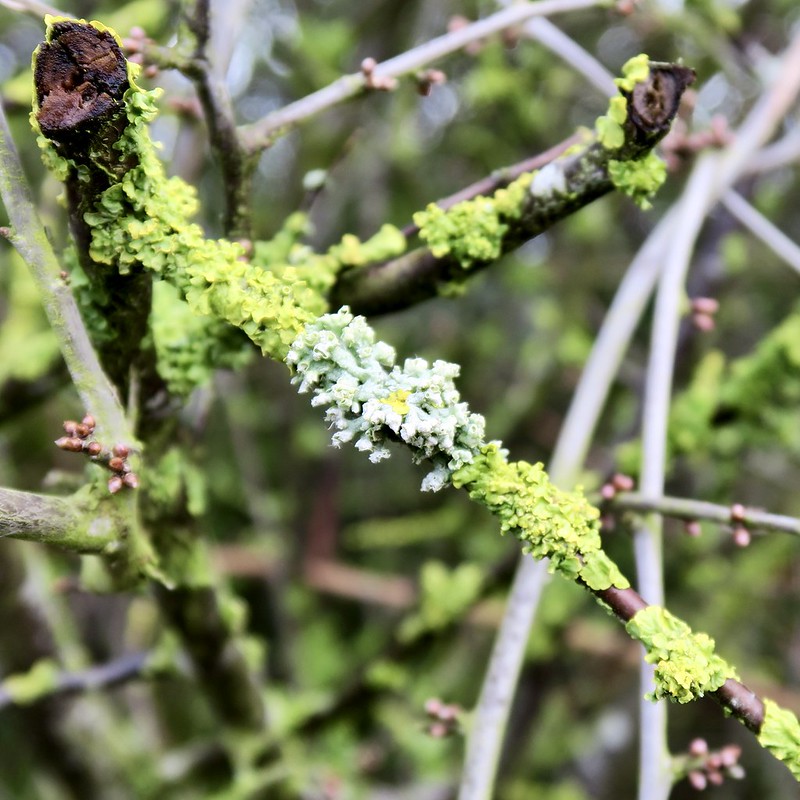
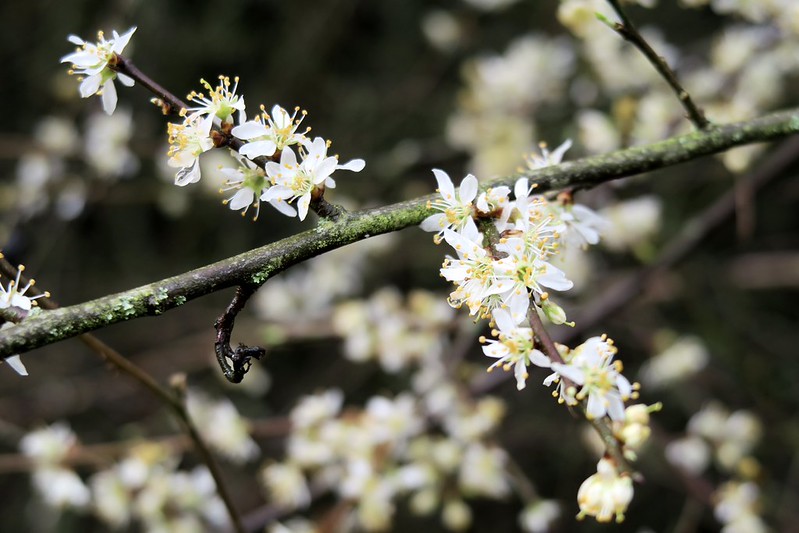
Chiffchaffs called from the woodland edge, blackthorn blossom had begun to open along the hedgerows, and bright lichens traced intricate patterns across the branches quiet indicators of both seasonal change and ecological balance.
A male Reed Bunting provided a particularly obliging encounter along the riverbank, hopping along the edge before disappearing back into cover, while nearby we noted:
- Oystercatcher
- Magpies
- A distant bird of prey being mobbed
and possibly an early martin skimming low across the water before rising again.
Here, close to the Outfall Sluice and Cromwell Weir, we stood at the point where the Trent finally sheds its estuarine character and becomes a fully inland river.
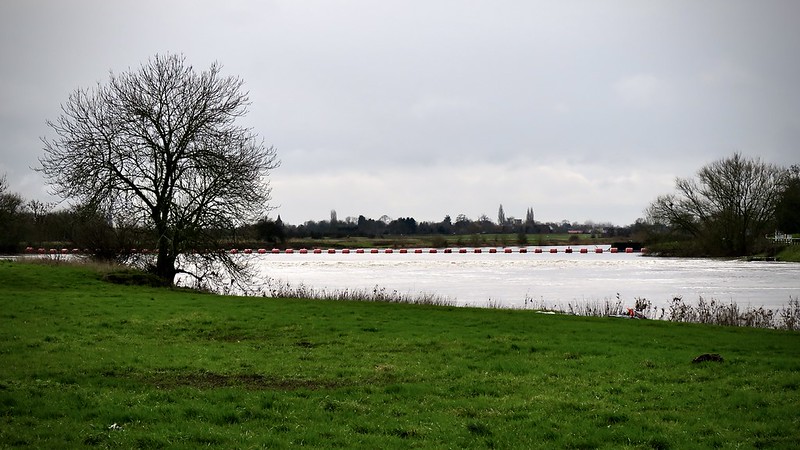
Louping along the perimeter trail, the water held:
- Pochard
- Tufted Duck
- Goldeneye (two pairs)
- Little Egret
and, through binoculars, we were able to watch a pair of Great Crested Grebes performing their elegant courtship dance before settling back into stillness.
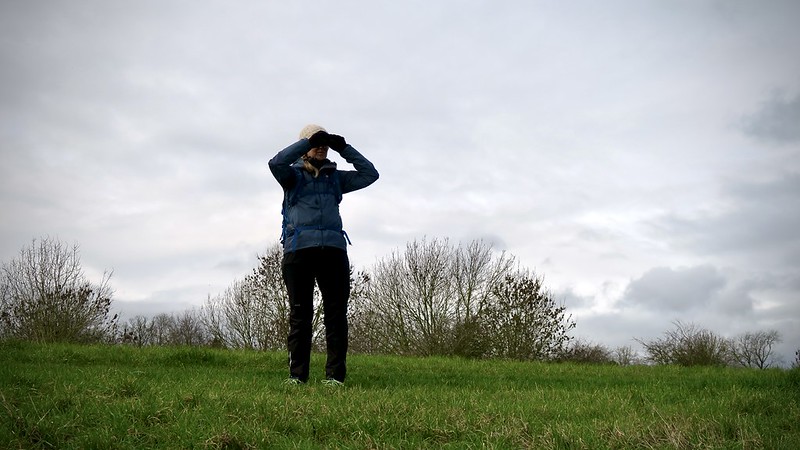
Later, Shelduck and Pintail appeared on the far side of the water and the unmistakable call of a Green Woodpecker drifted through the air before fading away.
The day wasn’t defined solely by feathers.
Blackthorn blossom marked the advancing season, lichens brightened the hedgerows and the presence of a carefully constructed bug hotel reminded us that conservation here extends beyond the headline species to the small and often overlooked.
Two robins singing back and forth above us provided a fitting accompaniment as we turned back along the shared-use cycle path beneath the power lines.
Langford Lowfields, once a sand and gravel quarry, is now a developing wetland shaped by a partnership between industry and conservation, where reedbeds continue to expand, water levels reshape the trails and habitats shift with time.
By the time we made our way back to the cars, just as the rain began to return, our flask were opened and after a quick snack while we looked back across a landscape that feels less finished than in progress, a place quietly demonstrating what can emerge when working landscapes are given space to evolve into something richer.