An AAC(UK) scrambling day across Kinder Scout
There are probably easier mornings to choose for taking a group scrambling on Kinder Scout. When I checked the mountain forecast the evening before, the message was fairly unequivocal: heavy rain through the morning, strong winds early on, low cloud over the higher moors and then, hopefully, a rapid improvement towards a mostly sunny afternoon. Our plan was a circular day from Edale, climbing Crowden Clough, crossing Kinder and eventually returning by Grindsbrook Clough. Crowden is probably my favourite Grade 1 scramble from the Edale valley, following the stream up through a steep sided rocky clough, with enough hands on movement to feel like a proper mountain route without becoming technical climbing. Grindsbrook provides a natural way back down afterwards. At least, that was the plan. As with most days in the mountains, the route was always going to depend on what we actually found when we got there and the abilities of the group.
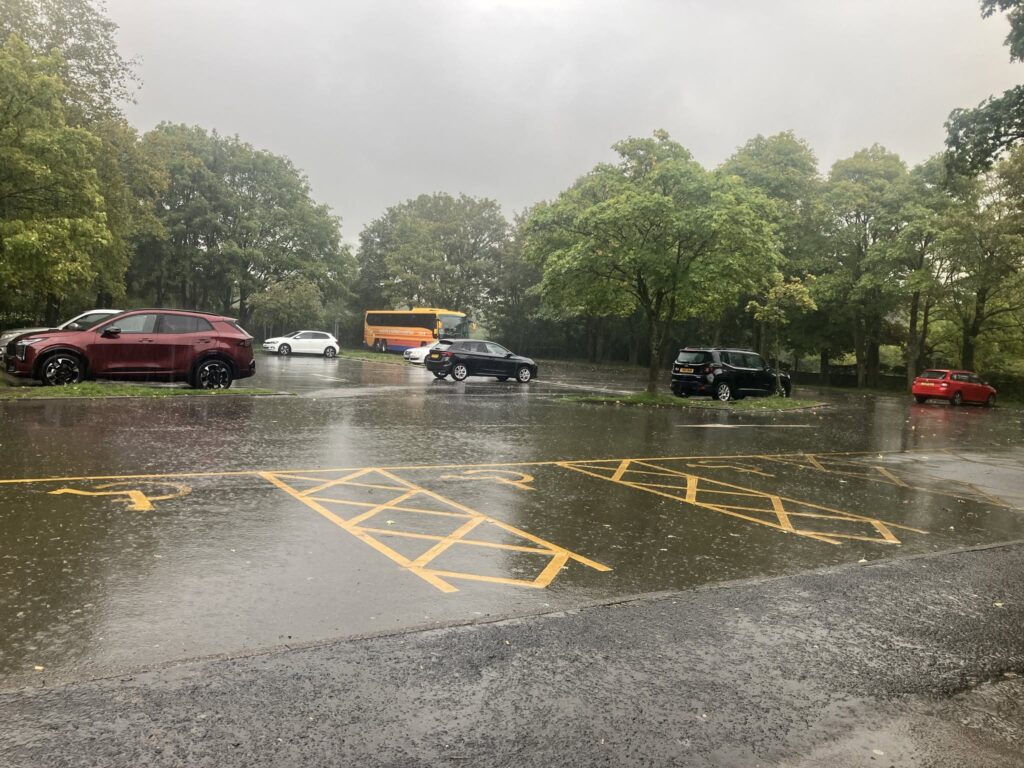
We arrived in Edale with some of the last of the morning’s heavy rain still hammering down. Eventually it eased, and our meeting point was the two benches opposite Edale Primary School, where we’d arranged to gather at 9:15. For once, the weather timed itself reasonably well; it stayed dry long enough for everyone to arrive, make introductions and sign the attendance sheet without reducing the paperwork to papier mâché. There were five participants plus me, all AAC members, giving us a nicely sized group of six. Experience varied considerably. Only two had done Crowden before and some hadn’t done a great deal of scrambling, which was something I’d keep in mind as the day developed. We set off through Edale and joined the Pennine Way, heading west towards Upper Booth, and for a few minutes it looked as though we might have escaped the worst of the rain. We hadn’t. A little way along the Pennine Way, the heavens opened again. Hoods went back up, people who didn’t have their waterproof trousers on quickly put them on and we found ourselves walking through another proper burst of heavy rain. It wasn’t entirely unexpected, but it did leave one fairly obvious question hanging over the morning: what was all this water doing to Crowden Clough?
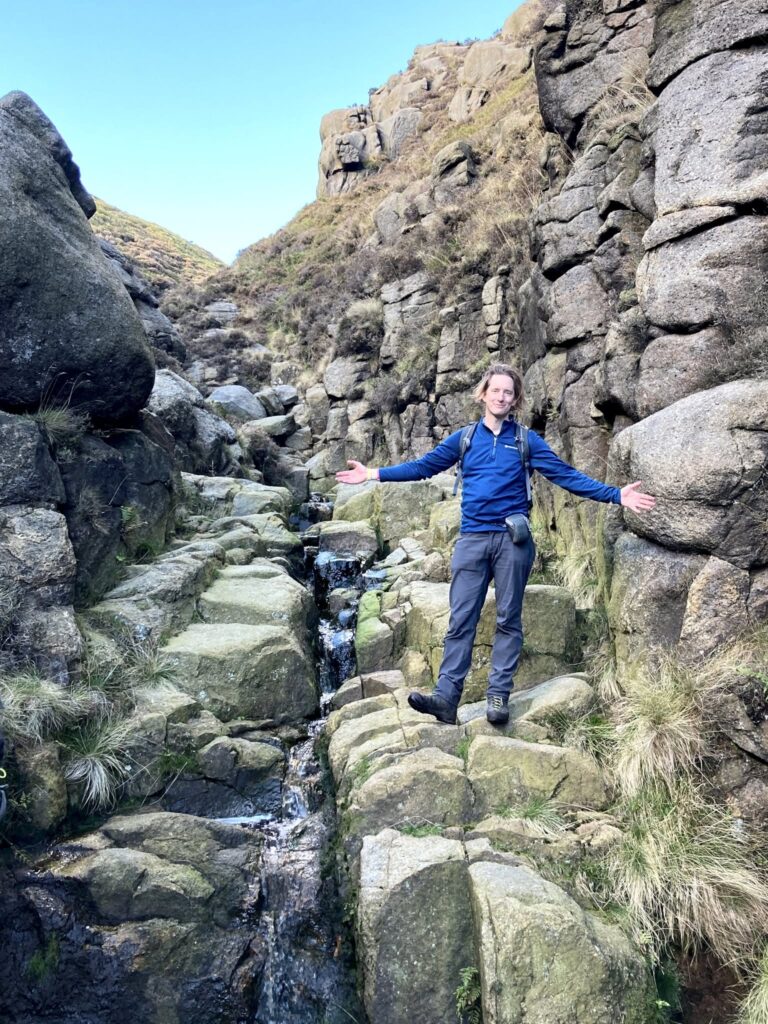
By the time we left the Pennine Way and began heading towards Crowden Brook, things were already changing. The rain eased again and there was a definite sense that the front was finally moving through. Before the day I’d made it clear that Crowden wasn’t something we were committed to doing regardless; if the water was too high, the rock excessively greasy or the weather simply unpleasant enough to make the route a poor choice, we’d change the plan. That’s how I tend to approach mountain days anyway. You can read forecasts, study maps and have contingencies in mind, but eventually you have to make the decision based on what’s actually in front of you. When we reached Crowden, conditions were considerably less dramatic than the morning forecast might have suggested. There was plenty of water running down the clough, but it wasn’t particularly deep. I’ve been up Crowden in significantly wetter conditions and, compared with some previous visits, the actual water level was quite acceptable. So there was never really a dramatic go/no-go moment, simply a continuation of the dynamic assessment I’d been making since leaving Edale, weighing water levels, condition of the rock, weather, how the group was moving and how everyone seemed to be feeling. Everything suggested that carrying on was reasonable.
We followed the stream upwards, inevitably getting a little damp in places, although nobody became particularly wet and the water itself never presented much difficulty. And then, as we began scrambling properly, something rather wonderful happened. The sun came out. Only a couple of hours earlier we’d been watching rain hammer down across Edale, and now we were climbing Crowden Clough in sunshine. It felt as though we’d walked into an entirely different day. We weren’t quite alone either; ahead of us was an instructor taking a small group of relatively novice scramblers up the route. We got talking and discovered the instructor was also an Austrian Alpine Club member. Remarkably, they were the only other people we encountered on the actual Crowden scramble, which made quite a contrast with what we’d find elsewhere on Kinder later in the day.
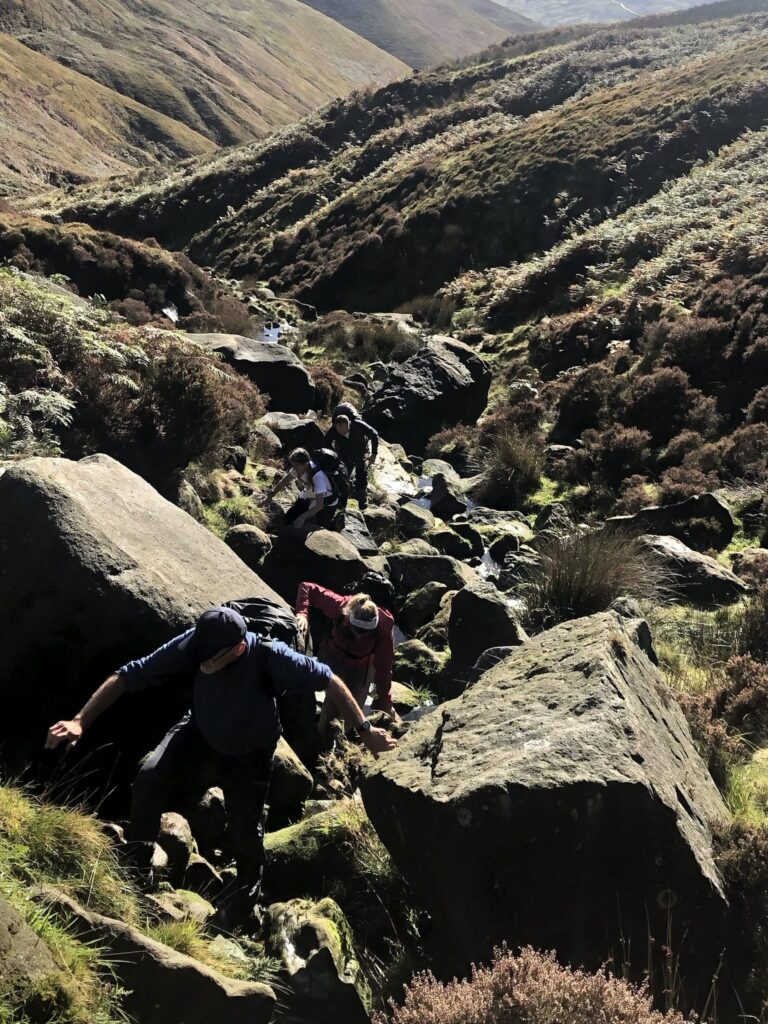
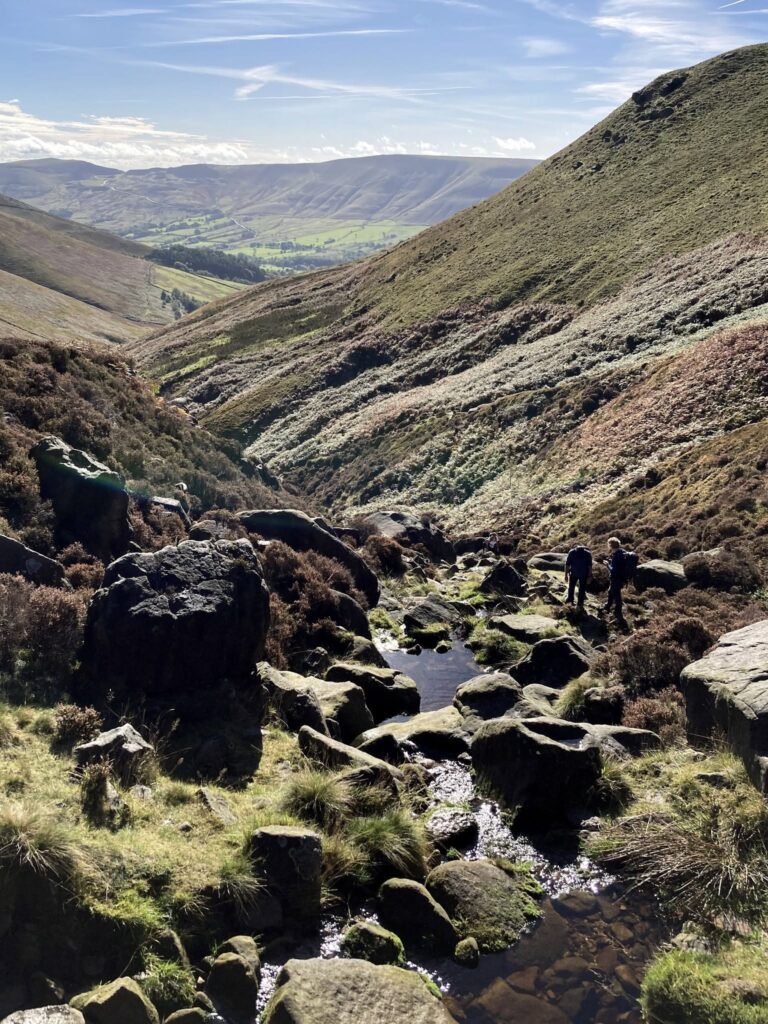
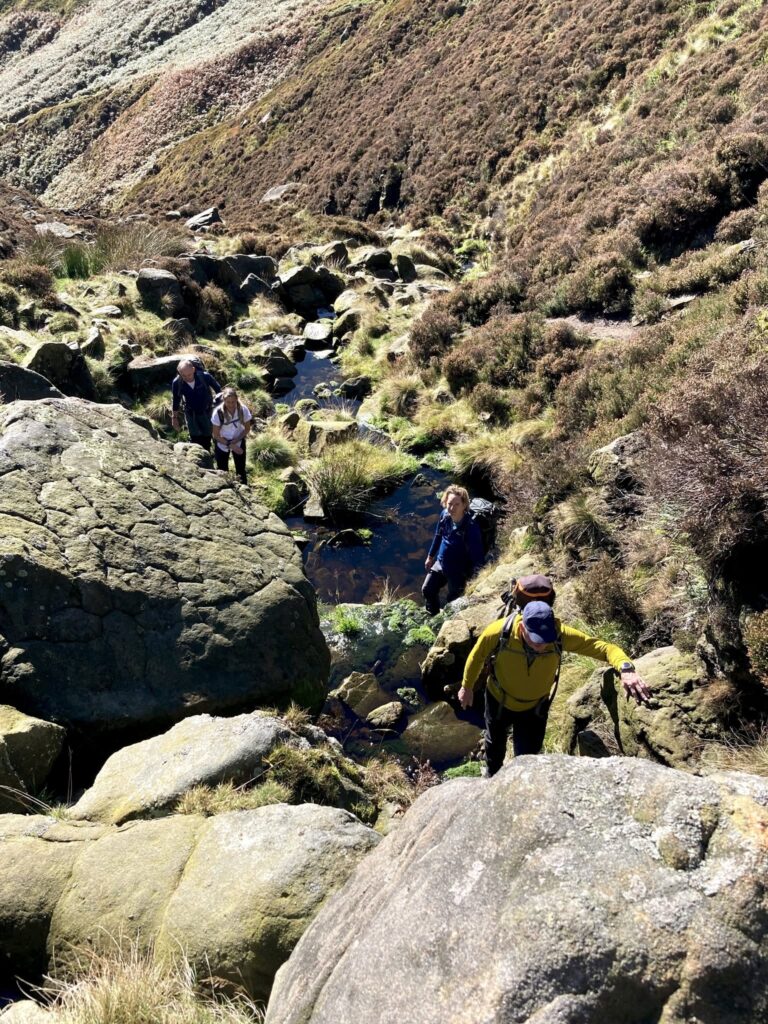
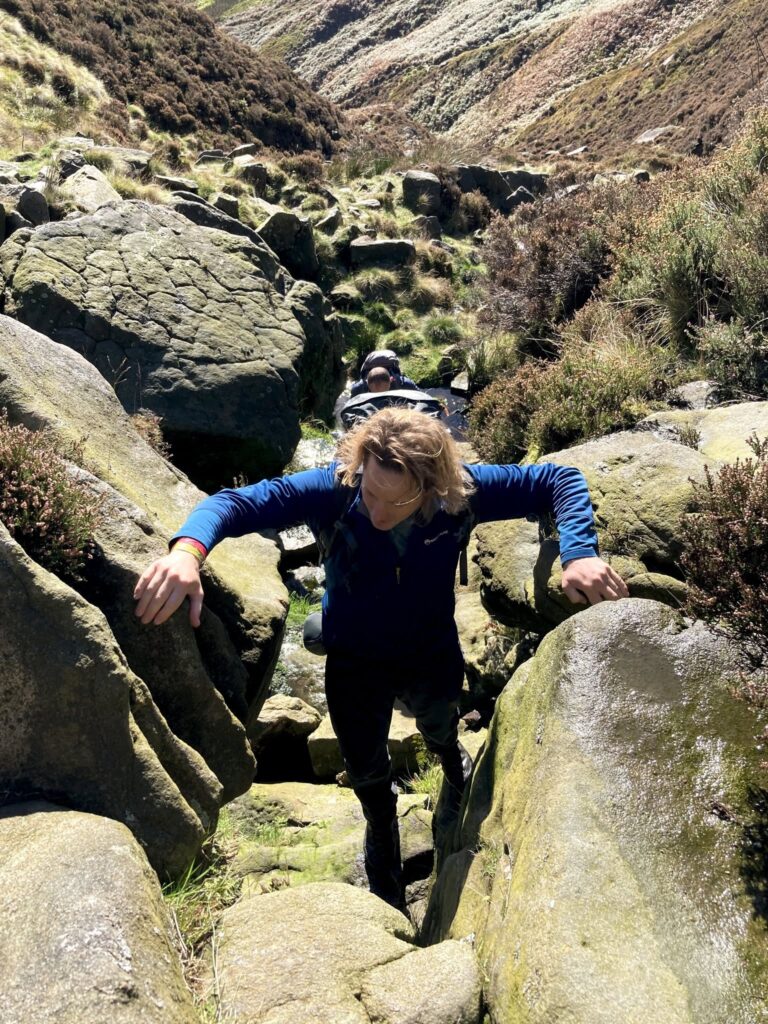
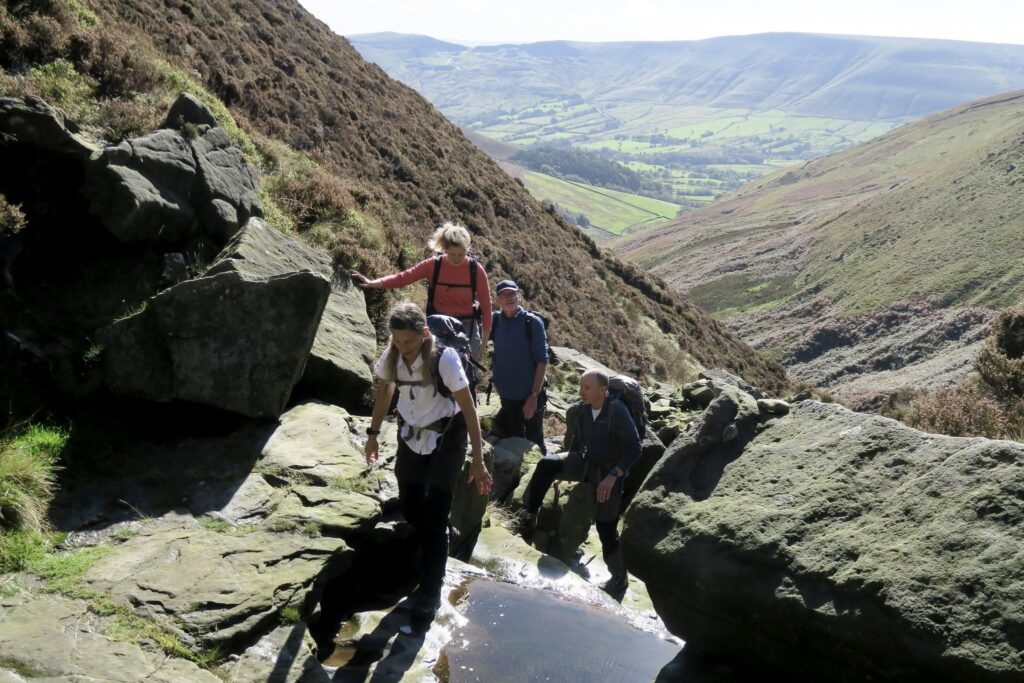
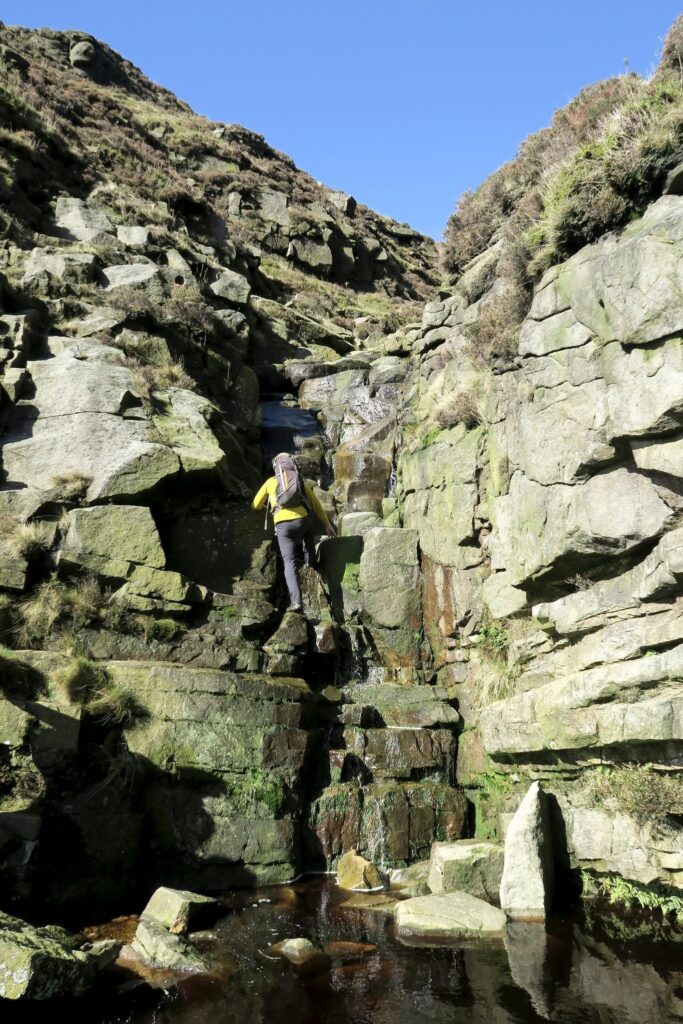
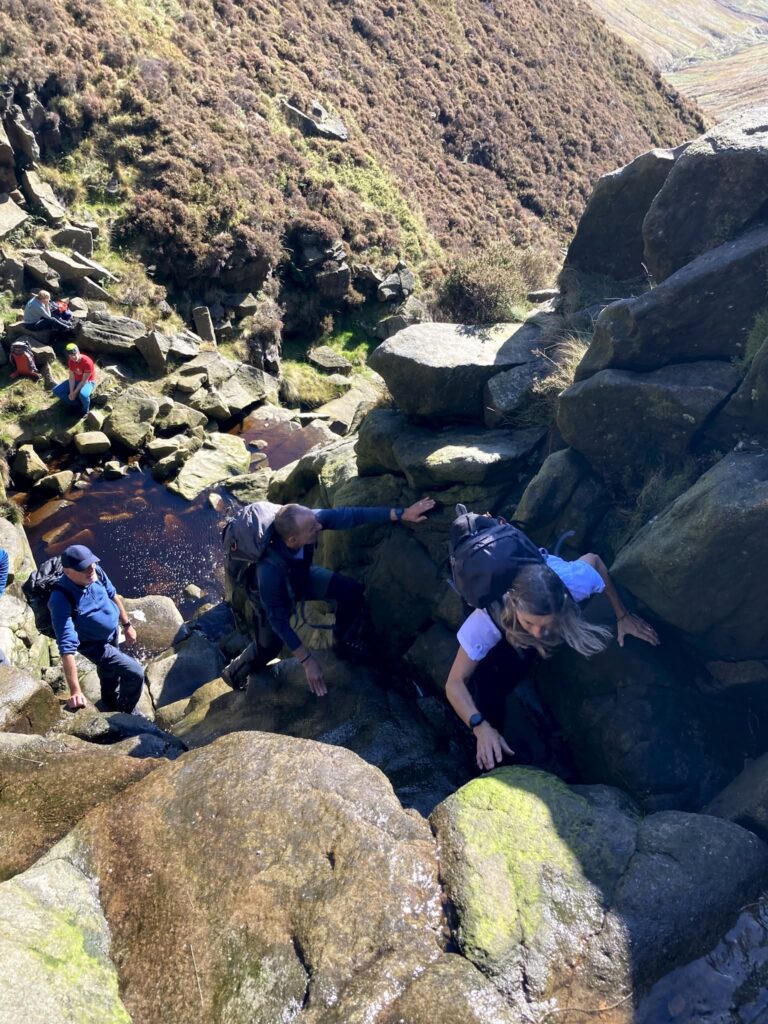
Most of the scrambling went very smoothly. Towards the top, where the clough narrows and the more obvious rocky step rises alongside the waterfall, everyone took the same line using the large positive holds. There were a couple of steps where a bit of hold spotting and encouragement helped, but nothing required anything more complicated than taking our time, showing people where useful holds were and occasionally offering a steadying hand. The rope stayed firmly in the bag. More importantly, everyone was moving well, and something else was happening too: the group was starting to gel. People weren’t simply talking to whoever they happened to know already. Everyone seemed to find time to walk with everyone else, conversations shifted naturally around the group and people were quietly encouraging one another on the rock. It didn’t feel like five individuals following a leader. It felt like a group.
We weren’t trying to race around Kinder. I tend to like breaks at natural transition points rather than stopping simply because a particular number of minutes has passed, and that worked well on this day. We stopped on the way up the valley, again close to the beginning of the scramble, and then once we’d topped out, with another pause to come before our additional scrambling excursion and another before we committed to the descent of Grindsbrook Clough. That gave the day a comfortable rhythm. Scrambling days aren’t only about getting through the rocky bits. Sometimes it’s worth stopping, eating something, allowing everyone to regroup and simply enjoying where you’ve got to, and by the time we reached the top of Crowden there was certainly plenty to enjoy.
We emerged onto the plateau, had a spot of lunch in the increasingly good weather and then began following the southern edge. The transformation was remarkable. The heavy rain and poor visibility of the morning had disappeared and we now had bright conditions across Kinder. What had begun as a day dominated by thoughts about forecasts, water levels and contingencies had become a genuinely lovely autumn mountain day. It was also noticeably busier. At one point we met a large sponsored walking group, perhaps thirty people, travelling in the opposite direction; I think they’d come up the walking route through Grindsbrook, were following the southern edge and would eventually descend by the Pennine Way. There was nothing wrong with sharing the hill, of course, but the size of their group made an interesting contrast with our six, and it made what we did next even better.
With the weather now looking excellent and the group moving well, we had time for an optional addition I’d had in the back of my mind. We left the southern edge and headed north across Kinder using the wonderfully named Seven Minute Crossing. Whether anyone has genuinely crossed it in seven minutes while carrying a rucksack over wet Kinder peat I don’t know, but it is a remarkably short journey between two very different sides of the plateau. Within a few minutes the busy Edale-facing edge disappears behind you, and ahead lies the head of Blackden Brook and the much quieter northern side of Kinder. The change in atmosphere seems much greater than the actual distance travelled. Earlier in the year I’d bivvied on Kinder and spent some time exploring this area, and on that trip I’d reccied an alternative scrambling line at the top of Blackden Brook and filed it away mentally as something that might work well on a future group day. Now we had good weather, enough time and a group that was clearly enjoying itself. So we went exploring.
From the plateau we first descended the normal upper scrambling section of Blackden Brook, which immediately had a different feel from Crowden. We descended until reaching the point where the alternative scrambling line begins when approached from below, and then we turned around. Rather than continuing down Blackden Brook, we scrambled back towards the plateau using the alternative line I’d reccied on my bivvy trip. The rocky blocks seemed larger and less rounded, and there were far fewer people around. Despite being only a short distance across Kinder, it felt considerably more remote than the southern edge we’d just left. And it was a smash hit. The scrambling had a different character from Crowden, the surroundings were quiet and it gave everyone something unexpected in the middle of the day. There was something particularly satisfying for me about that, because getting to know a mountain isn’t simply about completing individual routes. Eventually you start linking bits of knowledge together: a trod discovered on one trip, an alternative scrambling line from another, a crossing of the plateau you’d almost forgotten about. Gradually you stop seeing individual routes and start seeing possibilities, and this was one of those occasions when a bit of knowledge picked up on an earlier trip turned into something the whole group could enjoy.
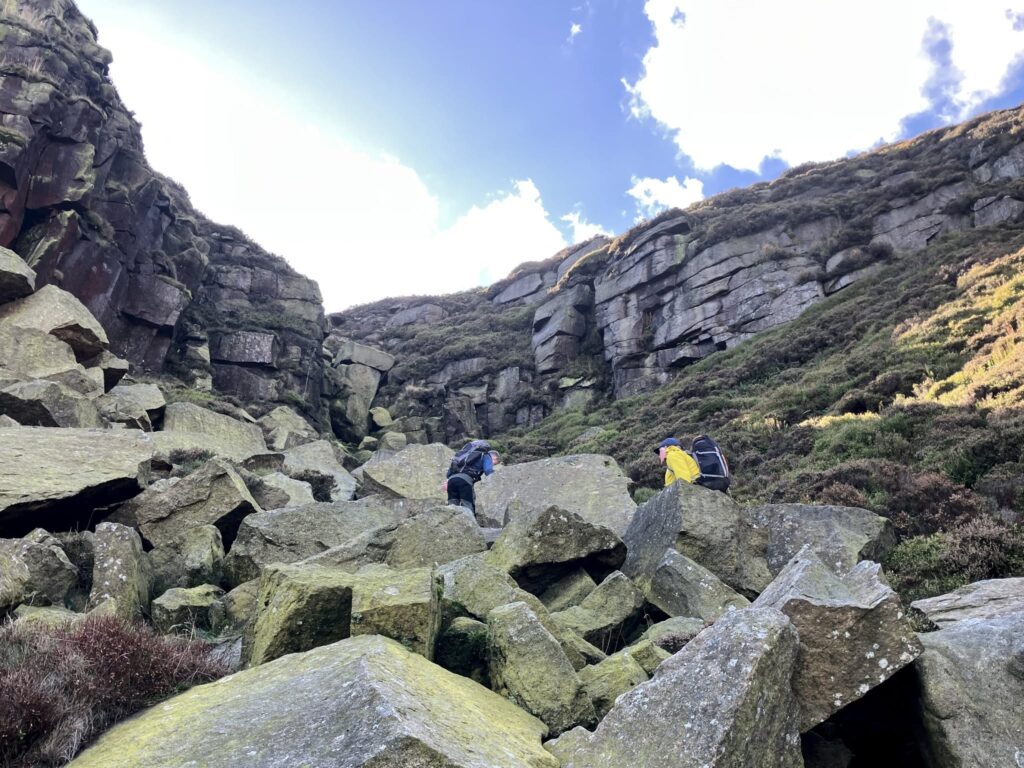
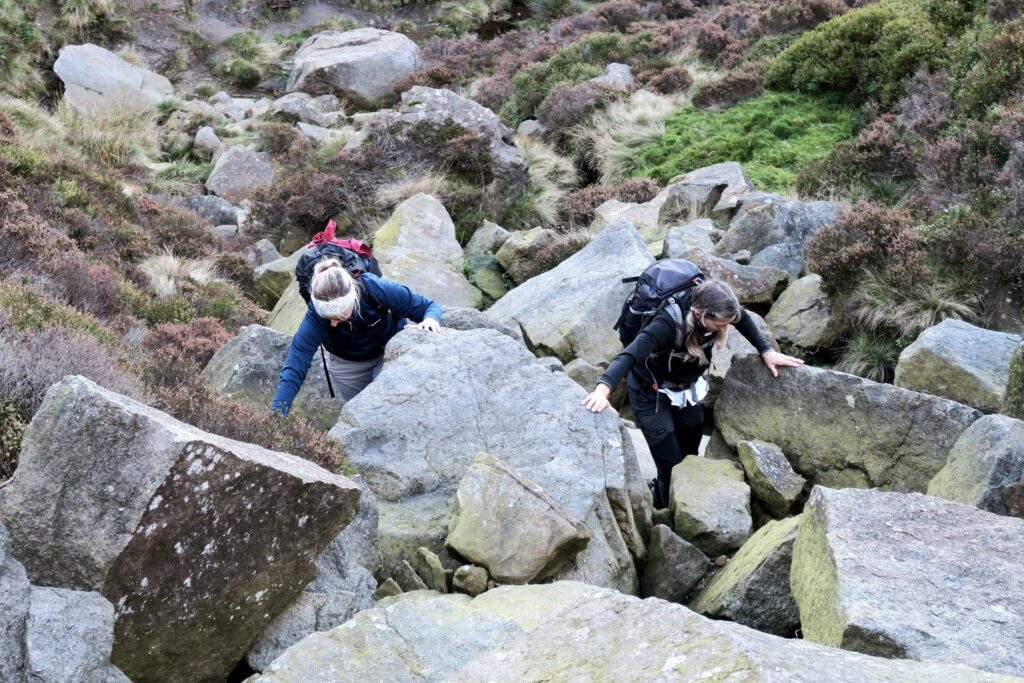
We climbed back onto Kinder and began crossing towards the southern side again, and somewhere during that second Seven Minute Crossing I had one of those moments that makes organising days like this worthwhile. Everyone was chatting. The weather was glorious. We’d climbed Crowden, escaped the crowds on the southern edge, crossed to the quieter side of Kinder and found an unexpected extra bit of scrambling in Blackden Brook. There was simply a buzz about the group. I remember looking around and thinking: Yes, this has worked. Not because we’d ticked off a particular objective, and not because everyone had negotiated a particular rock step. Simply because everyone looked as though they were genuinely having a good time. That feeling is difficult to manufacture, and when it happens, you know.
Of course, we still had to get down, and Grindsbrook Clough was waiting for us. By now we’d been on the hill for several hours and there was a little tiredness beginning to appear in everyone’s legs, although by that point we were also functioning increasingly well together. Grindsbrook felt different again. Crowden had been our ascent in improving weather, Blackden had been our little excursion into quieter country, and Grindsbrook was the final descent after a full day on the mountain. Down-scrambling is always slightly different from climbing upwards; holds that seem completely obvious when they’re in front of your face can be much less apparent when you’re trying to locate them below your boots. Most of the descent passed without difficulty. The upper wall was a little greasy and a couple of people appreciated some support and help identifying footholds, but everyone handled it really well. By then there was very little sense of people moving independently; we were waiting for one another, giving each other space, pointing out useful holds and naturally looking after whoever happened to be moving through the next section. Eventually the steeper scrambling gave way to the broader lower reaches of Grindsbrook and the unmistakable sense that Edale was getting closer. We were tired, but it was the good sort of tired.
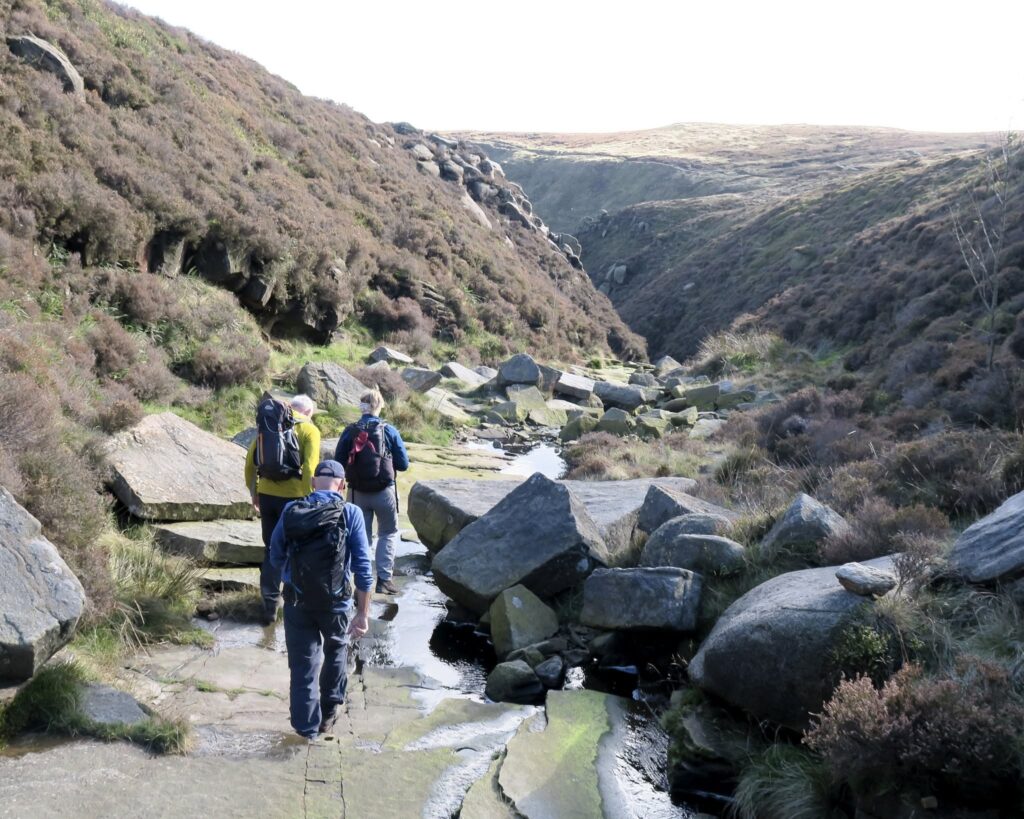
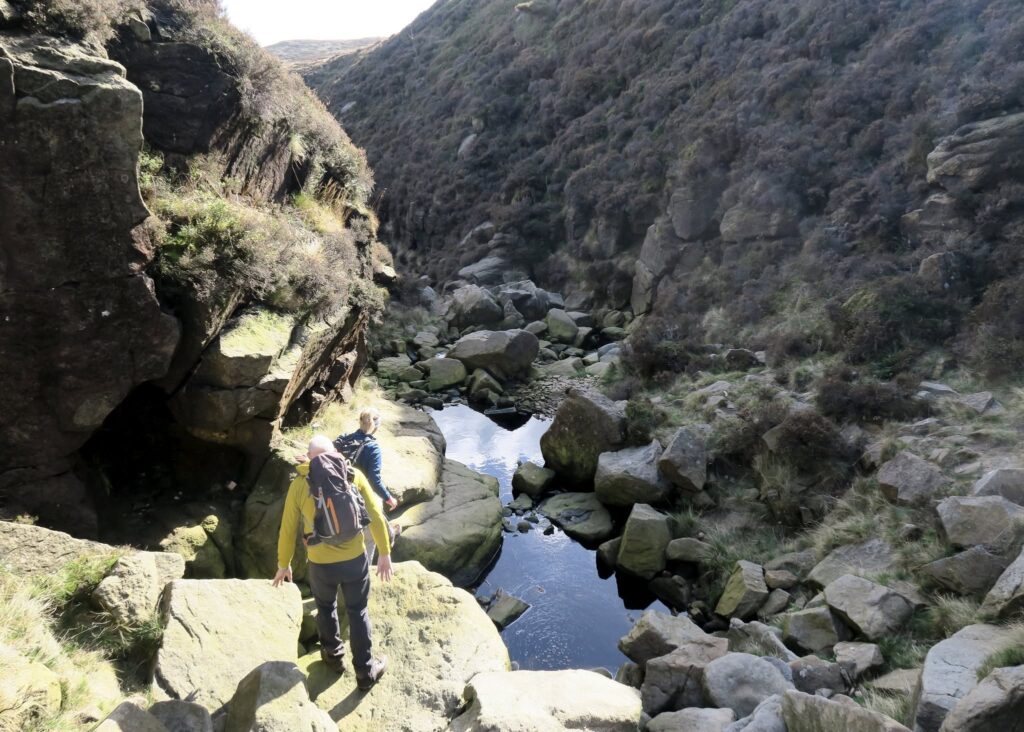
We arrived back at around 5pm, with time and height gain pretty much what I’d expected, although we’d travelled a little farther than originally planned thanks to our Blackden Brook excursion. After a full day in the hills, the obvious next thought was coffee and cake. Unfortunately, Coopers was closed for a private function and the other café was just closing as we arrived. We decided this was probably the universe telling us that coffee wasn’t going to happen, so we said our goodbyes and headed off in our separate cars.
Later that evening, something popped up that made me think about the day slightly differently. That day nine years earlier I’d been in Snowdonia with my son. We’d wild camped high on the side of a mountain in driving rain, spent the evening sheltering in the tent watching iPlayer, and then got up the following morning and went scrambling together on Daear Ddu Ridge in weather that wasn’t substantially better.
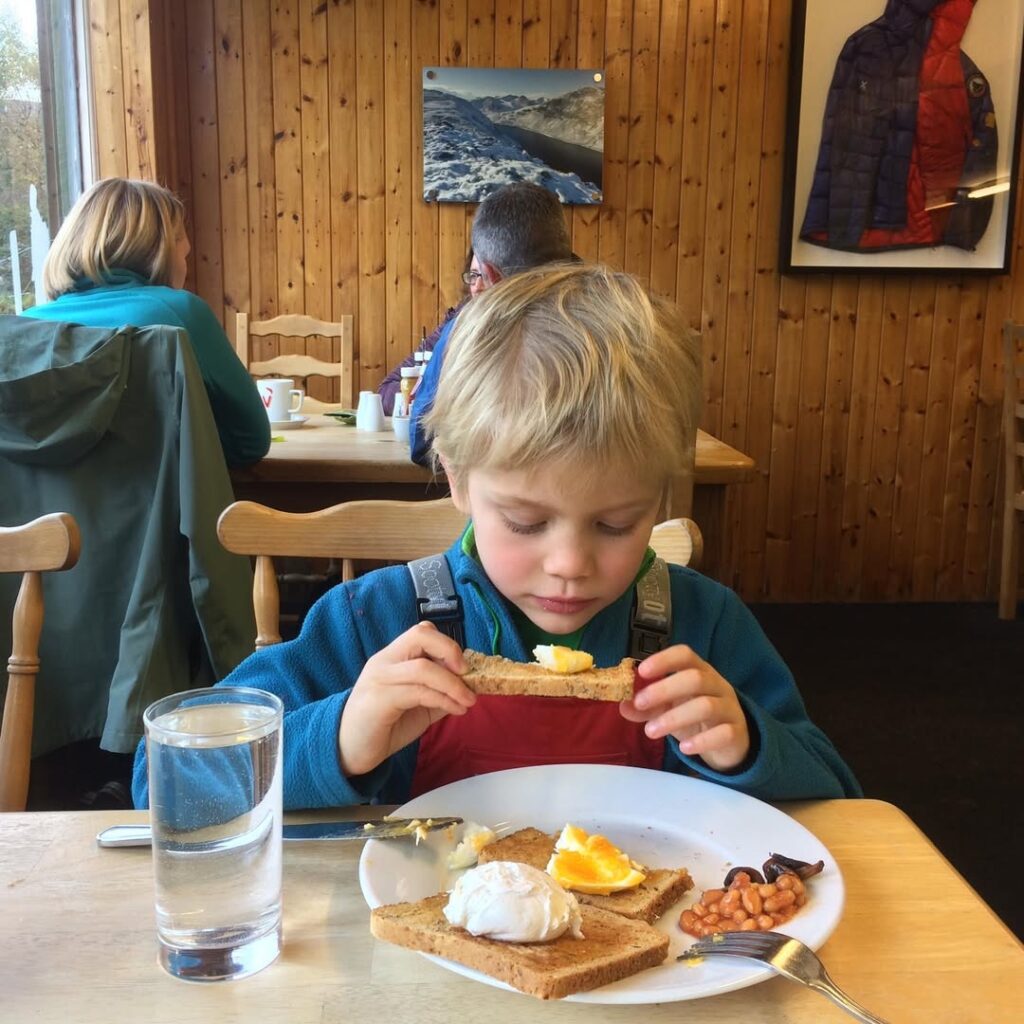
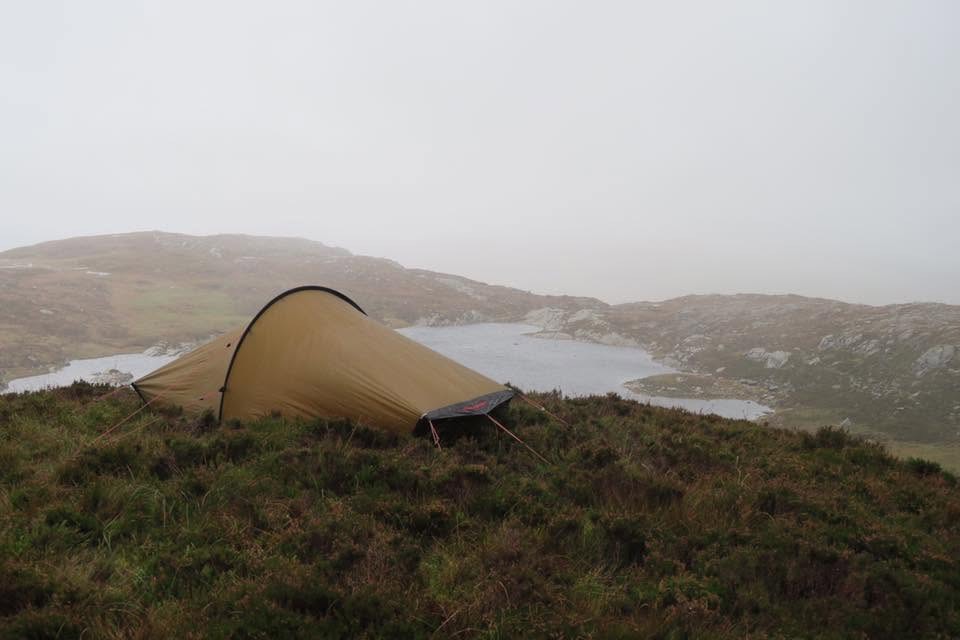
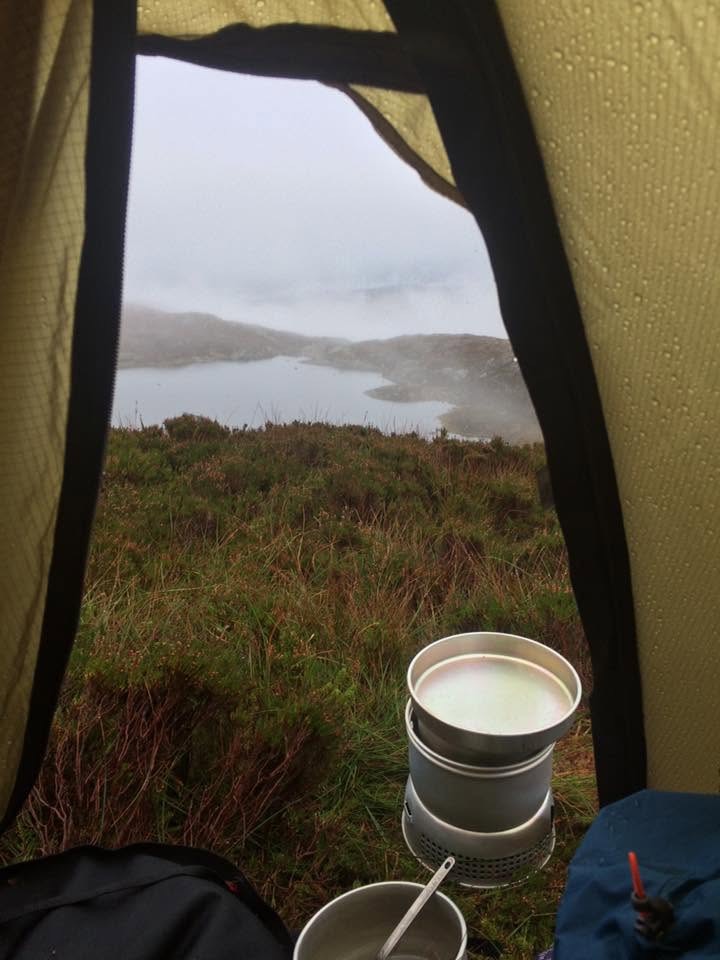
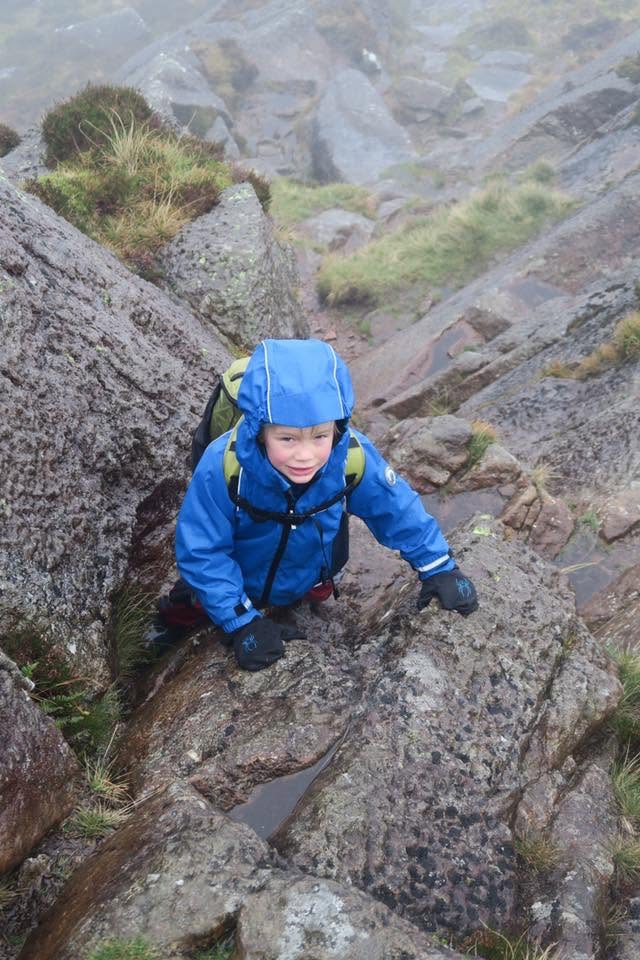
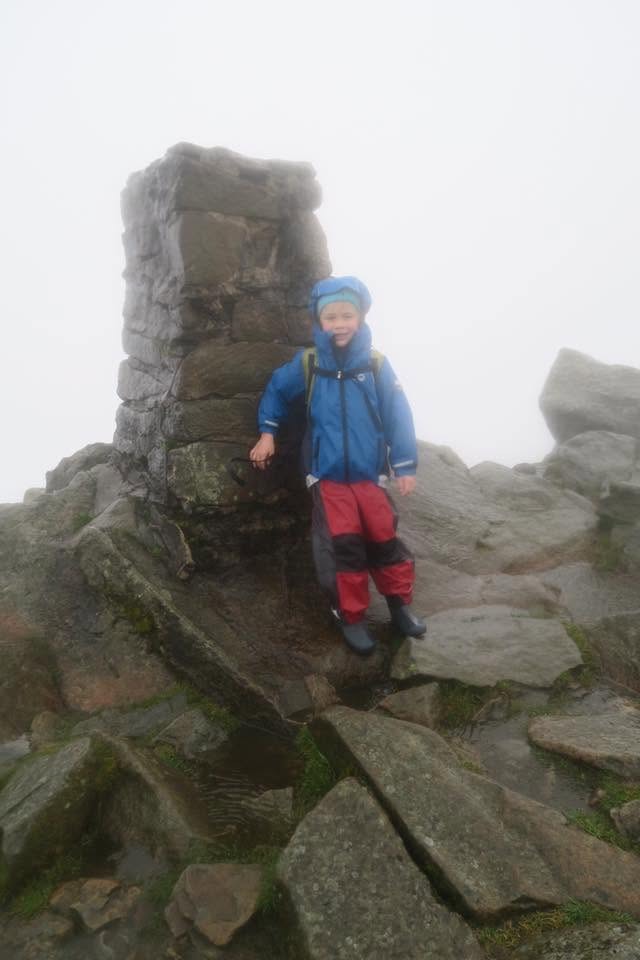
It made me smile, because perhaps days like this AAC trip aren’t really something new for me. Unless I’m completely on my own, I’ve spent a lot of my time in the mountains with some degree of responsibility for somebody else: sometimes my children, sometimes friends or family, and more and more often these days a group of fellow Austrian Alpine Club members. Over the years I’ve accumulated a fair amount of mountain experience, not simply scrambling or navigation, but the quieter things that come from spending years outdoors: moving around a group on rocky ground, noticing when somebody could use a steadying hand, recognising when people are tiring, watching the weather, judging water levels and knowing that the route you planned at home doesn’t necessarily have to be the day you actually have. But I don’t think I’ve ever been particularly interested in keeping that experience to myself. For me, one of the best things about being in the mountains has always been sharing them with other people. The next AAC scrambling day is already finding its way into the calendar for spring and I suspect that tells me everything I need to know.