There is always a temptation with a nature challenge to think that every day needs to produce something extraordinary.
A rare bird. A dramatic landscape. A long walk across the hills. Perhaps an encounter worthy of a wildlife documentary.
But that was not really why I decided to take part in 30 Days Wild.
For me, the challenge was about deliberately making space for nature in an otherwise busy month. It was an invitation to step away from work, get outside either on my own or with my family, return to familiar places and pay more attention to what was already happening around me.
Some days did bring memorable wildlife encounters and these were often nothing to do with what I was looking for. On others, the wild moment was simply a lunchtime walk, a different route home or a few minutes standing beside a stream.
Taken together, those thirty days became less a collection of isolated activities and more a lesson in noticing.
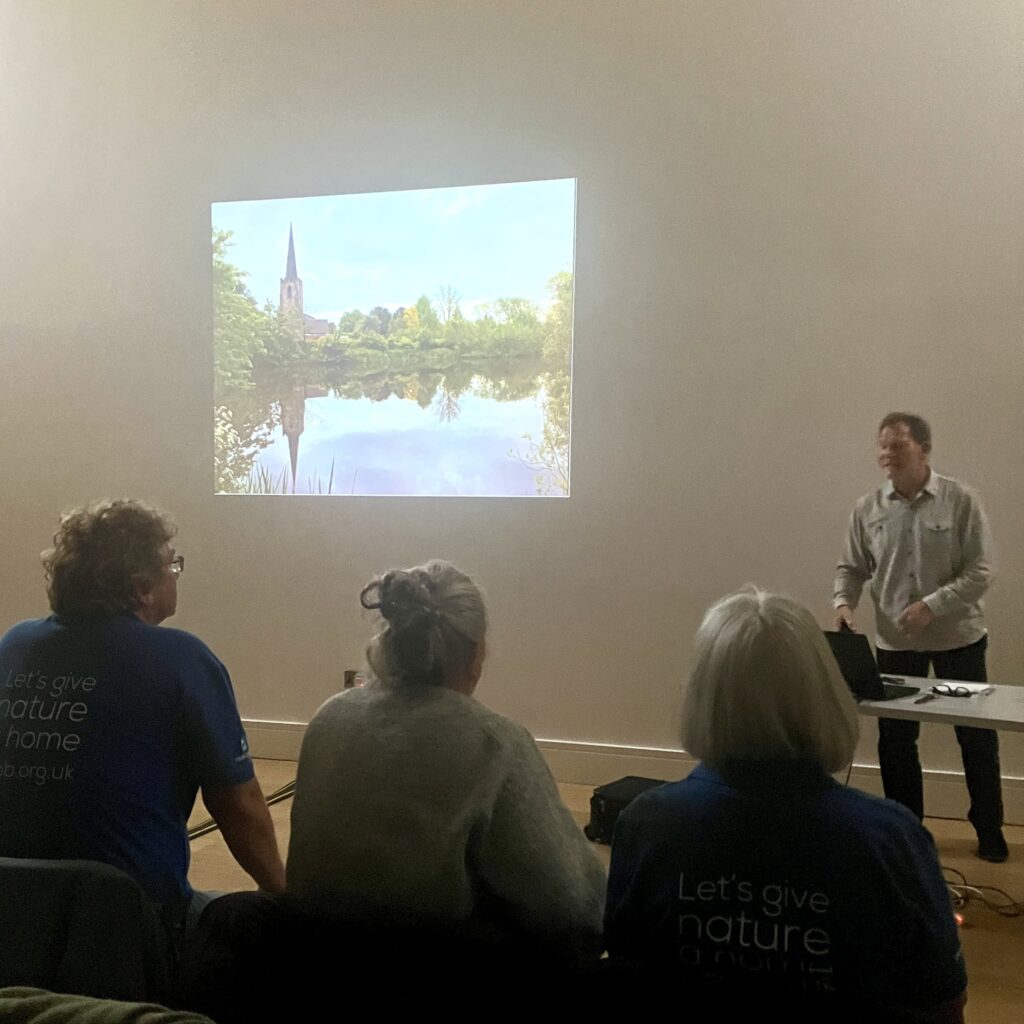
After weeks of sunshine, June began in more traditional Peak District fashion: increasingly strong winds, persistent rain and low cloud settling over the hills.
So a fitting start to the month was a trip to our local RSPB group talk about the history and wildlife of Attenborough Nature Reserve.
The talk brought together birds, plants, insects and the human history of the landscape. It was a reminder that nature reserves do not simply happen. They are created, protected and managed over time by people who notice what is there and value what it could become.
That idea stayed with me throughout the month. Wild places are not always remote or untouched. They can be former gravel workings, city rivers, canal edges, old industrial structures, local parks and small patches of woodland. Their stories are often inseparable from our own.
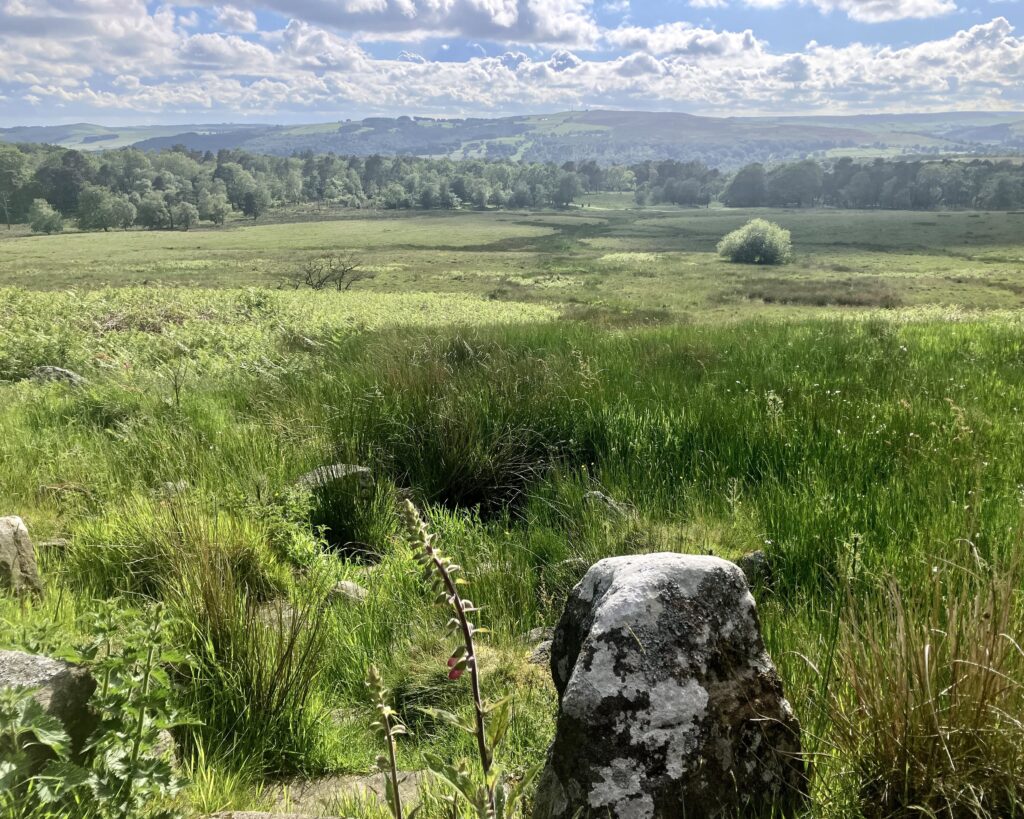
The following evening I returned to Longshaw, somewhere I used to visit regularly with the children after school. We would walk along the top track, stop at Little John’s Well, make our way down towards the pond and return through the rhododendrons for a picnic tea near the visitor centre.
This time I was rebuilding my running fitness after injury, so the outing was more of a gentle plod than a proper run. But being back on those familiar paths brought memories rushing back.
It was an early reminder that our relationship with a place is shaped not only by what we see there but also by the people we have shared it with and the versions of ourselves who have passed through it before.
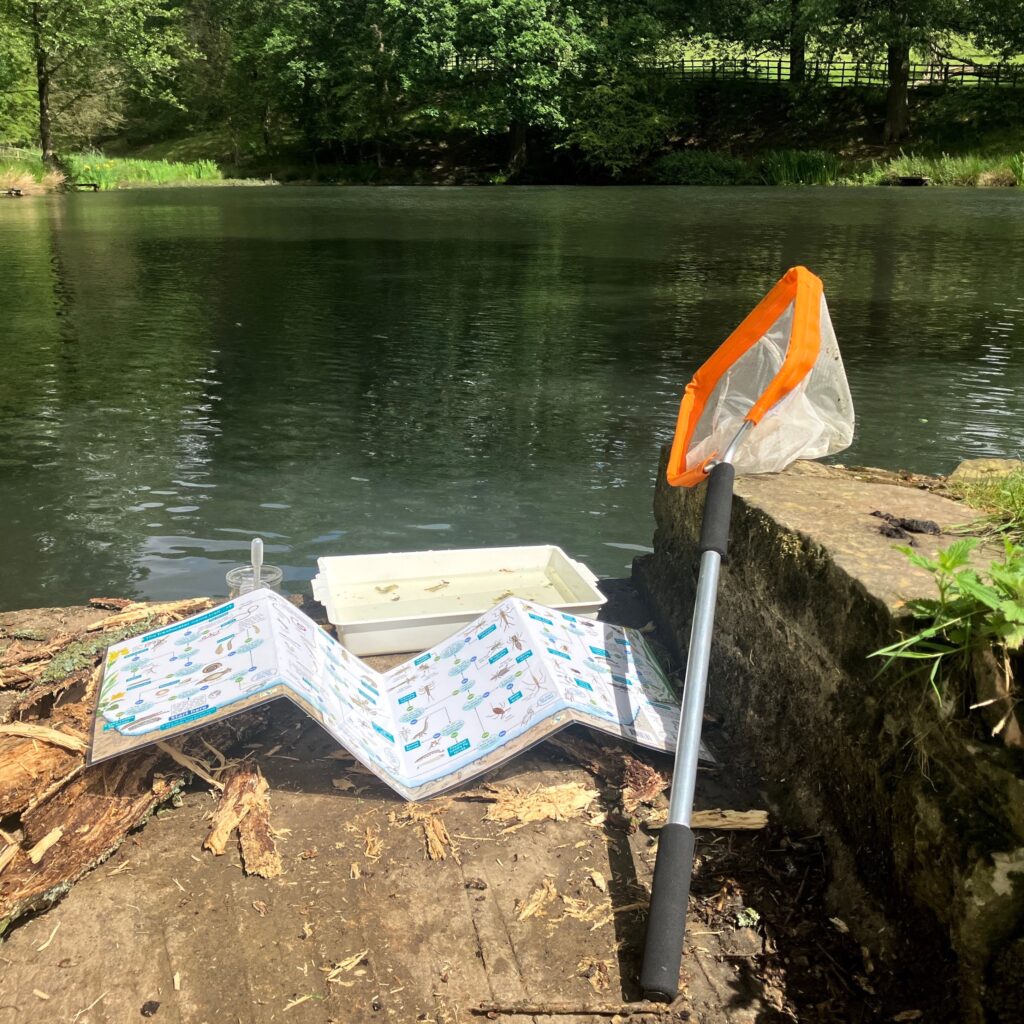
Next was a trip to the Row Ponds at Hardwick Hall with a pond net, tray and identification guide.
Then a handful of sweeps through the marginal vegetation revealed an entire hidden world.
There were bright red water mites, a fast moving pond skater nymph and damselfly nymphs, identified by patiently working through the questions in the field chart: Did it have legs? Jointed legs? How many tails? How long were they compared with its body?
That process of identification became a recurring feature of the month. Seeing something was only the beginning. The real pleasure often came from slowing down, looking at the details and gradually working out what was in front of me.
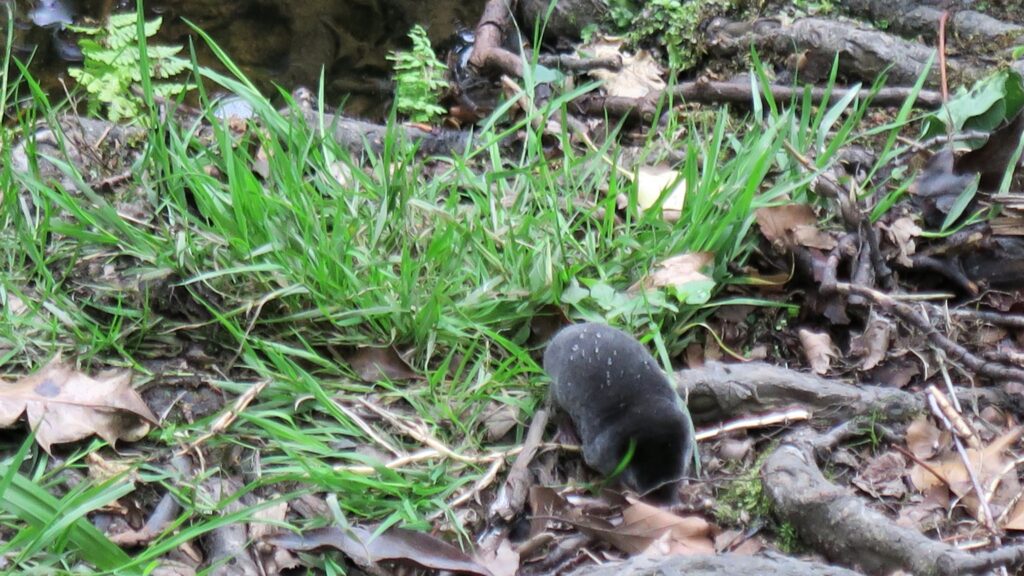
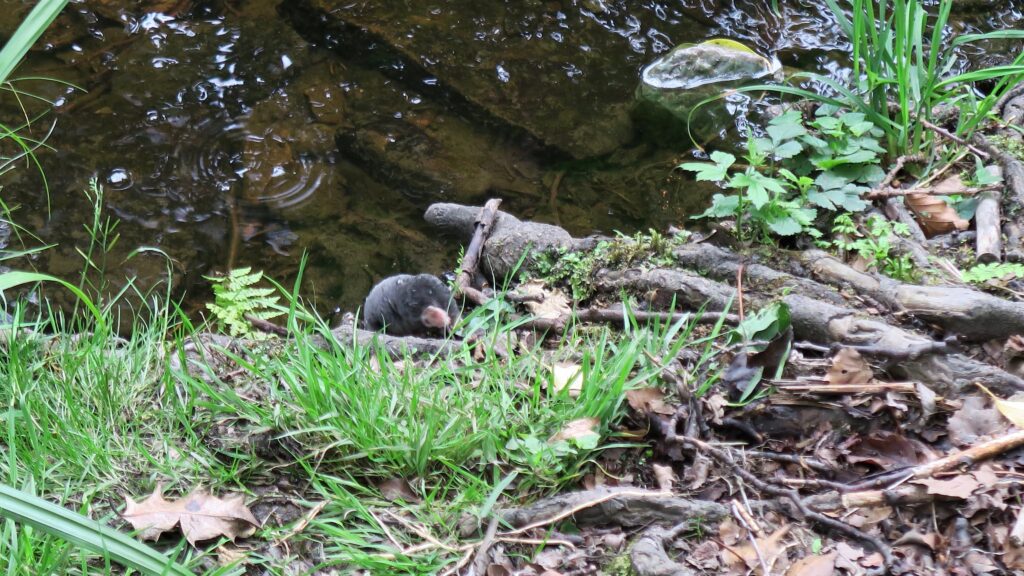
A few days later, my son and I were carrying out a British Trust for Ornithology survey beside a local stream. I was searching among a holly bush for a goldcrest that the Merlin app had detected when he called me over.
Just a few feet away, a mole was busily rummaging through the leaf litter.
Not a molehill or a brief glimpse before it disappeared underground. An actual mole, pushing its pointed snout through leaves and roots, apparently unconcerned by us.
As we watched, it moved closer to the stream and then slipped into the water.
“Can moles swim?” my son asked.
Neither of us was entirely sure.
For a few moments we watched anxiously before it climbed back onto the bank and continued foraging as though taking a quick swim was the most natural thing in the world.
We never found the goldcrest.
But that is often how nature works. You head out looking for one thing and come home talking about something completely different. The unexpected encounters are frequently the ones that stay with you longest.
Not every wild moment required heading into the countryside.
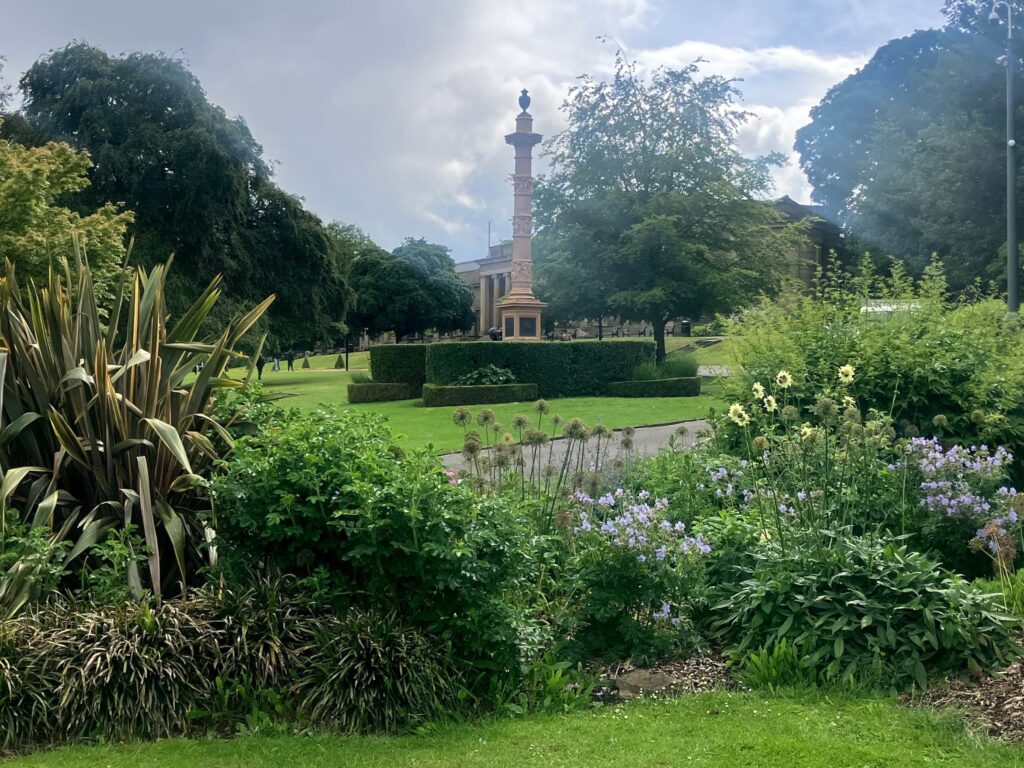
One lunchtime I stepped away from my desk and walked through Weston Park. There was no dramatic wildlife encounter: just trees, flower beds, fresh air and a little space between one part of the working day and the next.
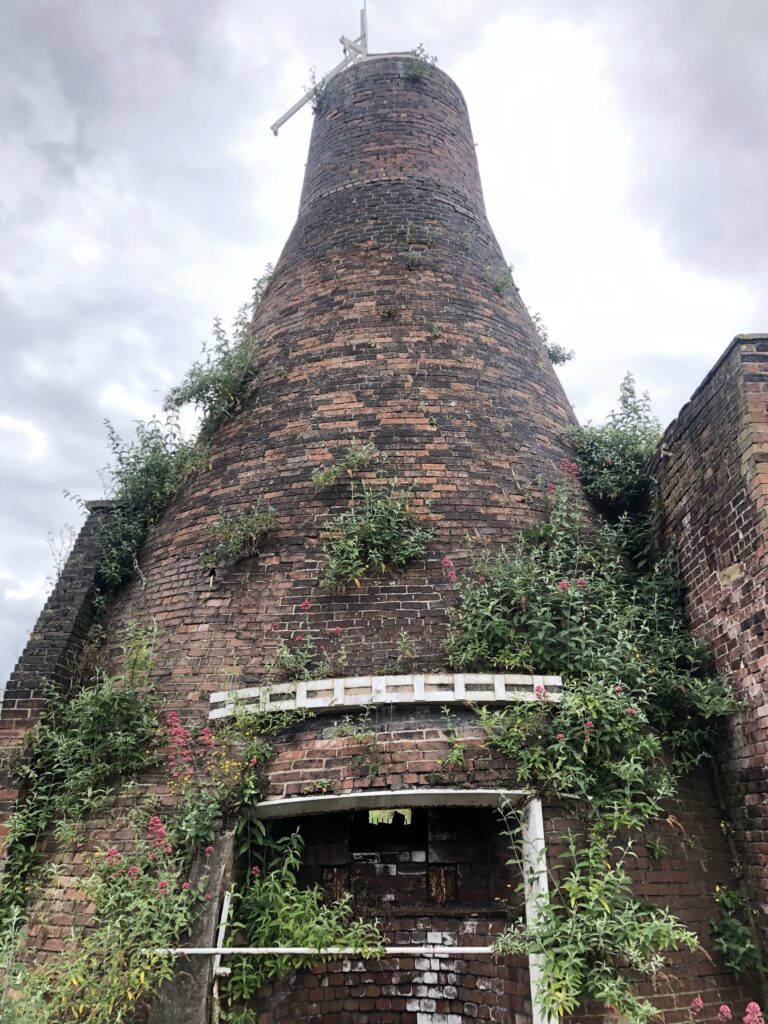
On another day, we walked from Sheffield Station past the canal basin and followed the River Don towards Kelham Island. At the old Cementation Furnace on Doncaster Street, my attention was caught not only by the great brick structure but by the plants growing from cracks in its fire blackened walls.
Flowers, mosses and small shrubs were gradually softening a structure once built for heat, smoke and hard labour.
It felt like a particularly Sheffield form of wildness: nature woven into old walls, railway edges, rivers, chimneys and forgotten corners.
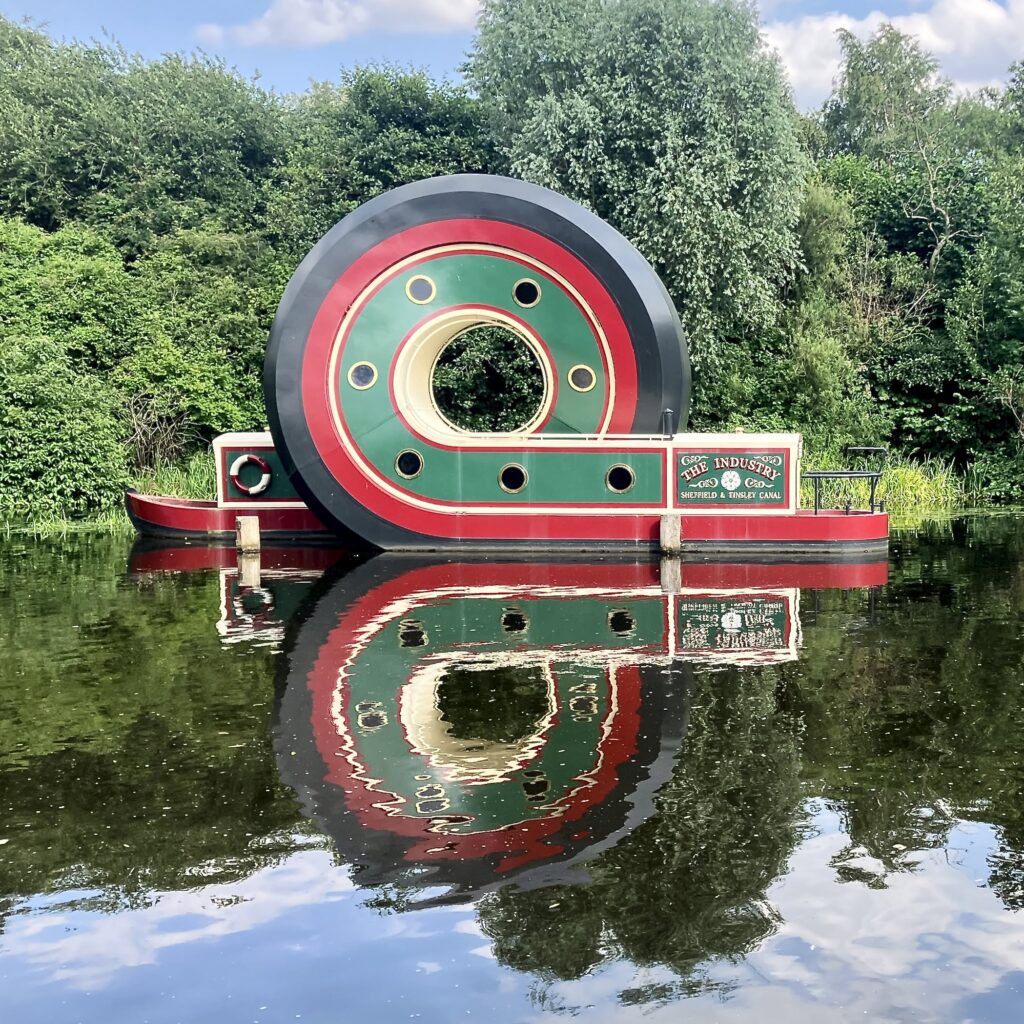
Later in the month, an after work ride followed the Sheffield and Tinsley Canal before returning along the Five Weirs Walk. Roads, locks, bridges, graffiti and former industrial sites shared the corridor with water, trees, birds, reflections and long grass.
These routes are not wilderness. But they provide something equally valuable: space for nature and people to move through the city together.
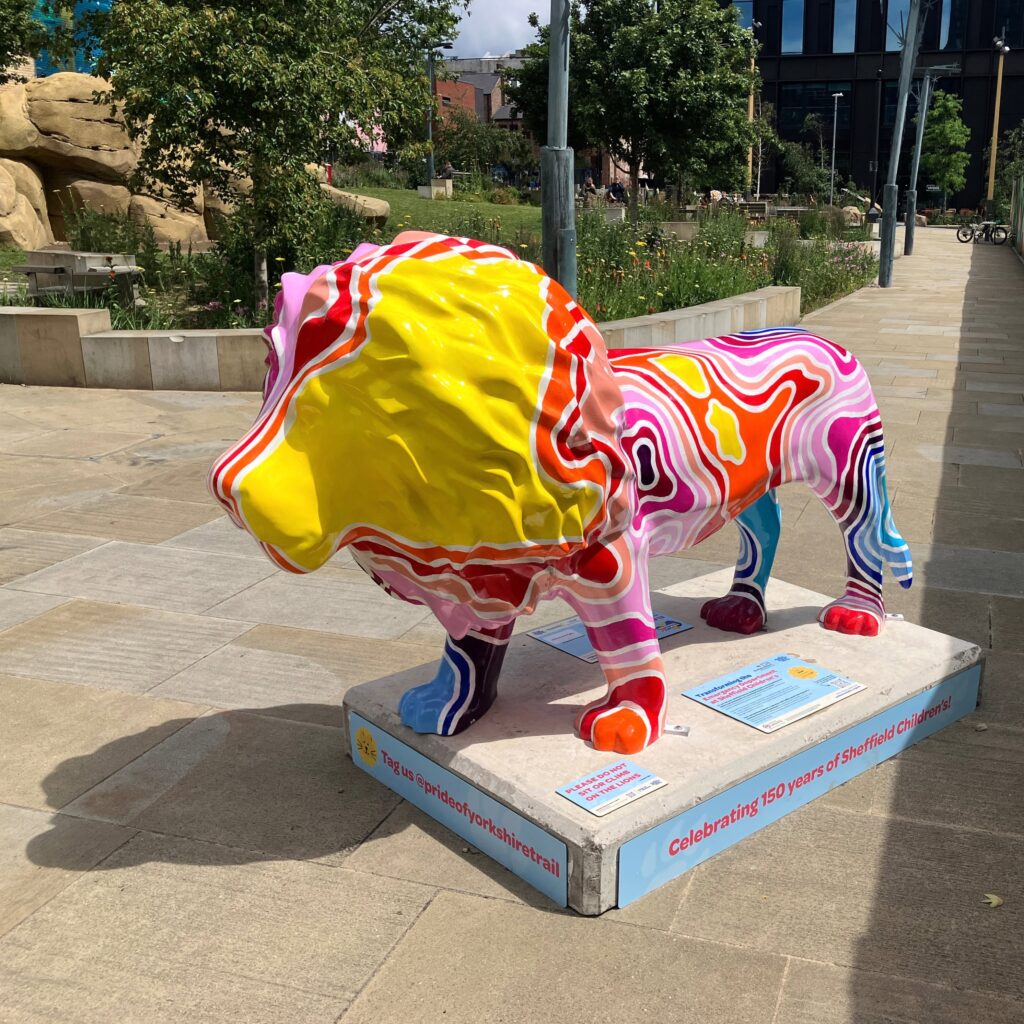
Even the Pride of Yorkshire sculpture trail became part of the challenge. Following the colourful lions through Sheffield was not wildlife watching in the usual sense, but it gave me a reason to leave the office, wander, follow my curiosity and reconnect with the world beyond the screen.
Thirty Days Wild gradually became less about defining what counted as “wild” and more about being open to whatever encouraged me to notice my surroundings.
Some of the most rewarding moments came from revisiting familiar places.
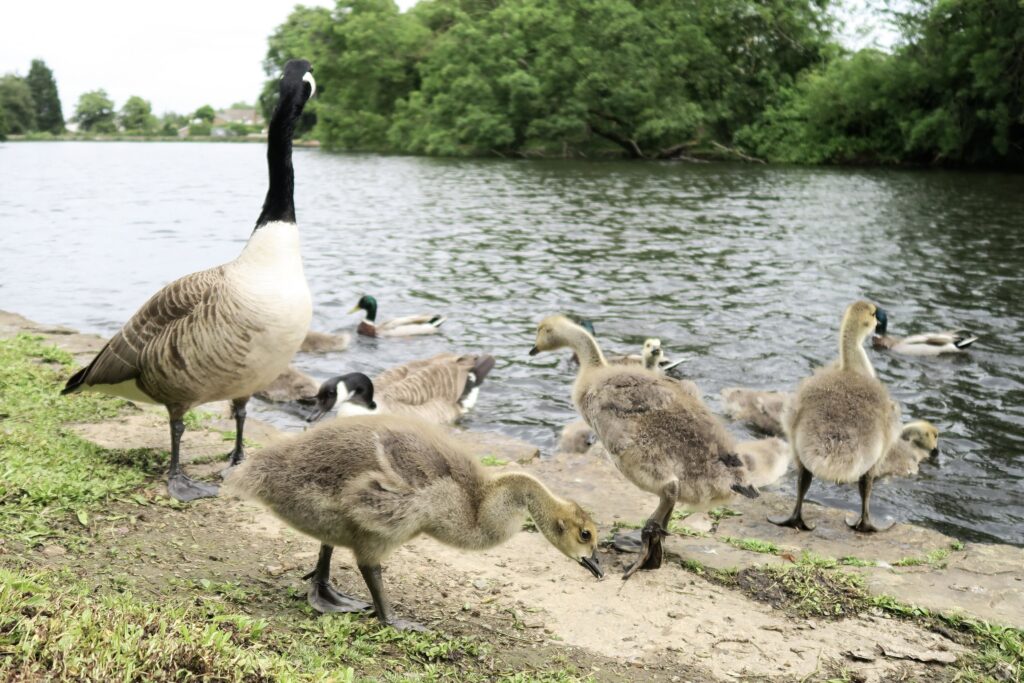
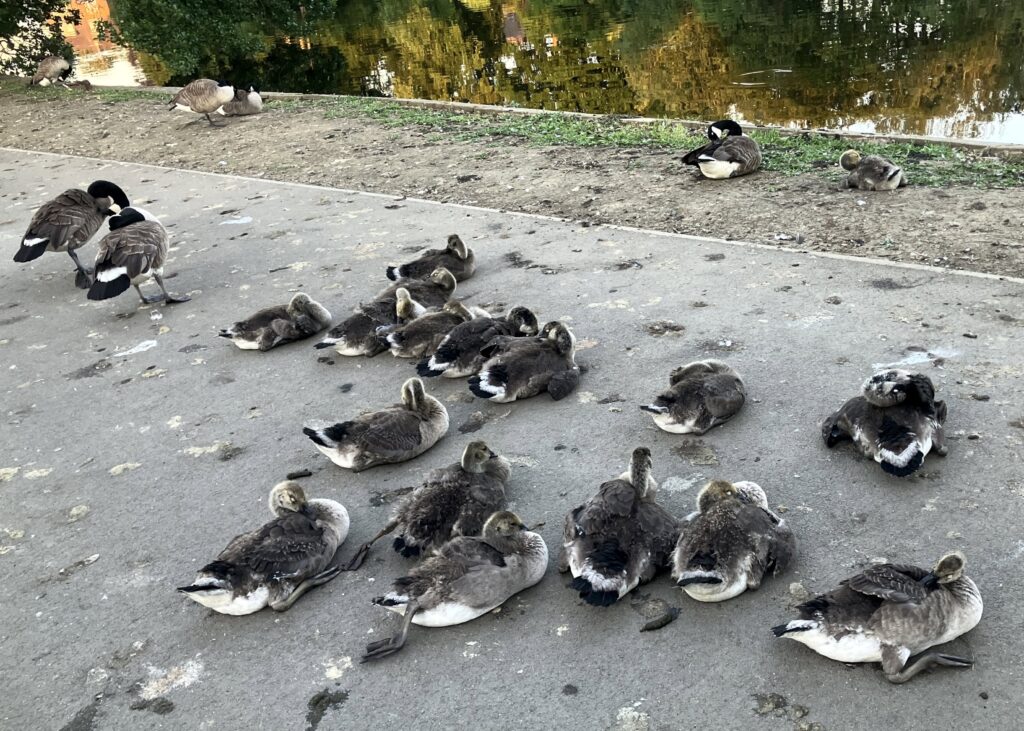
Early in the month, the children, Grannie and I went to a local pond to see the ducks. The Canada geese and their goslings stole the show: fluffy youngsters feeding at the edge of the water while the adults watched over them and occasionally reminded us that family life in the natural world is not always peaceful.
A few weeks later, I returned to find what may have been the same family. The goslings were already bigger, with feathers replacing fluff and bodies stretching into the awkward proportions of adolescence.
Seeing that change made the month feel connected. These were not simply thirty separate visits. The season was moving forward around us.
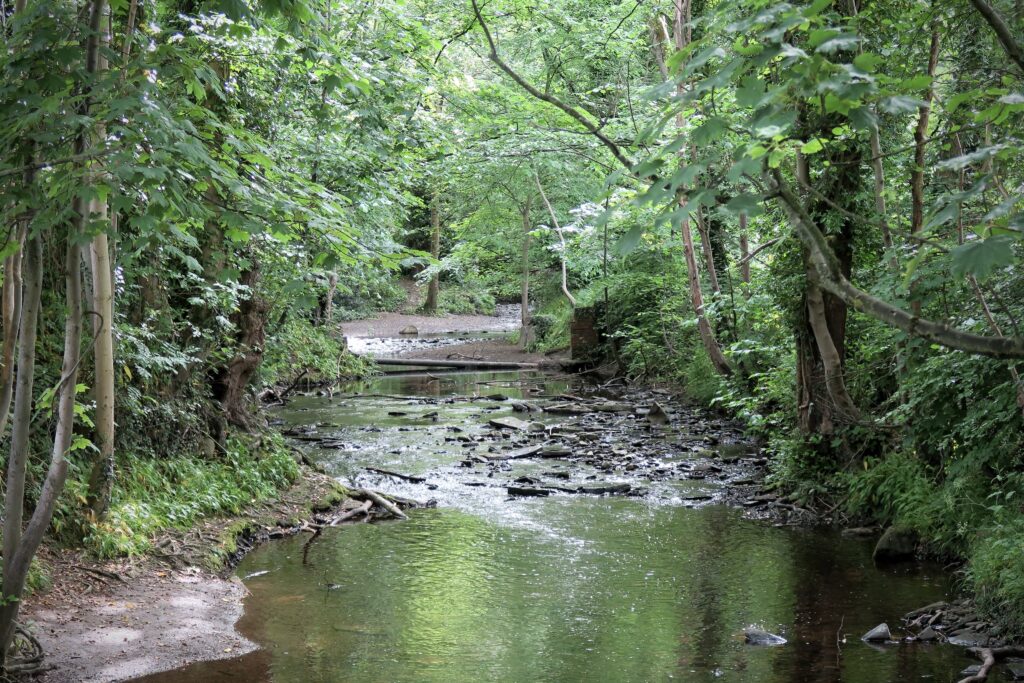
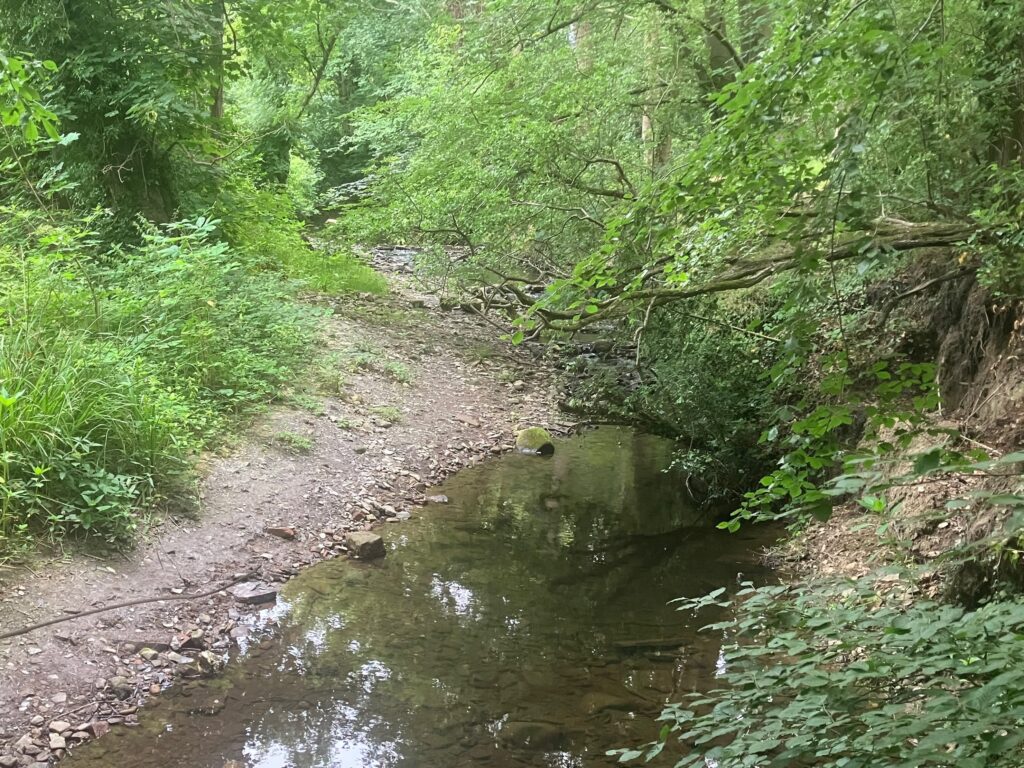
The same was true of the bird surveys my son and I carried out beside our local stream.
In May the place had seemed full of birdsong. By June it was quieter, perhaps because birds were nesting, feeding young or remaining hidden among thicker leaves.
We recorded what we could hear and see: wrens and robins in the undergrowth, grey wagtails working the shallows and, on one particularly memorable evening, a kingfisher sitting on a branch directly in front of us, sunlight catching its almost impossible blue and orange plumage.
There was no photograph. I simply watched through my field glasses.
Towards the end of the month, I realised that our repeated visits had changed our relationship with the stream. At first, it had felt as though we were simply counting birds. Gradually, we had begun to know the place itself.
We noticed what changed, what stayed the same and what only revealed itself after we had learned to be still.
The stream had become a small anchor for us: a place of shared discoveries, quiet conversations and unexpected encounters.
At Longshaw, one of the month’s most remarkable sights was also one of its smallest.
Tiny toadlets were emerging from the water and dispersing into the surrounding woodland. At first they looked like little dark marks moving across the path. Once I had noticed one, however, I began seeing them everywhere.
Each was barely larger than a fingernail.
They had completed their transformation from tadpoles and were now heading into the damp vegetation and leaf litter, beginning one of the most dangerous journeys of their lives.
Watching them made me more conscious of how much happens beneath our normal field of vision. What looks like an ordinary path may be filled with vulnerable lives that we could easily walk straight past.
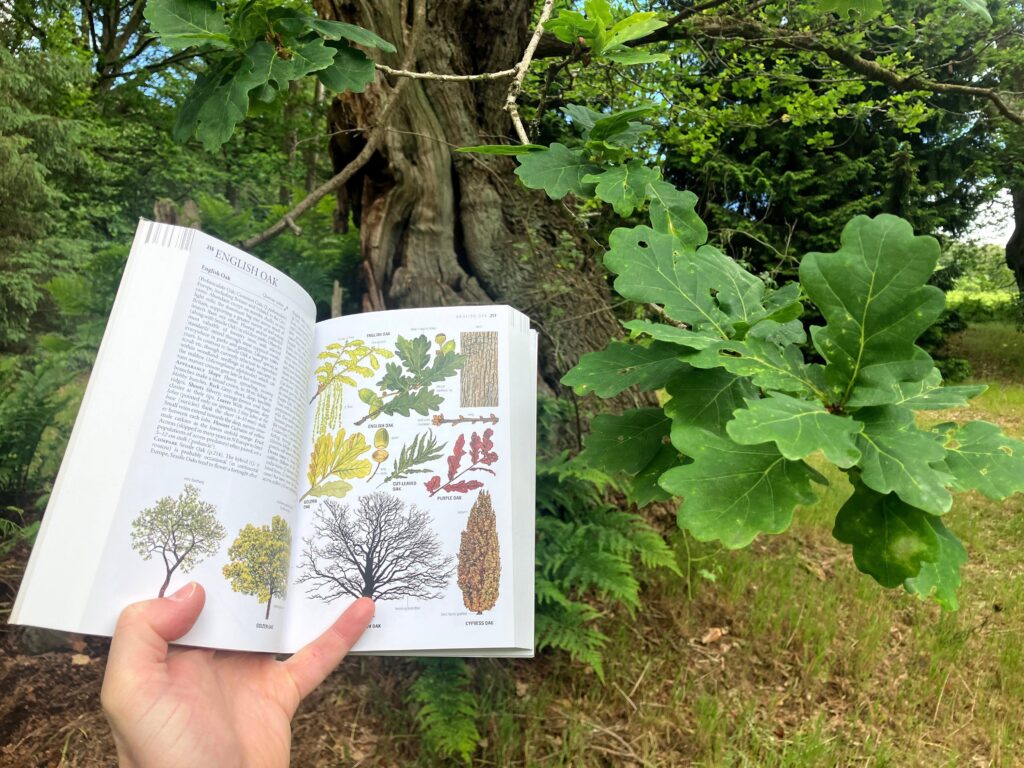
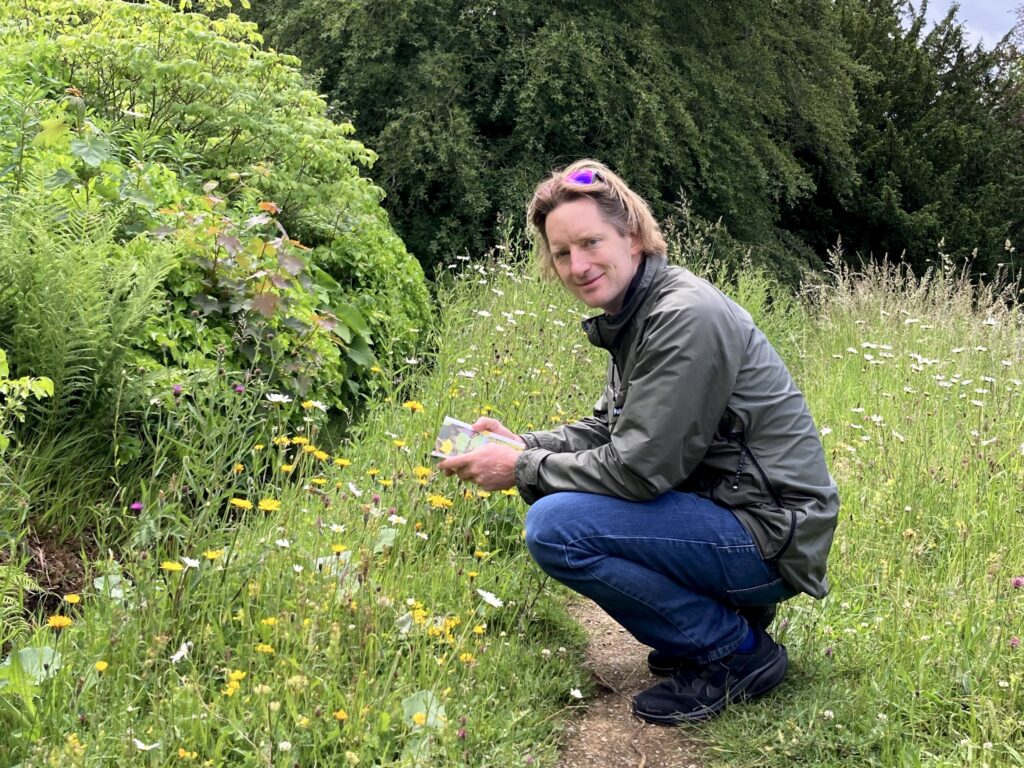
Wildflowers offered another lesson in close observation.
At Chatsworth, after walking through the formal gardens, we found ourselves drawn towards the flowers growing along a sunny hillside and the edges of the woodland.
With a field guide in hand, identification became a treasure hunt crossed with a detective story. Oxeye daisies, red clover, yellow-rattle and bird’s-foot-trefoil were joined by my puzzle of the day: common cat’s-ear, also known as false dandelion.
At first I wondered whether it might be a hawkweed. Then we found a larger patch, and the differences began to make sense.
Those small moments of recognition are deeply satisfying. You begin with something vaguely yellow or white and, by looking at leaves, hairs, stems, flower heads and habitat, it gradually becomes an individual species with a name.
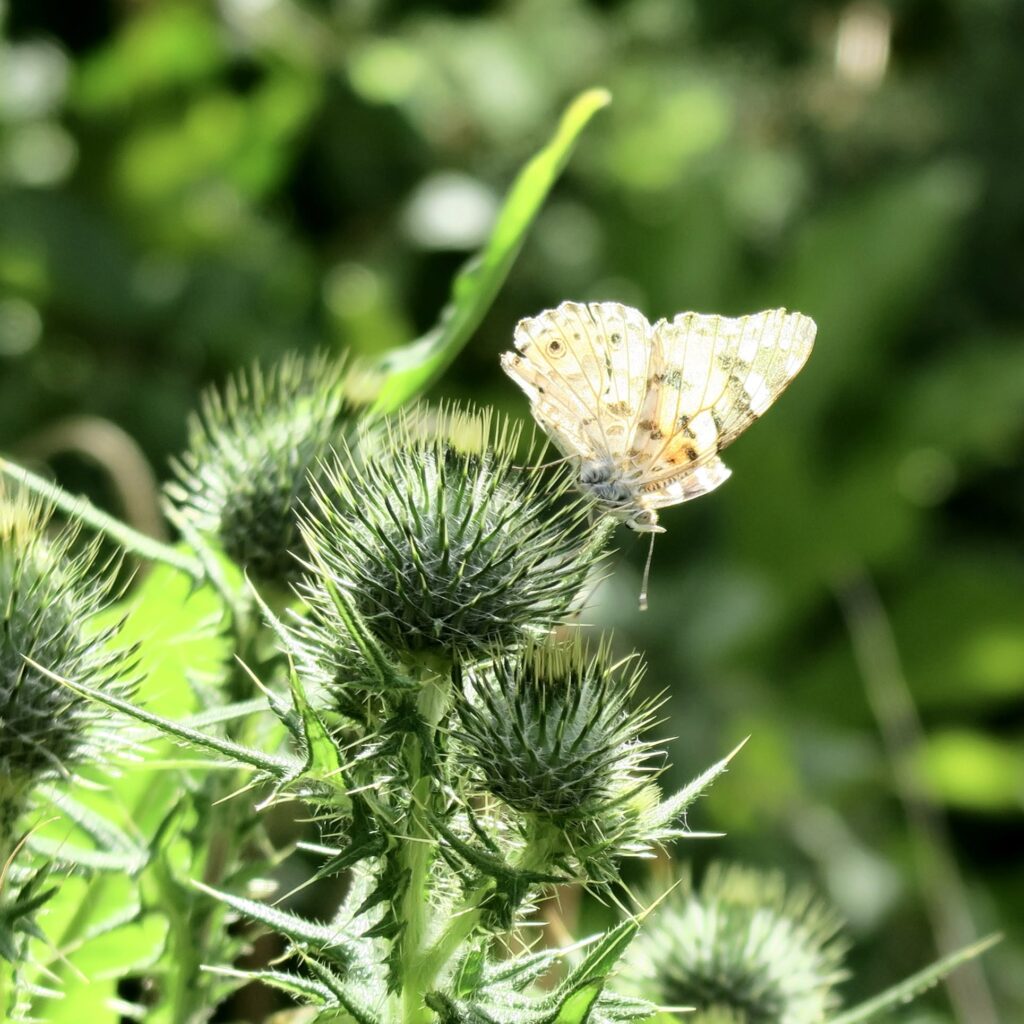
At RSPB Old Moor, a speckled wood butterfly offered the same reward. From a distance it was not the showiest butterfly, but close up its mottled wings and delicate eye-spots were beautiful.
Nearby, a whitethroat sang from the top of a tree while swifts moved overhead.
The month repeatedly taught me that ordinary does not mean uninteresting. It often means we have not looked closely enough yet.
Not every outing delivered the creature I hoped to see.
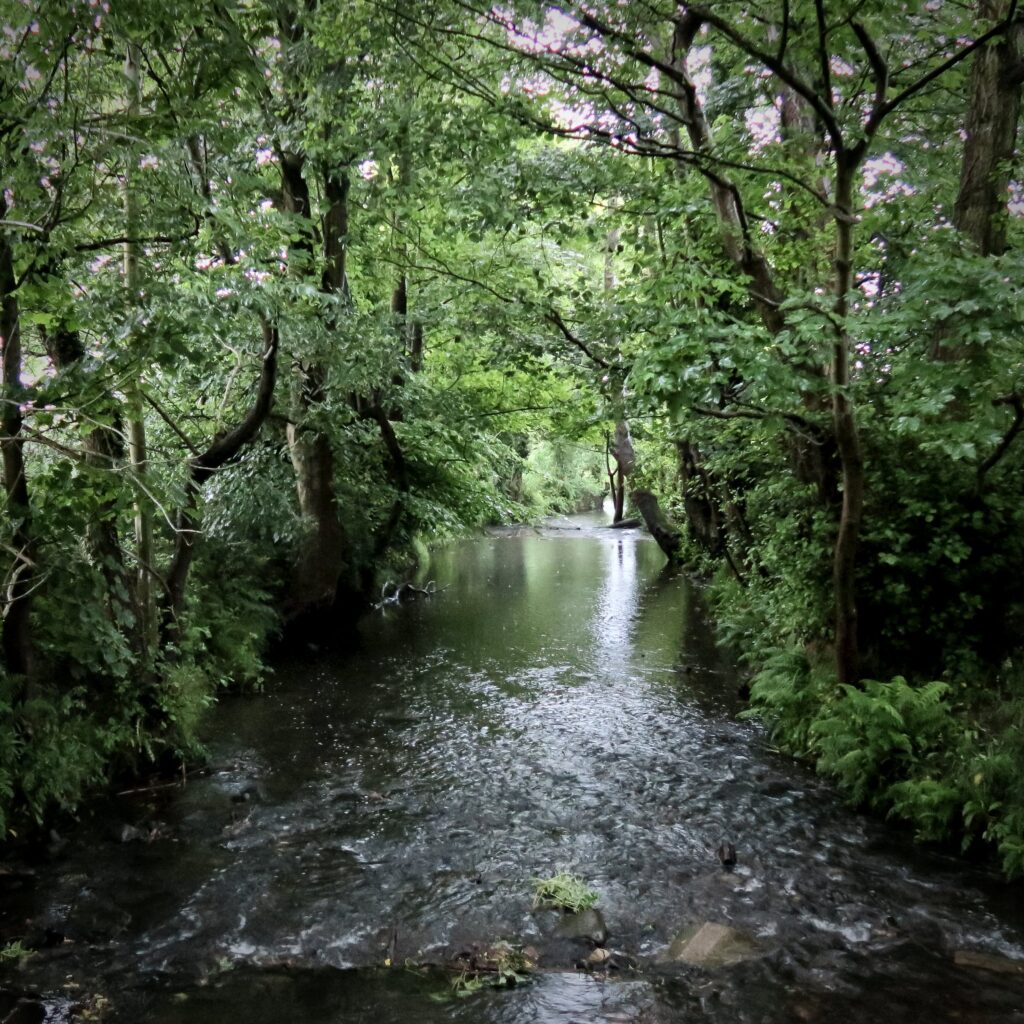
One damp evening I walked to a local park and stopped at a familiar bridge over the stream, hoping for a dipper. I had seen them there before, bobbing on stones and flying low above the water, but not recently.
There was no dipper that evening either.
Yet the walk still mattered. Rain deepened the colours, emptied the paths and gave the park a different atmosphere. The absence of the bird was itself noticeable because I had come to associate it with that stretch of water.
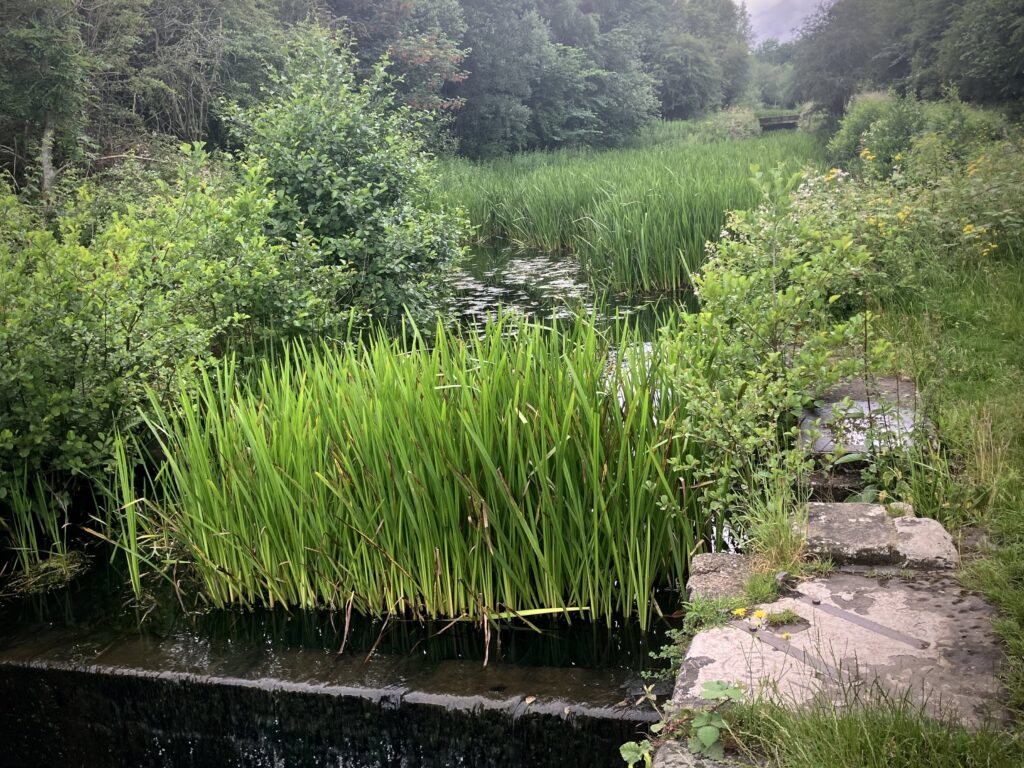
On another lunchtime walk, I followed a quieter, fragmented section of the Cromford Canal near Butterley and Codnor Park. Water voles are known along parts of the canal and I found myself looking for burrows, nibbled stems and sudden movements in the vegetation.
I did not see one.
But knowing what might be there changed the way I looked at the canal bank. Expectation sharpened my attention.
Wildlife watching often involves uncertainty. A movement in the reeds. A distant call. A butterfly that will not settle. A bright point in the evening sky that may be a star, a planet or something else entirely.
Sometimes the answer comes through a guidebook or an app. Sometimes it remains unresolved.
That uncertainty is part of the pleasure. It keeps us curious.
Many of the month’s best moments were shared with my family.
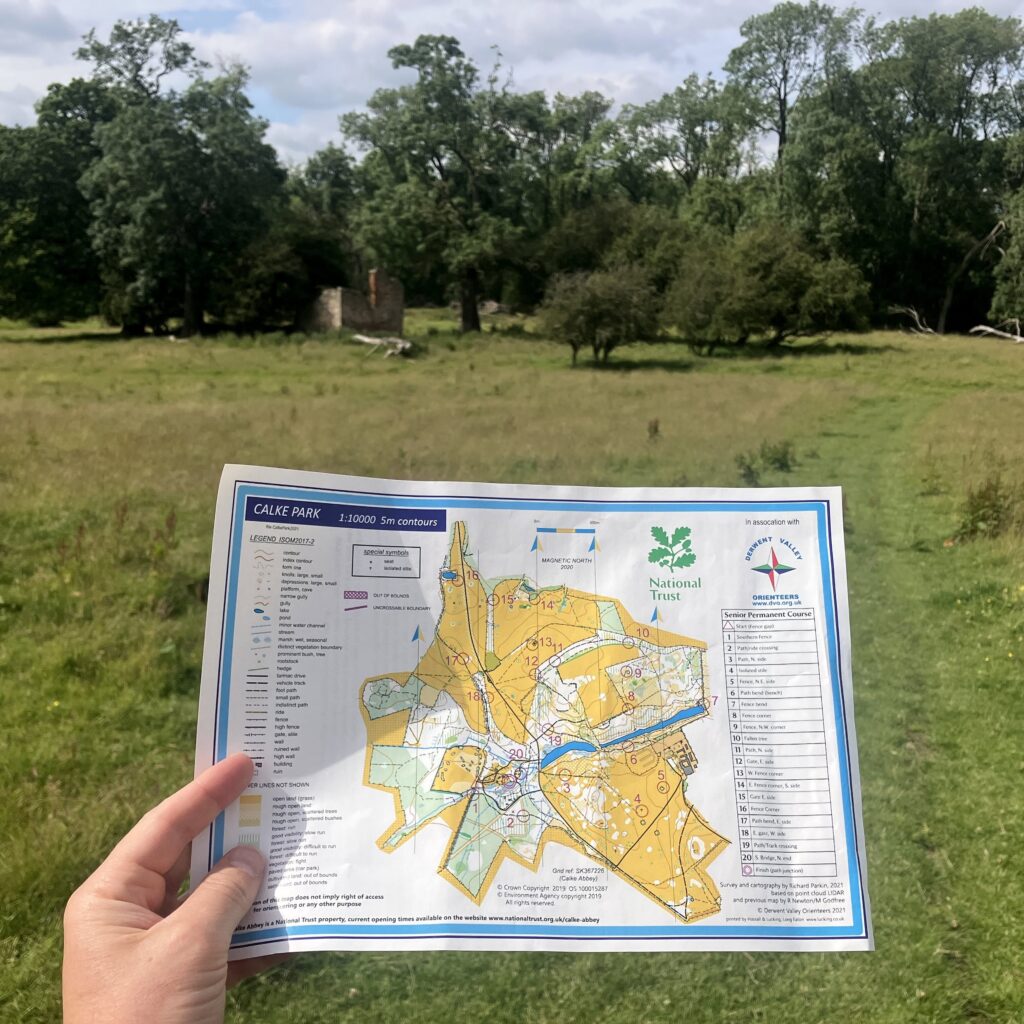
At Calke Abbey, a permanent orienteering course became an outdoor classroom. Rather than racing between controls, we used each leg as a small navigation problem.
Where were we now? Which way should the map face? What feature were we following? What would tell us we had gone too far?
We practised orientating the map, thumbing our position, using handrails, choosing attack points and judging distance.
While discussing pacing, we walked straight past one of the controls.
That was perhaps the most useful lesson of all. Navigation is not about getting everything right immediately. It is about noticing, checking, adjusting and using the map and landscape together to understand what is happening.
Other days were about preparing for future adventures.
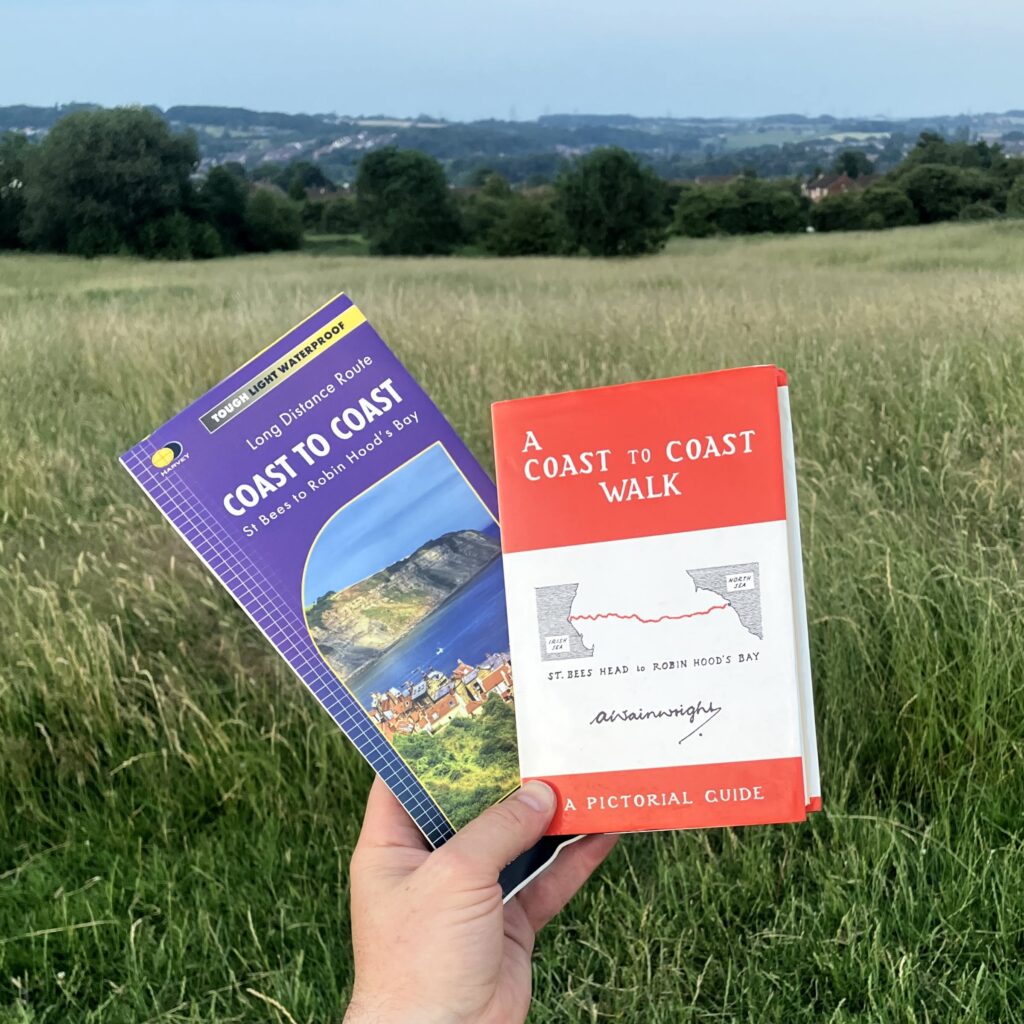
My son had been given a copy of Wainwright’s Coast to Coast guide, and i stood outside with the book and a newer Harvey map, imagining the route between St Bees and Robin Hood’s Bay.
There is something special about the quiet planning stage before a journey. Before the trains, packing lists, weather forecasts, tired legs and café stops, there are simply lines on a map and the possibility of where they might lead.
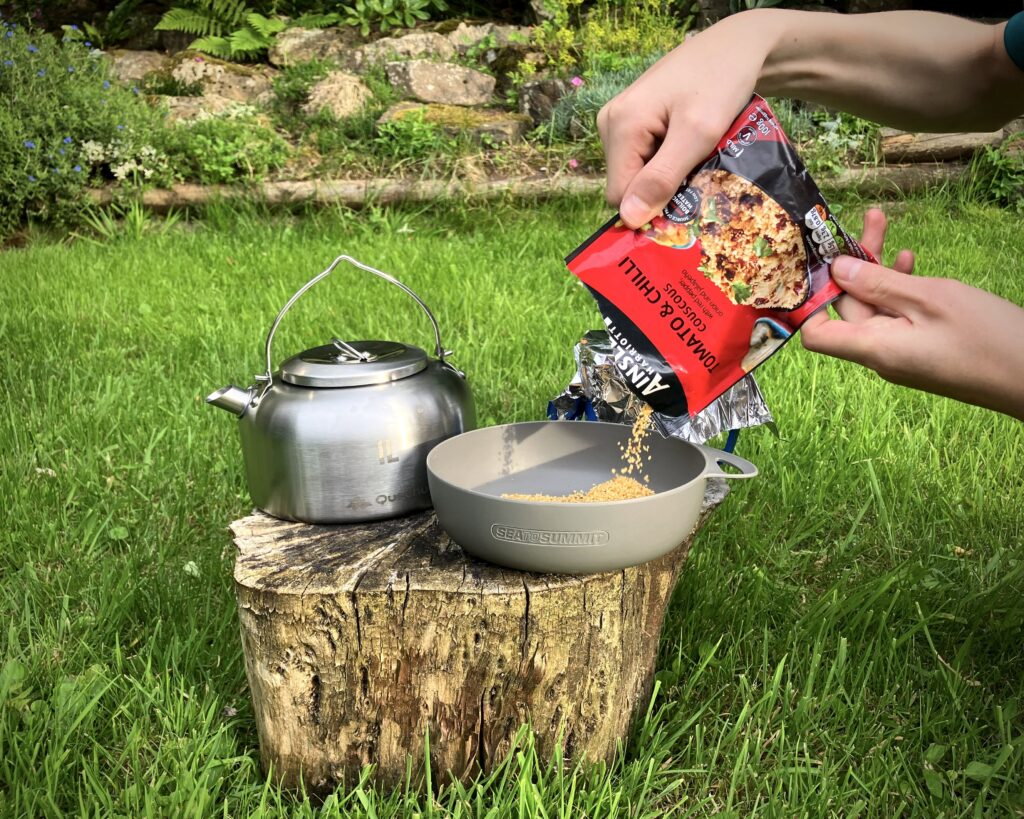
We also tested expedition food in the garden, comparing portions, hot water requirements and what might still taste good when tired, hungry and damp.
Camping does not begin when you arrive at the campsite. It begins in these small acts of preparation.
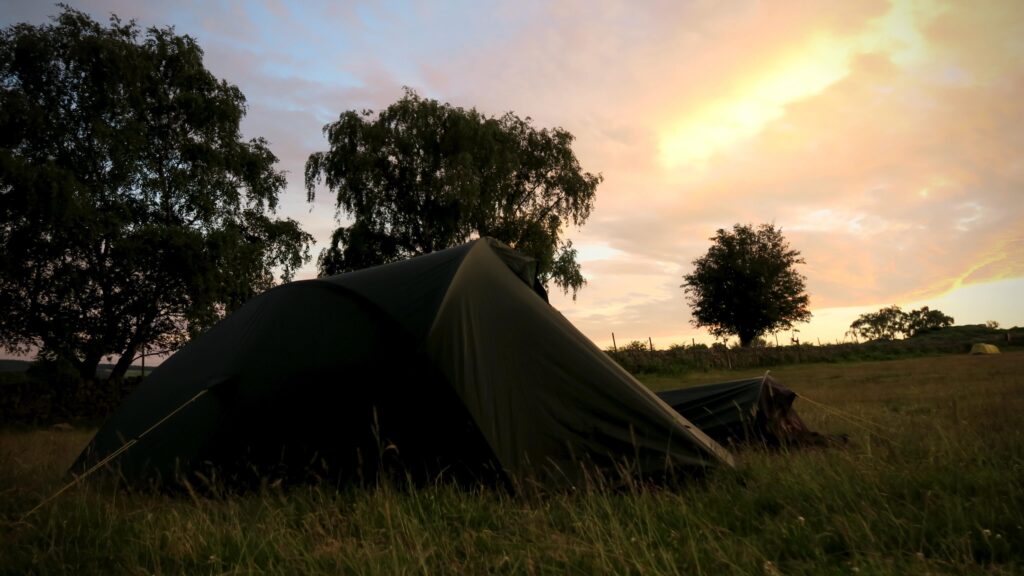
The summer solstice provided one of the month’s bigger adventures.
My son and I loaded our bikes and headed out past Old Brampton, where he increasingly demonstrated that he can now cycle faster up hill than I can keep up.
We descended to the Eric Byrne Memorial Campsite, cooked a three course meal on my new stove, listened to linnets in the trees and watched the sky turn to watercolours as the sun set.
With the shortest night came the longest light. By the time some of the other campers returned from the pub, we were already drifting off to sleep.
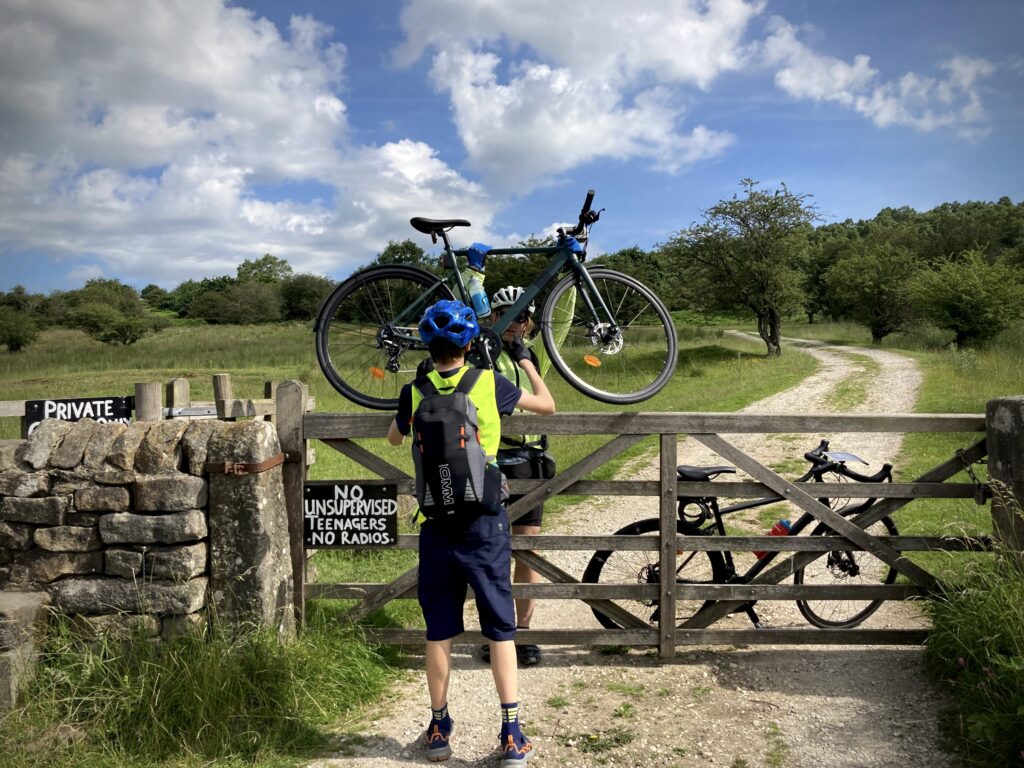
The following morning, the tent warmed rapidly in the sunshine. After breakfast and a hot drink, we packed up and began the ride home through Chatsworth and Rowsley, along old railway lines and through Whitworth Park, stopping beside the ancient yew at Darley Dale before tackling the long climb back towards the tops.
It was not an epic expedition. It was simply a small adventure completed together.
That made it more than enough.
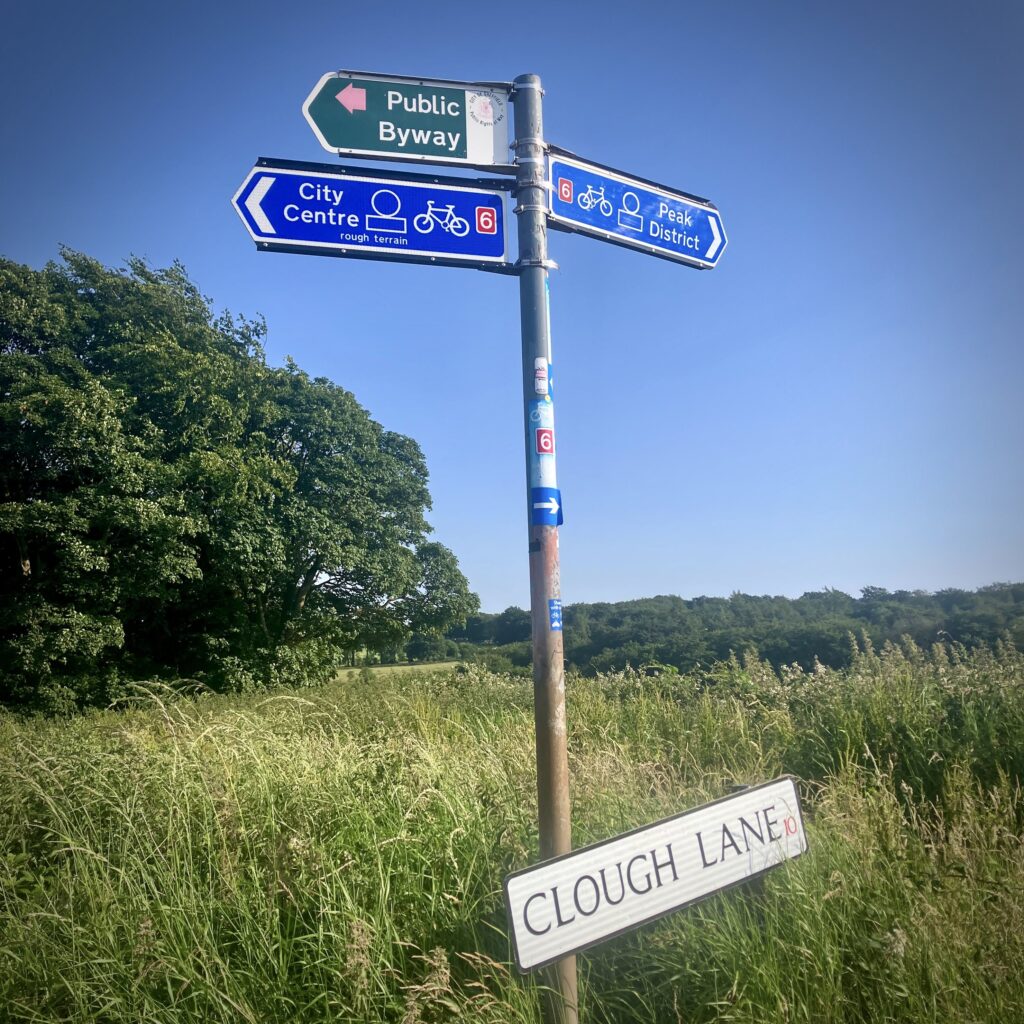
As the month progressed, I became increasingly drawn to indirect journeys.
Instead of cycling straight home from Sheffield, I followed part of Sustrans Route 6 towards the Peak District. At the edge of the city, one sign pointed back towards the centre while another pointed towards the hills.
Suddenly, the commute felt less like transport and more like exploration.
There were woodland tracks, byways, long grass and evening light. The city gradually loosened its hold and gave way to open country.
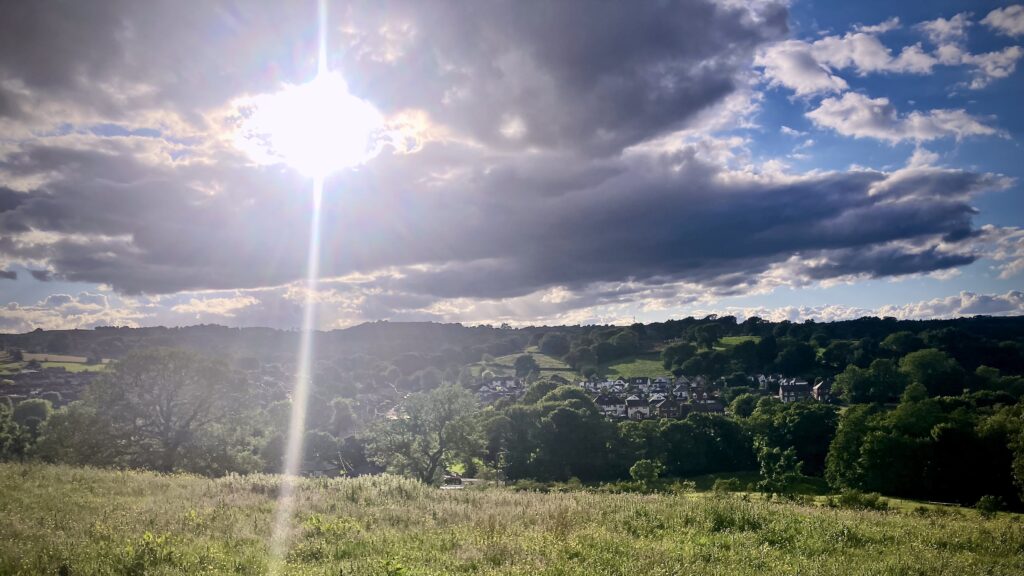
On another day, the wild moment was a walk up the hill to a favourite countryside pub with my brother. We carried waterproofs and a torch, avoided muddy puddles and talked our way up the lane.
As the light faded, clouds, fields and late sunshine filled the sky. On the way home, we tried to work out whether the brightest lights above us were stars or planets, eventually reaching for binoculars without becoming much wiser.
It was a simple evening: a walk, conversation, mud, a pub stop and a reason to look upwards.
Sometimes that is all an adventure needs to be.
Nature and history continually overlapped during the challenge.
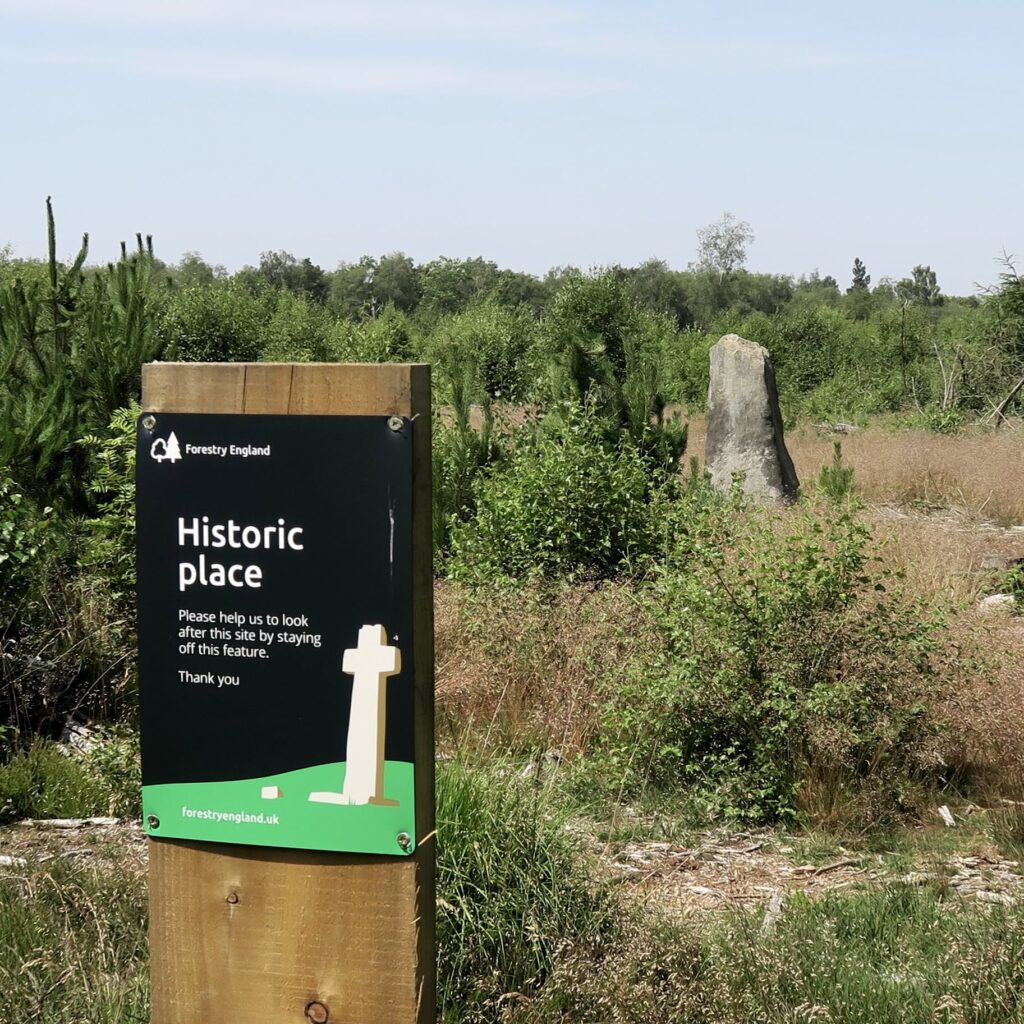
At Farley Moor near Matlock, I visited a Bronze Age standing stone. It was not a dramatic monument: just a single stone standing quietly among young trees, grass and scrub.
Yet archaeological evidence suggests that the surrounding landscape may once have contained a stone circle, platform and spring, forming part of a ceremonial site dating to around 1700 BCE.
Standing there was a reminder that landscapes accumulate meaning. The same patch of ground can be a habitat, a workplace, a route, a place of worship and a source of memory, depending on who is looking and when.
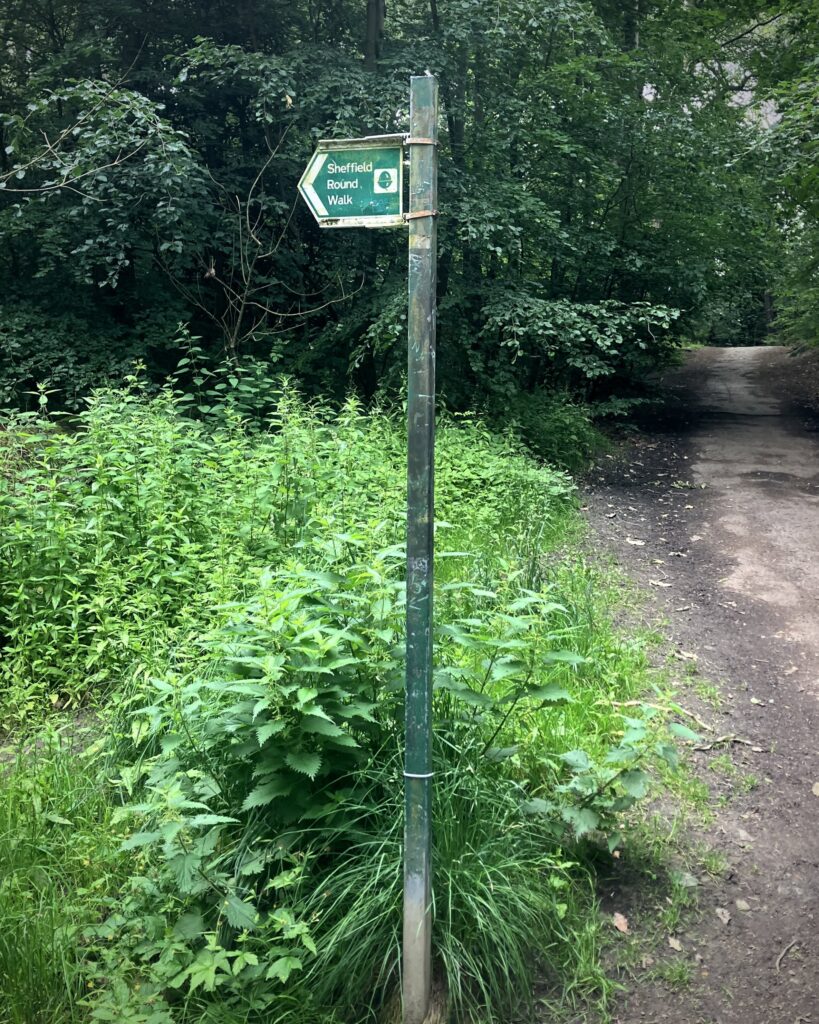
The battered Sheffield Round Walk sign I encountered in Graves Park had a similar effect. It transported me back to walking the route with my son a few years earlier.
The Round Walk threads together parks, valleys, woodland, rivers, industrial remains and green spaces hidden behind ordinary streets. Like so many of the month’s routes, it showed that nature and human history do not sit in separate compartments. They are layered together.
I still have unfinished business there involving the search for Sheffield’s Alexandrine parakeets.
I will be back.
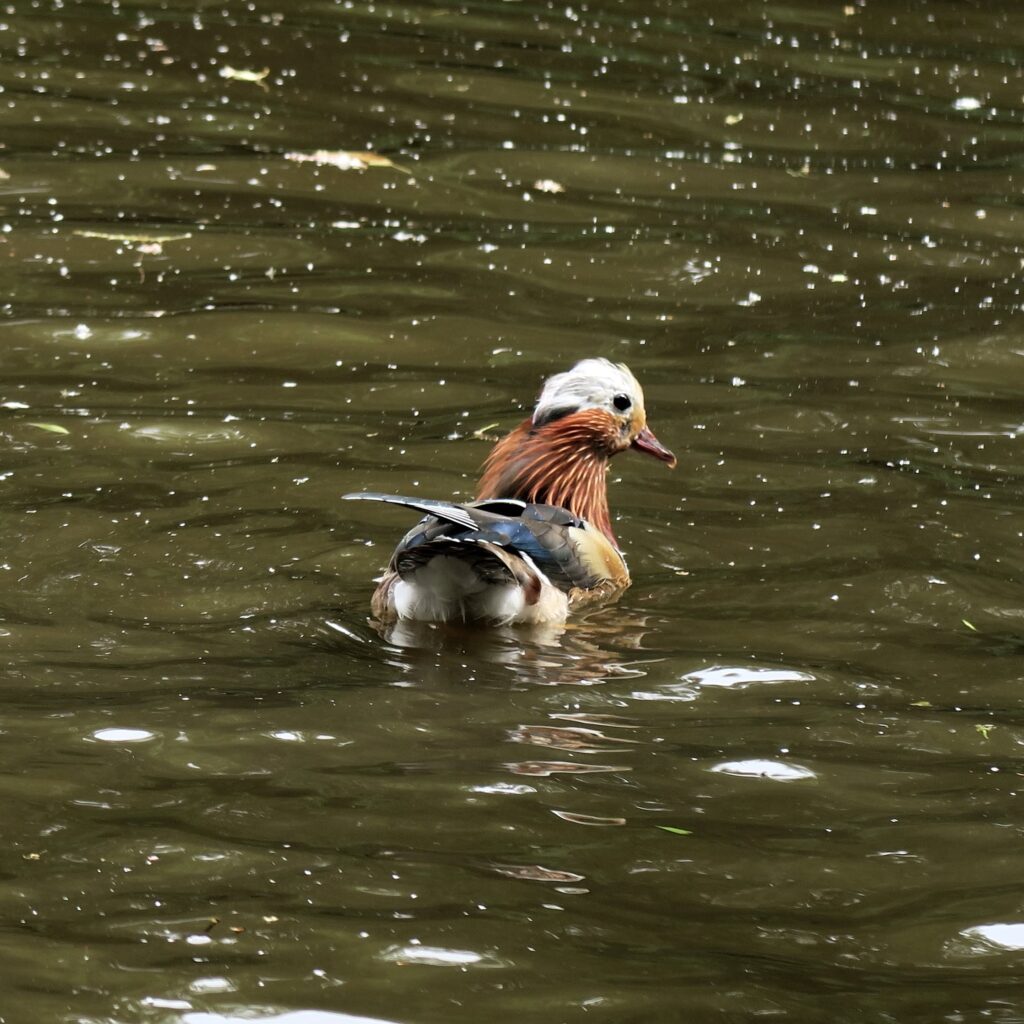
A male Mandarin duck at Walton Dam offered another memorable moment.
Earlier in the year, he would have displayed the elaborate breeding plumage for which the species is famous. Now he was beginning to moult into eclipse plumage and looked almost deliberately scruffy.
It was a reminder that nature is not always polished. Moulting is a necessary but vulnerable stage, especially when flight feathers are being replaced.
Nature is frequently awkward, unfinished and halfway through a change.
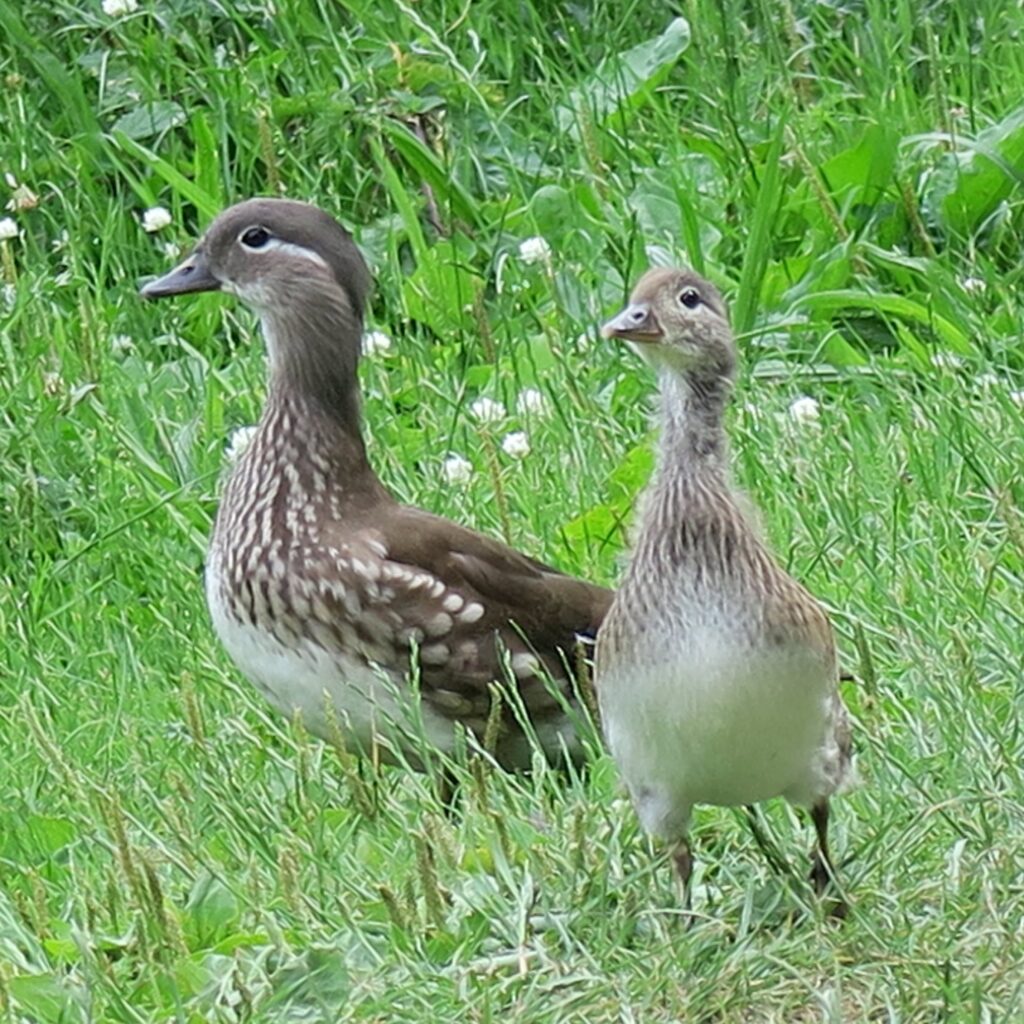
Later, beside another pond, we watched a young Mandarin repeatedly searching along the bank, peering through the undergrowth towards a nearby stream.
There were no other Mandarins in sight, and we began to wonder whether it had become separated from its family.
Then an adult female appeared nearby.
What had initially looked like a lost youngster became a small family story. We only understood it because we had remained still long enough to see the next part unfold.
I ended the challenge with a forty five kilometre bicycle commute.
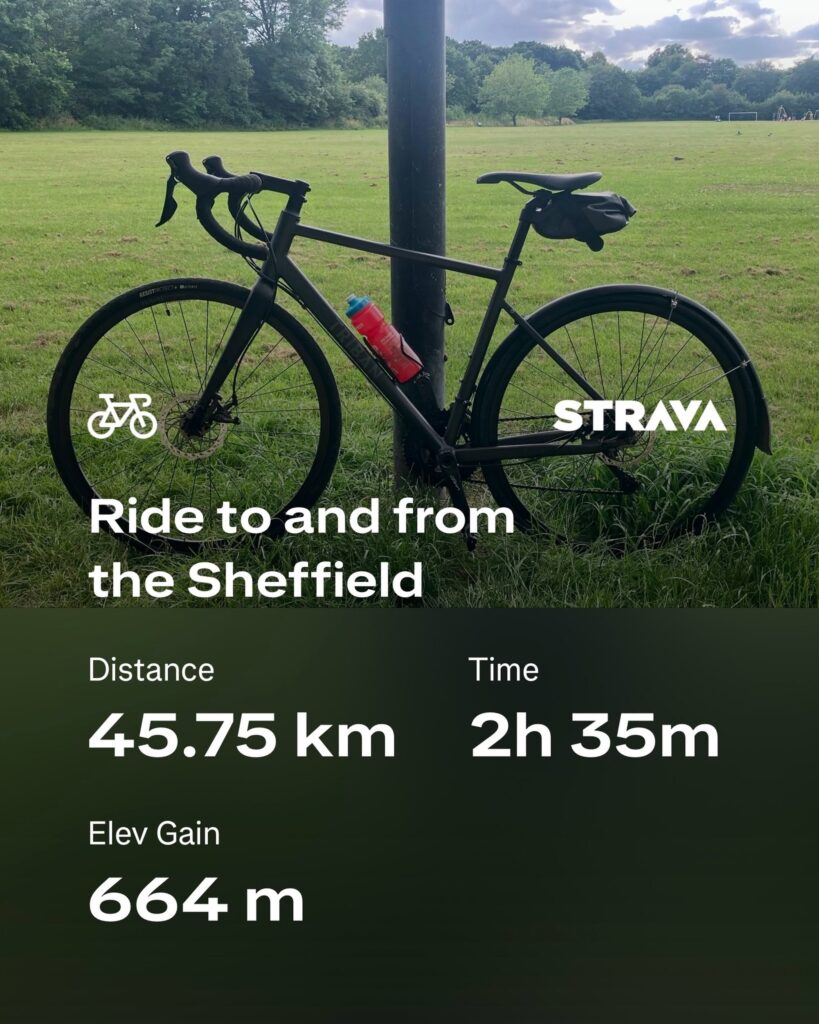
I would normally make most of that journey by train but the weather was dry and warm and cycling seemed an appropriate way to mark the final day.
Looking back, the month had included pond dipping, bird surveys, wildflower identification, canal rides, family walks, urban nature, Bronze Age history, navigation, camping and countless pauses beside water.
There had been kingfishers, butterflies, toadlets, goslings, Mandarin ducks and one unforgettable swimming mole.
But the challenge was not really about collecting sightings or finding extraordinary places.
It was about paying closer attention to ordinary ones.
Returning to the same stream.
Taking a less direct route home.
Looking more closely at a yellow flower.
Stopping for a butterfly, a bird or a sunset.
Going outside even when the forecast was uninviting.
Learning that a familiar place can continue to surprise you if you visit it often enough and remain curious.
Thirty Days Wild did not require me to escape everyday life. Instead, it encouraged me to find more nature within it.
The challenge may have ended but I hope the habit continues.
There are still countless paths to wander, birds to identify, skies to look up at and small adventures waiting just beyond the front door.
Here’s to staying a little bit wild for the other 335 days of the year.