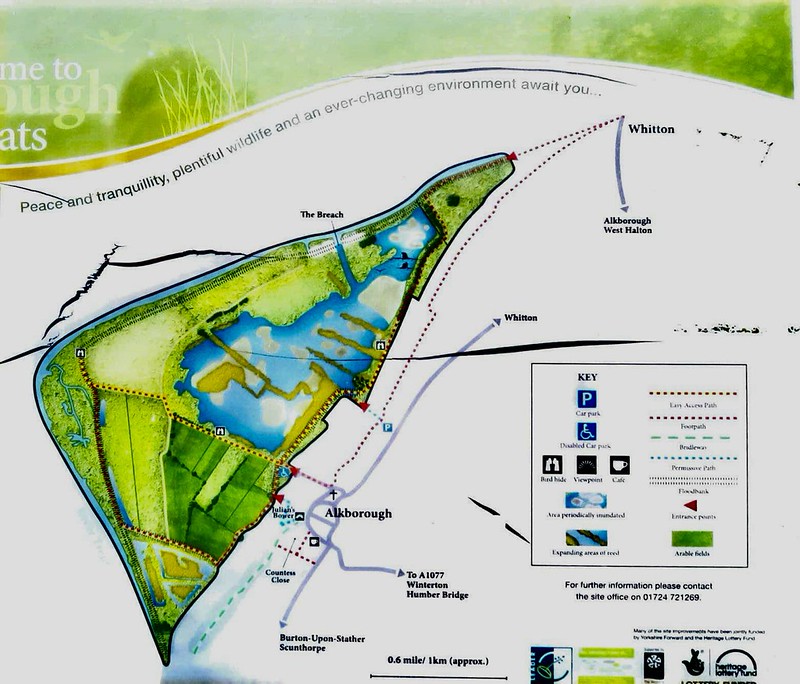
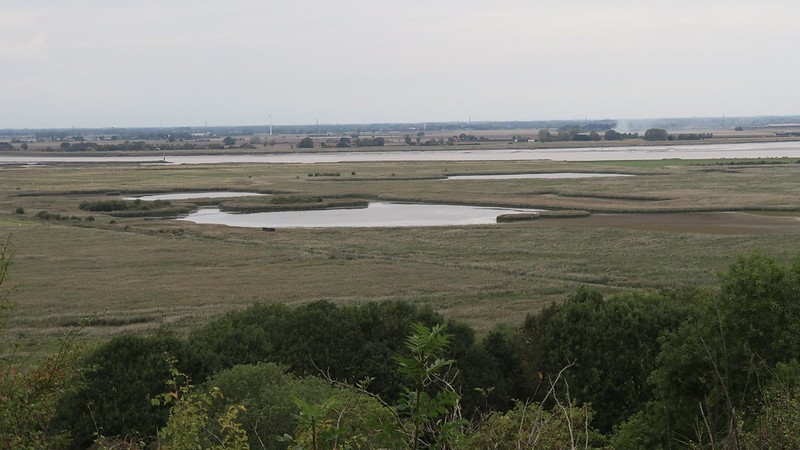
As usual, we roll in early, creeping down the last stretch of lane that falls away towards the Humber. The small car park by the disabled bays has only a handful of spaces and was already quite busy. As we headed off from the car, the reedbeds quickly came into view and beyond them, two rivers, Trent to the left and Ouse to the right, were already gathering themselves into the Humber. This is Trent Falls: a meeting of waters, mud and sky, and the stage for one of Britain’s “managed realignment” projects. In 2006, engineers breached the old flood bank here, allowing high tides to spill over 440 hectares of former farmland. The result is Alkborough Flats: a working floodplain that shaves the top off storm surges and, in the bargain, has become an amazing wetland for our wildlife.
We hadn’t gone twenty paces before the day surprised us. Two men were lying flat on the path ahead, cameras level with the gravel. We slowed to a careful creep, peering across. From a distance we could see small birds on the gravel. As we got closer we realised they were “bearded tits,” or bearded reedlings as we later found out.
The rename matters. Despite their long association with the tit family, bearded reedlings (Panurus biarmicus) are closer to Sylvioid warblers. And what they were doing, eating grit, was the giveaway to the season. Through summer they hawk soft-bodied insects among the reed stems; come autumn and winter, their diet switches to hard seeds. The grit helps the gizzard grind this tougher fare. Here at Alkborough, one of the best local places to see them, they often drop to the path or track edge at first light to “top up” before vanishing again into the reed maze. Perhaps this explained why the car park was busy early on, before shortly emptying out. Alkborough’s dual identity is always present: flood defence in function, wildlife spectacle in practice.
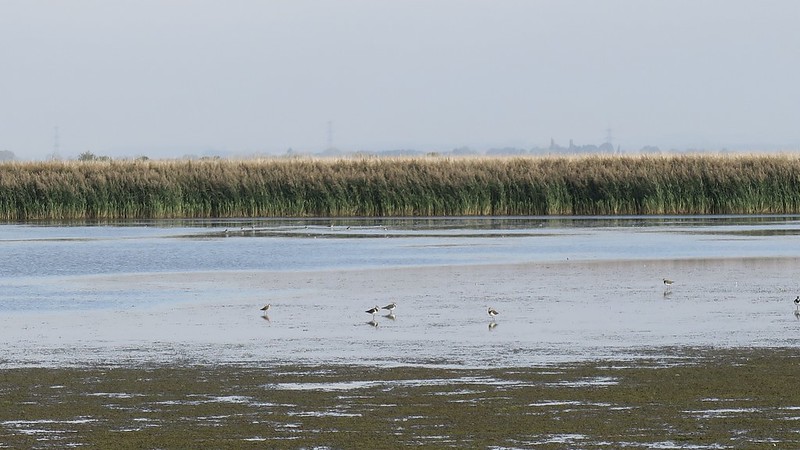
The first hide offered shelter and a quick hit list. Lapwings, when the sun came out, really brought out their greens and purples.
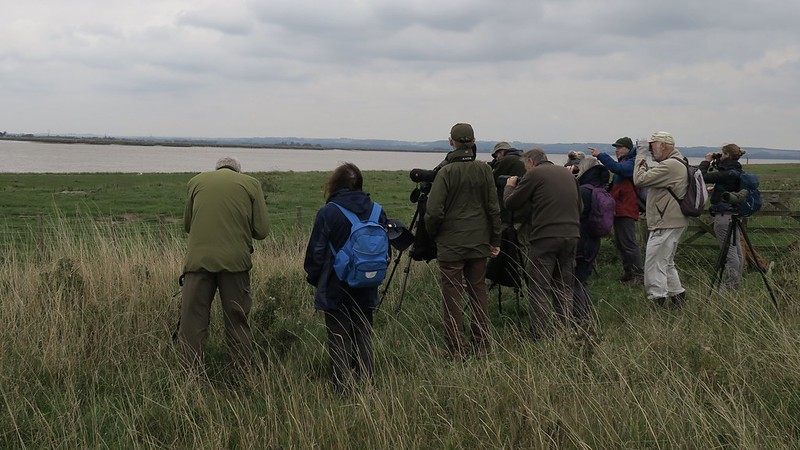
By now it was time to get back to the car park to meet the rest of our group, with a great turnout from some familiar faces.
Together we headed back to look at the bearded reedlings once more. We drifted out along the path and were rewarded again. The bearded reedlings, were on the ground, fussing over the gravel just metres away. Everyone stopped dead to watch, the whole group spellbound. They seemed completely absorbed in their work until a farmers UTV rattled up the track, scattering them into the reeds.
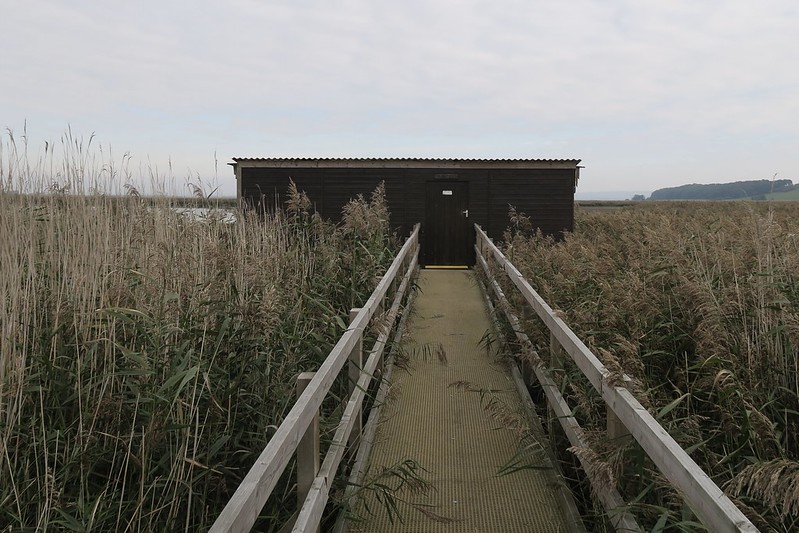
The group moved to the first hide, with geese chattered across the far water. A ruff worked the muddy edge at the tail of the scrape, half-hidden as it picked through the shallows. Out over the reedbeds, a marsh harrier appeared, calm and low, before a second bird joined it and the pair flew together, sweeping towards us in a brief sky-dance. Then three shelduck dropped in; then through a scope someone picked out a snipe, so well camouflaged in the reeds that it took ages for everyone to catch sight of it.
Back on the track we’d hardly reset when another prize appeared. A brief brown outline of the heron like bittern showed for a moment before disappearing back into the reeds. Not everyone managed to get onto it before it dropped back into cover, but those who did felt very lucky. Up to now, our encounters with this elusive heron had been limited to hearing its springtime “booming.” To actually see one, wings broad and slow, was something special.
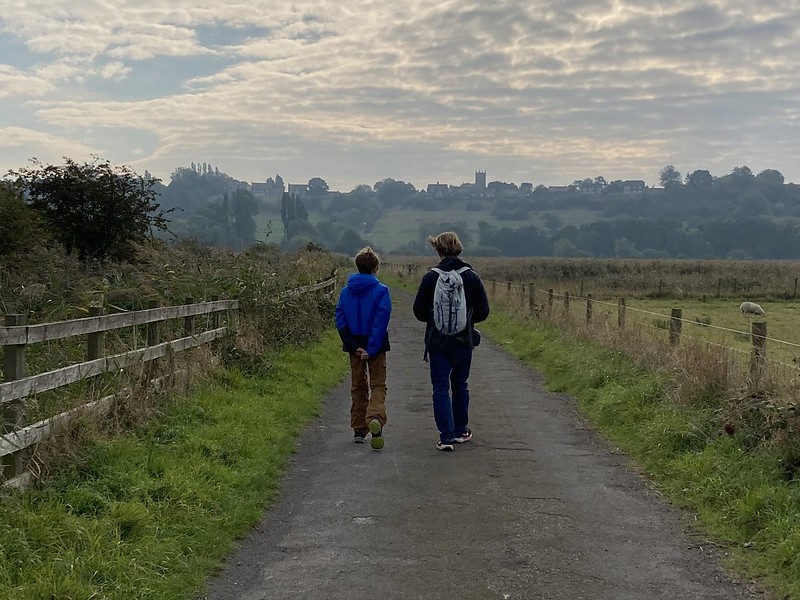
As we progressed along the track, other sightings popped up. Somewhere close by, a Cetti’s warbler burst out its explosive song. Then came a flicker, a light green blur diving in and out of a bush, never staying long enough to be sure, but enough to remind us that these hedges and edges often hide more than they give away. A long-tailed tit party ghosted through, tails bobbing, chattering as they passed.
A sudden, dense flock bustled across a field. “Not sparrows,” someone said, and there was talk of redwings, though perhaps a bit early in the season. What was certain was they didn’t fly like sparrows.
Soon after, skeins of pink-footed geese cut across the sky, calling, fresh arrivals from Iceland. We noted mallards dabbling in a muddy ditch, yellowhammers calling from the hawthorn, and curlews slicing overhead with those unmistakable long bills.
Then another treat: a tight flock of goldfinches swept low along the ground, flashing their golden wing-bars in the light as they changed direction. The moment they dropped into thistle and undergrowth they vanished, as if the colour had been switched off.
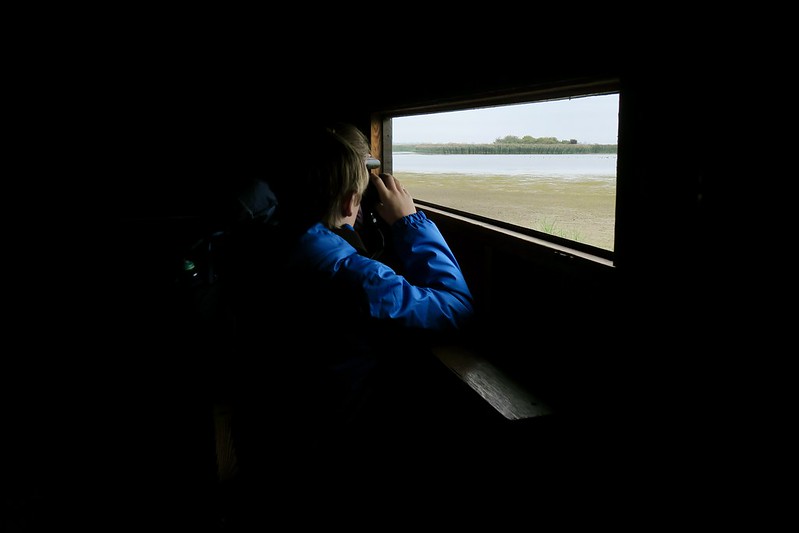
Further on, the air filled again with Cetti’s warblers, calling from both sides of the path, while a stonechat balanced neatly on a bulrush, tail flicking. We stopped in another hide for a snack and looked out towards the Humber estuary. With the reedbeds in the foreground, the hide sat a little too low for views over the reeds and there was a better view was from the side on the bank preferably with a scopes, but golden plovers rewarded us anyway, lifting in a single mass over the mudflats, turning the flock into a flashing signal of gold and grey.
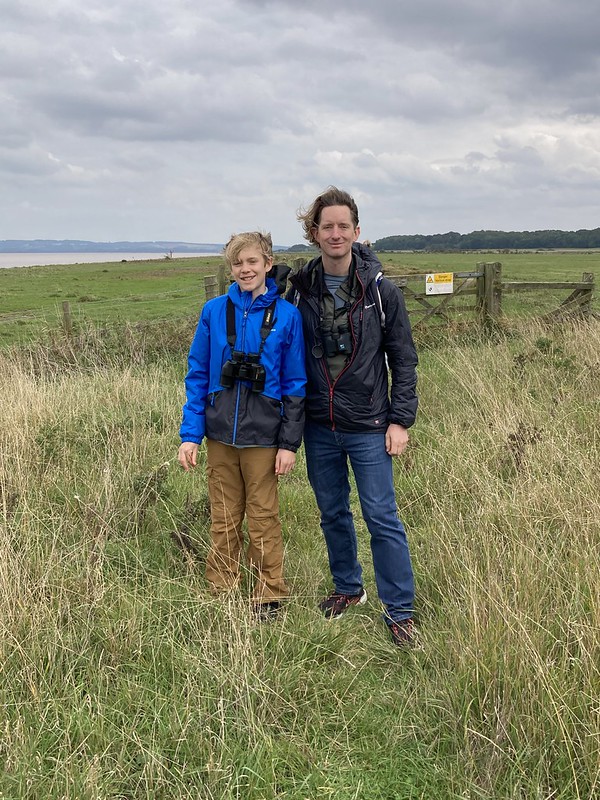
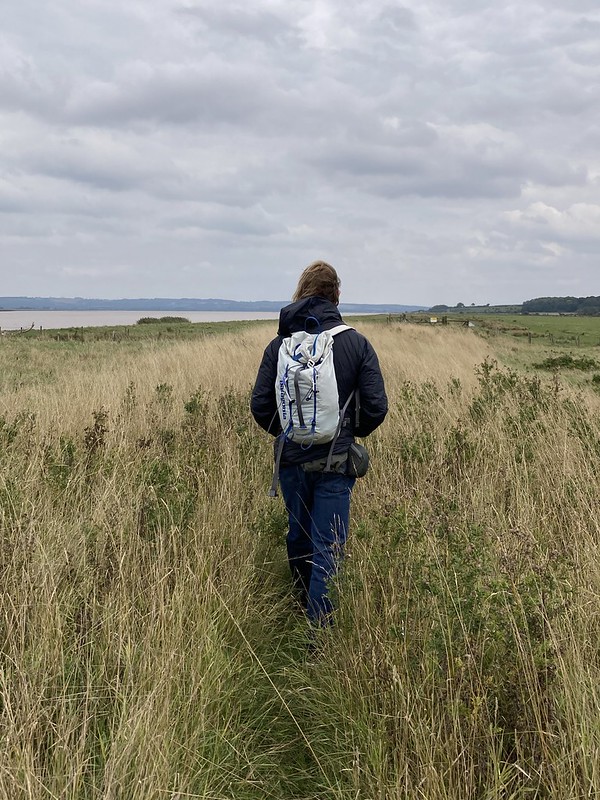
By early afternoon we reached the section where the bank had been breached and the path ended near the gap. The open water was low, many of the ponds drawn down, but the sense of scale, the meeting of the Ouse, Trent and Humber, was reward enough. Retracing our steps, we passed the hides again and said our goodbyes to some of the group at the car park.
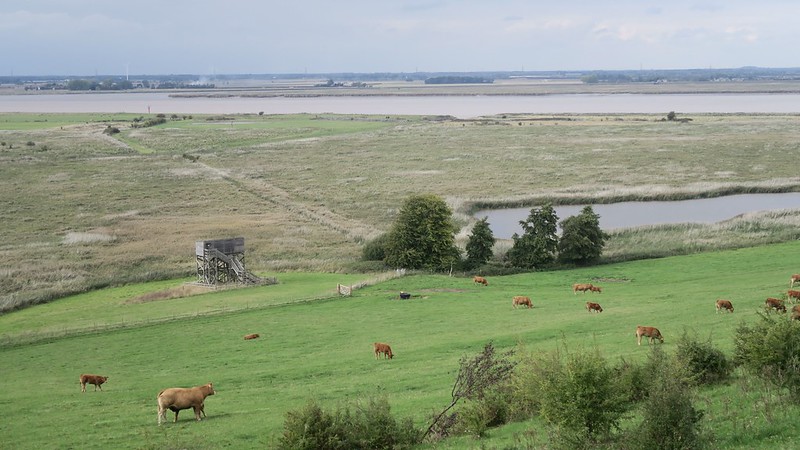
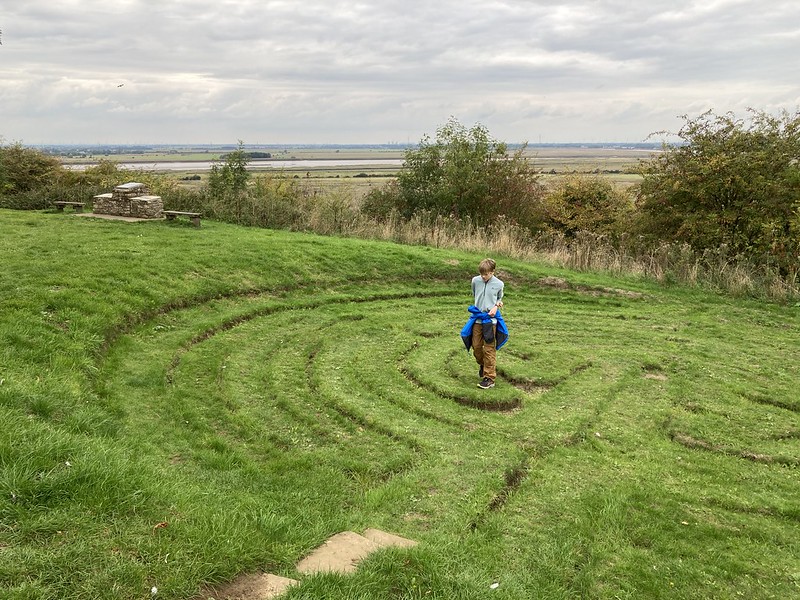
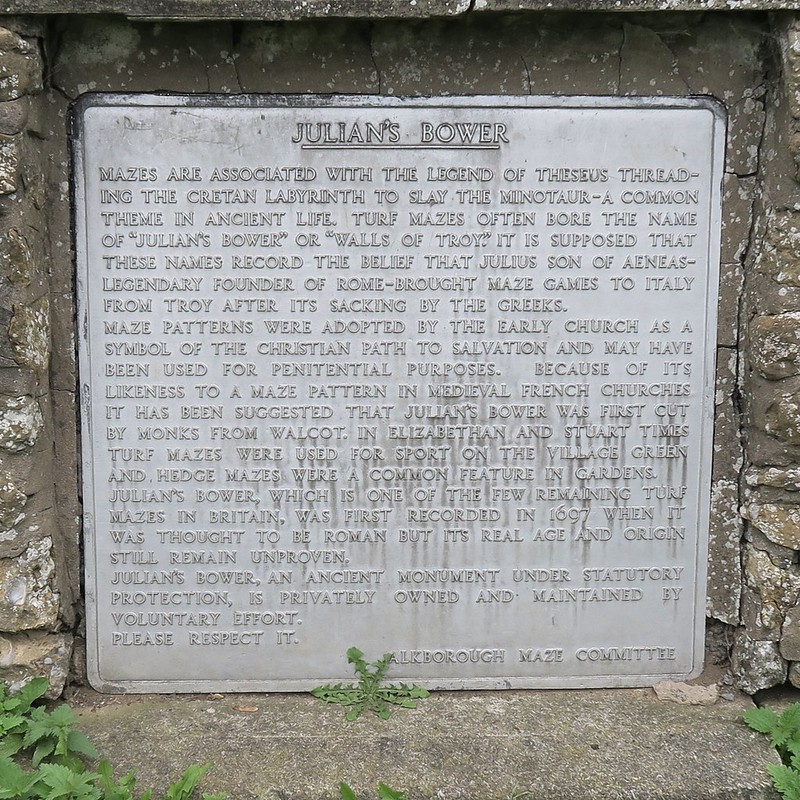
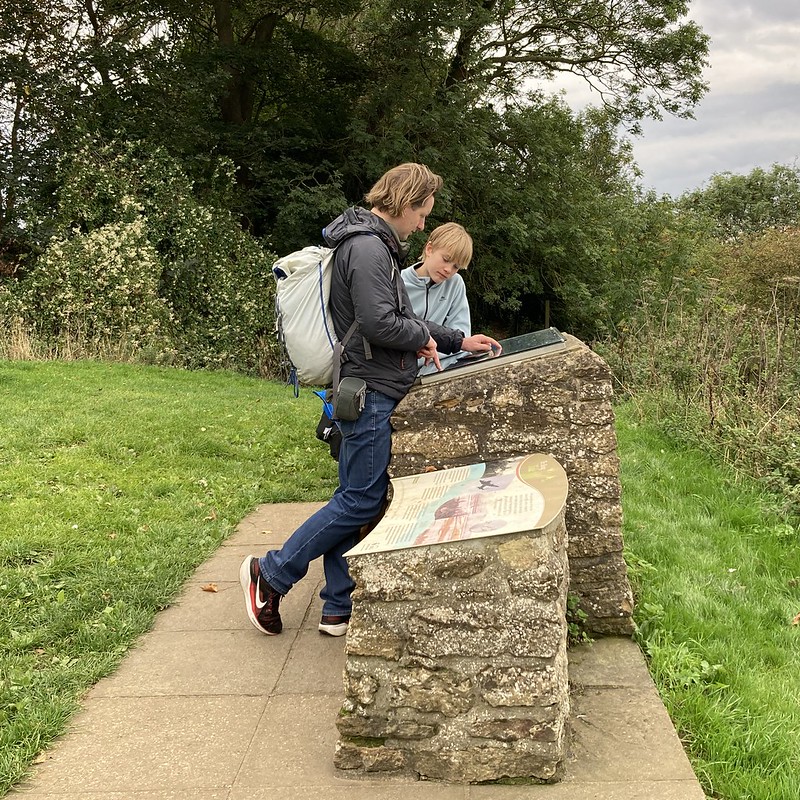
We weren’t quite done. From there we pushed on to the tower hide on stilts. With water levels down there wasn’t much to see, but the elevated view gave a new angle on the reserve. A concessionary path lifted us further onto the ridge, opening the whole landscape, the creeks, reedbeds and estuary, like a map at our feet. From there we dropped into the village for a different kind of history. St John the Baptist church stood closed, but just beyond it we found Julian’s Bower: a rare medieval turf maze cut into the ground. Thirteen metres across, its single winding path leads in and out in hypnotic turns. No one knows exactly when it was first cut, but standing at its centre with the estuary spread below, you feel both history and geography folding together, the maze at your feet, the floodplain at your back, and the Humber spilling towards the North Sea.
We circled back to the reserve for a second hot drink from the flask, leaving us only our journey home and the amazing memories of a fabulous day.