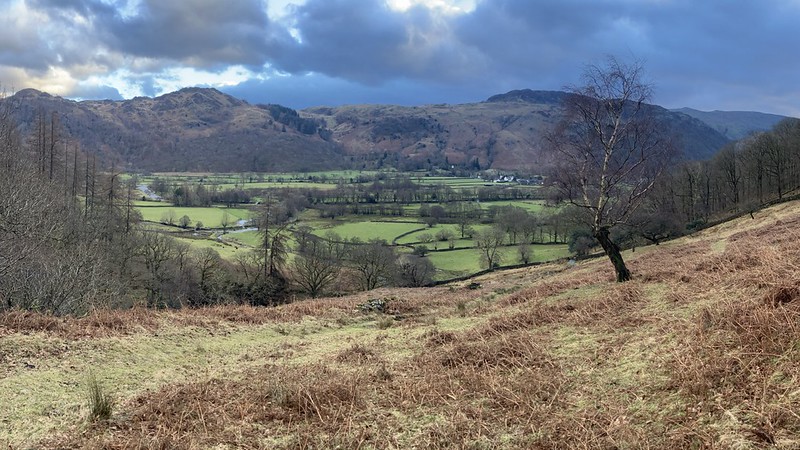
Some places don’t just stay with you, they quietly weave themselves into your life. For me, Borrowdale is one of those valleys. One I’ve returned to across decades, through different stages of life, different friendships, different adventures. Every visit feels familiar the moment I arrive, as if the landscape itself remembers you.
I’m fairly sure my first trip here was to Grange campsite; back when a campsite didn’t need much more than a toilet and a tap to qualify as perfect. No pitch numbers, no shop, no hot showers, certainly no Wi-Fi. Just damp grass underfoot, the river close by and that quiet Borrowdale soundtrack of wind in the trees and distant voices echoing off the fells.
It was simple and somehow that simplicity made everything feel bigger. I still carry memories of slipping canoes into the shallows of the River Derwent, drifting downstream to Derwent water and group of us, as school children, wandering across fields later for a lemonade at the pub.
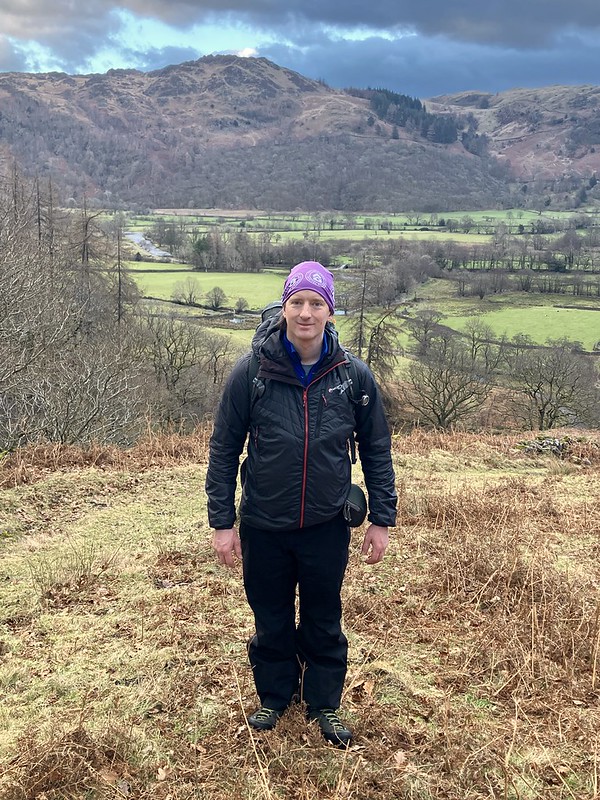
Borrowdale became the backdrop to friendships too. It was here I first met Tim; a moment that seemed small at the time although went on to shape decades of adventure: fell running on Rum and Knoydart, the Welsh 3000s, Scottish islands, long climbing days, camping in the woods and chatting over a brew made on the campfire.
This valley holds chapter after chapter of my life; starting with school trips, then trips with Warwick Uni Mountaineering Club, Southampton Rats Climbing Club, helping on DofE Gold assessments, days out with my father, classic Lake District climbs like Little Chamonix and Corvus, the ill-fated 2008 Original Mountain Marathon when the valley flooded and fought back, nights out with the kids scrambling days and wild camps high up in the mountains and more recently gentler stays at the youth hostel, mixing mountain days with slower days in the temperate rainforest in the valley. Borrowdale has always offered choice: push high into steep ground or sit quietly and let the place work its magic.
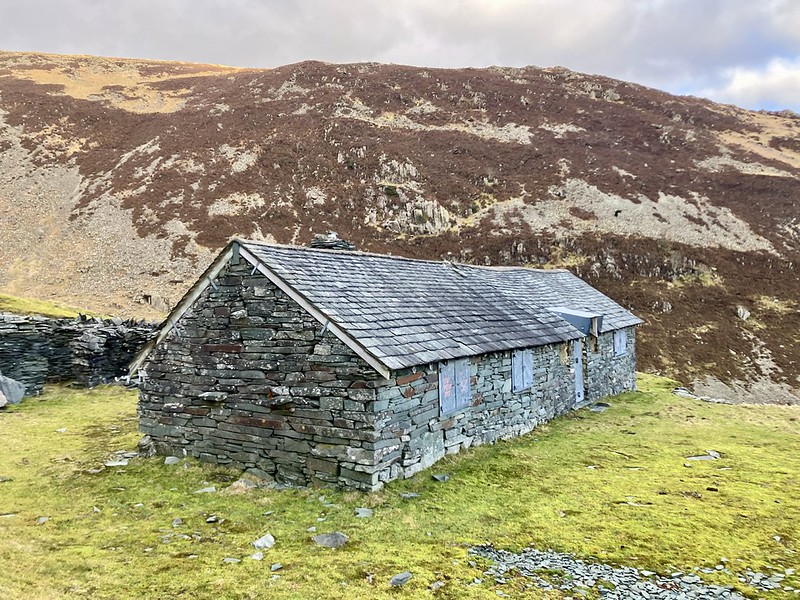
This weekend’s journey felt like a walk through both landscape and memory. We set off through the edge of Johnny Wood, a reminder that Borrowdale holds fragments of temperate rainforest; moss heavy on branches, damp earth underfoot and that deep green calm only ancient woodland seems to manage. From there we climbed onto the bridleway, traversing beneath the Rigg Head quarries, passing a privately owned climbing hut tucked into the rock, before threading through old quarry edges toward the tarn below Dale Head. Higher still, we crossed over High Spy and Maiden Moor, where Borrowdale opened out in sweeping views.
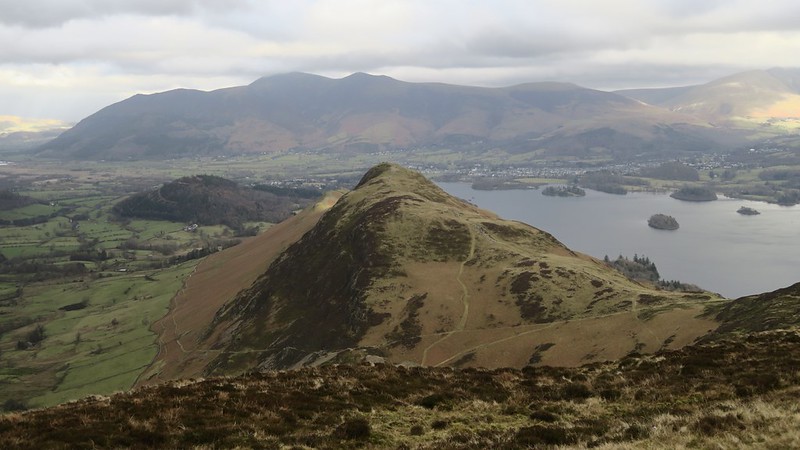
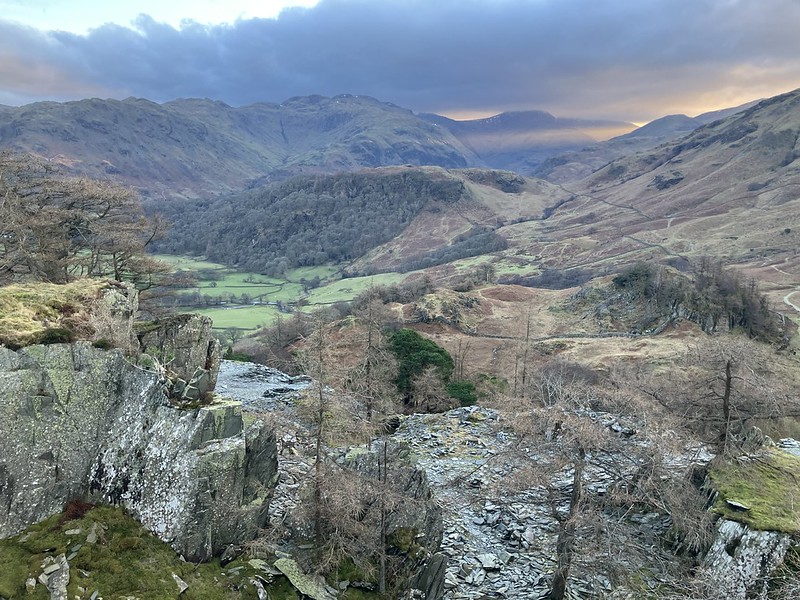
Eventually we dropped toward the unmistakable crowds of Cat Bells. One of the most accessible viewpoints in the Lakes and still capable of stopping you in your tracks no matter how many times you’ve been. From Hawse End we traced the lower bridleway back along the valley floor, picking up the road into Grange, pausing at the tiny chapel and museum (wishing we’d brought cash), before wandering to the famous bridge and finally back toward Hollows Farm; the fields where I once camped in my early years.
Past Nitting Haws we passed the Grade 2 scramble I still haven’t quite worked out the best line on; one of those little Borrowdale puzzles waiting patiently for another day. It was hard not to detour up Castle Crag. A short climb for a big view and historically one of the few spots in the valley where you could ever get phone signal.
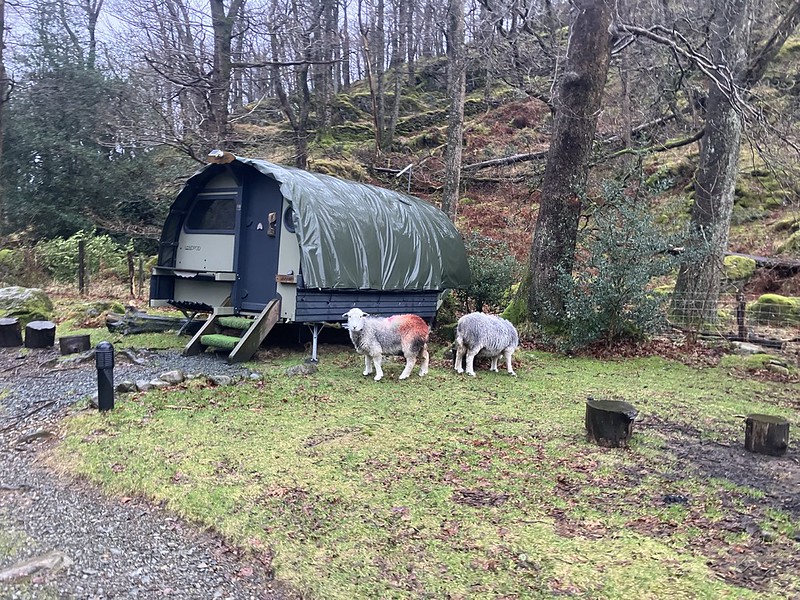
I remember years of poor reception here: once returning from a post-COVID wild camp with my son to find the car battery flat after three days, then a battle with the payphone to get help! Looking back that isolation used to be part of Borrowdale’s charm. Now? There’s signal across much of the valley. Efficient and convenient, although also a reminder that even wild sanctuaries slowly absorb the modern world. Add in number plate recognition at the hostel car park and the sheer increase in visitors and it’s hard not to feel the vibe shifting. Busier, louder and a little more managed, of course we can’t hold back change although it does make you aware. Especially as you reach that reflective stage of life how much of what you’re returning to is not just a place, although a version of yourself from another era. From Castle Crag it was a short wander back to the hostel, dinner cooking, boots drying and that familiar mountain tiredness settling in.
The next morning we headed the other way; first through Seatoller, then on to Seathwaite, before tackling the steep pull toward Sty Head Tarn.
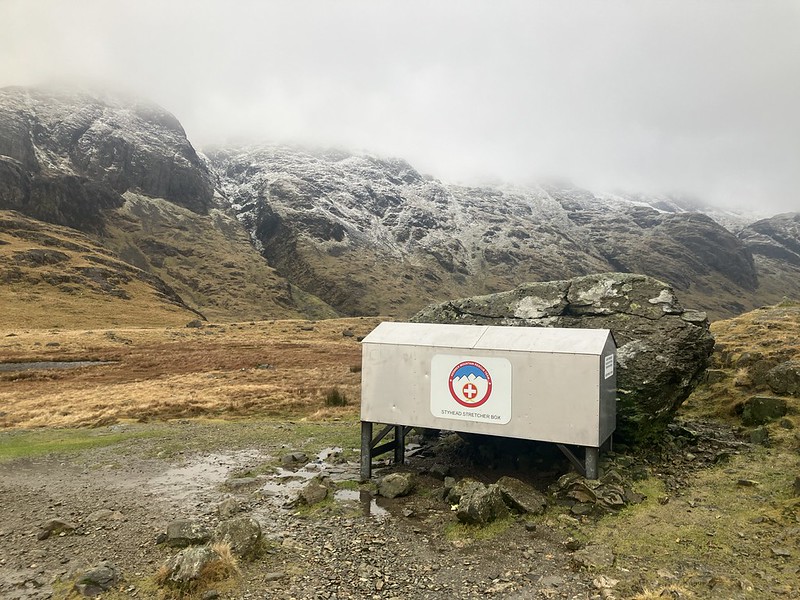
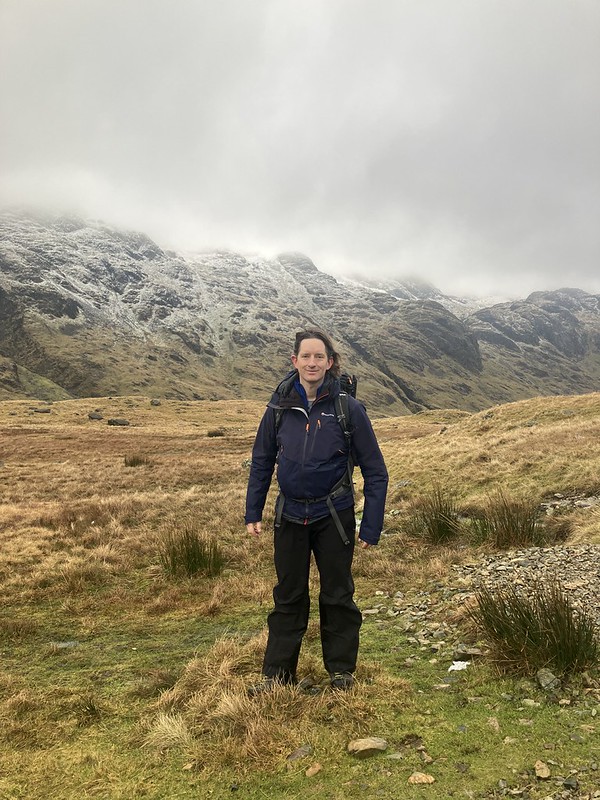
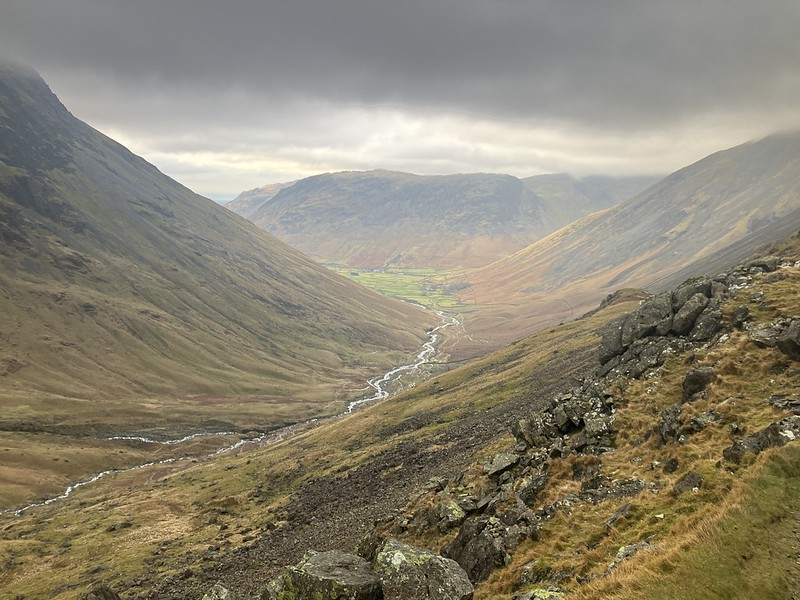
With recent rain the paths were half stream and half trail, so there was plenty of boulder hopping, wet boots and that rugged Lakeland terrain that keeps you paying attention. From the pass we poked our heads toward Wasdale and weren’t disappointed. The views into that valley reminded me of the wonders of this part of the world, the kind of landscapes the Lake District does better than anywhere else. It was what I’d call proper mountain weather: damp, windy, grey and somehow perfect.
We retraced our steps back to the hostel, soaked but smiling, fuelled up again, and turned in early for the journey south.A slight shame not to catch snow like the year before although far outweighed by simply being back where so many memories live.
(Jan 2026)